TL;DR
Carry-on luggage with 20-inch wheels usually means a case advertised as 20 inches tall; the label may exclude wheels and handles. Compare the bag’s full outside dimensions, empty weight, and interior capacity with your airline’s current rules, then choose two wheels or four based on the surfaces you travel across.
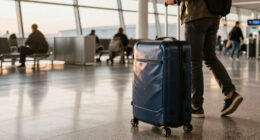
A suitcase can be called 20 inches and still be too tall for your flight. That small label often describes the case itself, while the wheels and handle add extra height—the part that can turn an easy boarding into a gate check.

Get travel and outdoor gear delivered free with Prime
- Fast, free delivery on millions of items
- Prime Video, Amazon Music and more included
- Member-only deals all year
This guide shows you how to compare overall dimensions, judge two-wheel and spinner designs, and weigh packing room against the space wheels use. You’ll also get a practical checklist for choosing a bag that works for your routes, whether you’re rolling through a polished terminal or bumping over old cobblestones.
Airline limits vary by carrier, route, and ticket type, and they can change. Check the official rules for each airline before booking, then compare them with the manufacturer’s listed exterior measurements. A tape measure at home is cheaper than a surprise at the gate.
Treat “20 inch” as a case-height label until you confirm the full outside dimensions, including wheels and handles.
Check your usual airlines’ current size and weight rules, including restrictions that may apply to your fare or aircraft.
Choose spinners for easy movement on smooth floors and consider two-wheel designs for recessed wheels and rougher ground.
Compare interior capacity, empty weight, and wheel housings; a larger liter figure does not guarantee easier packing.
Read warranty coverage and check whether damaged wheels, handles, or zippers can be repaired or replaced.
Check the full bag size before trusting the 20-inch label
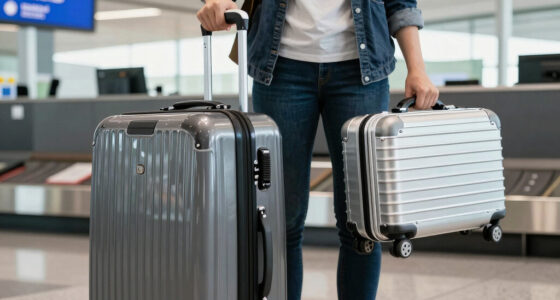
A 20-inch carry-on label usually describes the suitcase’s case height, not its full height with wheels and handles. For airline fit, the relevant number is the bag’s overall outside dimension: the space it actually occupies when you place it in a measuring frame or overhead bin. A few extra inches can matter because a bag that exceeds a limit may need to be checked, even if its shell matches the advertised size.
Manufacturers may give one measurement for the shell and another for the complete bag. For example, a case listed as 20 inches tall could measure 22 inches from the bottom of the wheels to the top of the shell, before you account for a raised handle or bulging pocket. The distinction is practical: shell height helps compare the case body, but it cannot establish whether the whole bag fits. Check the product’s dimension notes, and measure from the outermost fixed points if the listing is unclear.
Imagine you’re flying on a regional aircraft after buying a bag that just meets a larger airline’s rules. Smaller bins or different aircraft limits may leave less room, so the crew may ask you to gate-check the case. That can mean waiting at the aircraft door on arrival or having less access to your belongings in flight. The exact carrier’s current allowance matters more than a general claim that a bag is “carry-on size.”
Use this quick check before buying:
- Find your airline’s current carry-on size and weight rules, including restrictions for your fare.
- Look up the bag’s overall dimensions, measured from the bottom of the wheels to the highest fixed point.
- Check whether pockets, handles, or wheel housings add extra depth or height.
- Compare your most restrictive usual airline and leave a little room for measurement differences.
Airlines may set different limits by route or aircraft, so verify with official carrier sources before you book. Leaving a small margin can make measurement differences less consequential, but it cannot guarantee bin space when a flight is full or an aircraft is changed. A bag that fits one flight may not fit the next.
Popular right now

Dreame X60 Ultra Robot Vacuum and Mop with Dual AI Cameras

Ninja Foodi 6-in-1 DualZone FlexBasket Air Fryer, 7-Qt MegaZone, Black, DZ071

KitchenAid 5.5 Qt Bowl-Lift Stand Mixer – Porcelain White (KSM55SXXX)
As an affiliate, we earn on qualifying purchases.
Choose wheels that match the ground you travel on
Two-wheel and four-wheel carry-ons move differently: two-wheel cases tilt behind you, while spinner cases roll upright in several directions. The choice affects more than maneuverability. It changes how the bag handles rough ground, how much force you use, and how far its wheels project beyond the case. Your better choice depends on where you walk, how crowded your route gets, and whether you value easy turns or recessed wheels.
A four-wheel spinner can glide beside you through an airport’s smooth floors, which is handy when you’re balancing a coffee and checking a departure board. Because it rolls upright, you do not need to hold it tilted, which can make short turns and waiting in lines easier. The tradeoff is that the wheels may stick out farther, increasing exterior dimensions, and small casters can rattle or snag on rough pavement. If you regularly walk outdoors with your bag, that ease indoors may come with more effort on broken surfaces.
A two-wheel case usually rolls at an angle. Its wheels are often recessed, which can shield them from knocks and leave more room inside. Picture pulling it along a brick sidewalk to a guesthouse: its larger wheels may track more steadily over uneven ground than a spinner’s small casters. But the tilted position puts some of the bag’s weight on your arm, so a heavy case can become tiring over a long walk. The design works best when the route makes wheel stability more valuable than upright maneuvering.
Wheel count alone tells you little about durability. A wheel can turn smoothly in a shop yet fail if its mount is weak or replacement parts are unavailable. Check whether each wheel feels secure, turns without grinding, and has a mount that looks solid. If you travel often, look for replaceable wheels or a repair policy; being able to replace one damaged part can keep a usable case in service, while a proprietary wheel with no repair option may leave the whole bag inconvenient to use.
Before you commit, roll the bag across a hard floor, make tight turns, and listen for clicking or wobbling. These checks reveal rough movement or loose fittings, though they cannot reproduce curbs, cobblestones, or a fully loaded bag. If possible, test it with weight inside: a loaded case puts more strain on the wheels and changes how much effort it takes to steer. No shop test predicts every surface you’ll meet, but it can expose problems before they become part of your trip.
Compare capacity, weight, and packing access as a set
Advertised capacity in liters helps you compare suitcases, but it does not tell you exactly how much clothing will fit. Capacity describes volume, while packing also depends on shape: a deep, narrow compartment may hold the same volume as a wider one but make shoes, folded clothes, or a laptop harder to arrange. Wheel housings, lining, compression straps, and pockets further change the space you can use.
That matters when two 20-inch bags look nearly identical outside. One might have bulky wheel housings inside the lower corners, while another keeps the floor flatter. If you pack a pair of shoes, a toiletry pouch, and folded trousers, those few inches of usable shape can decide whether items lie flat or have to be wedged in. A higher liter figure is useful only if the interior dimensions suit the things you actually carry.
Check empty weight too. A lighter bag leaves more of an airline’s weight allowance for your belongings when the carrier sets one. The difference can be especially useful on trips where you carry dense items, such as a laptop or shoes, because they use weight allowance quickly without taking much space. But a lower empty weight does not guarantee a roomy or sturdy bag; compare the number alongside construction and capacity, then consider whether the weight saving is worth any differences in protection or features.
Organization can help you use the space you have. Compression straps keep a stack of clothes from shifting, and a divider can separate shoes from a clean shirt. That can make packing more orderly, but dividers and pockets also occupy some of the interior. Exterior pockets on a soft-sided case make a passport or charger easy to reach, but a stuffed pocket can add depth and catch on a measuring frame. Consider whether quick access is worth the space it uses and whether you can keep the pocket flat when checking the bag’s dimensions.
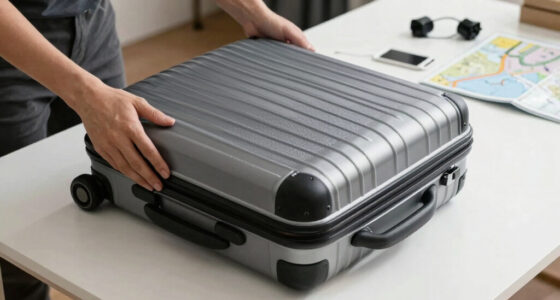
Try a realistic packing test at home: pack what you’d actually take for a long weekend, then close the bag without leaning on it. This shows whether the layout accommodates your belongings without relying on the advertised volume alone. If your toiletries and shoes force the zipper to bulge, the printed liter figure won’t rescue the trip; the bag may also become harder to fit within its stated exterior dimensions.
Pick a shell and handle you can live with for years
Hard-shell and soft-sided bags solve different problems, and neither guarantees years of trouble-free travel. A hard shell wipes clean after a wet taxi ride and can help shield packed items from bumps, but a rigid case cannot compress to fit an awkward gap. Fabric cases often offer exterior pockets and some flexibility when you squeeze them into a tight space, though that flexibility can disappear when a pocket is stuffed or the bag is fully packed.
Think through a real arrival: you set your hard-shell carry-on on a rainy curb, and muddy droplets bead across the surface. A damp cloth may clean it quickly. On another trip, a soft-sided bag’s front pocket gives you fast access to a boarding pass, but the fabric can show stains and may be more exposed to tears or moisture. Those differences affect everyday convenience; neither material alone tells you how well the seams, corners, or zippers will hold up.
Inspect the places that take the most strain: zippers, seams, handle, shell, and wheel mounts. The telescoping handle should lock securely and feel comfortable at your height. A handle that rattles or twists under a light push may become irritating as you drag a loaded bag through a long terminal, and looseness can make steering less controlled. Check the zipper around corners, too, because tight turns put more strain on it than a straight, empty opening.
Read the warranty terms before treating a long coverage period as a durability promise. Some warranties exclude routine wear or airline damage, and the repair process may matter as much as the number of years. A warranty helps only if the problem is covered and you can get the repair completed when you need it. Ask whether wheels, handles, or zippers can be serviced, especially if you plan to use the case for frequent trips.
If you can inspect the bag in person, extend and retract the handle several times and run the zipper around a packed corner. At home, repeat the checks with a few clothes inside: a bag can feel smooth when empty but behave differently under weight. These simple checks cannot predict years of use, but they can show whether the bag feels stable and easy to manage before you rely on it.
Match the bag to your trips with a simple comparison
The best 20-inch carry-on for you is the one that meets your strictest regular airline limit and rolls comfortably on your usual route. Those goals can pull in different directions: larger or more prominent wheels may feel convenient on smooth floors but use more of your size allowance, while recessed wheels can help with dimensions and rough ground but require you to tilt the bag. A frequent flyer with short airport transfers may want easy-turning spinners, while a traveler who crosses cobbles or broken sidewalks may prefer two-wheel cases.
Use the table as a starting point, not a substitute for checking a specific model’s measurements and current airline rules. The table describes common tradeoffs; it cannot show how a particular bag’s wheel size, interior layout, or handle will feel when loaded. Brands vary, and the same wheel style can have very different capacity, weight, construction, and warranty terms.
| Design | What you gain | What to check | Example trip |
|---|---|---|---|
| Four-wheel spinner | Upright rolling and easy turns on smooth floors | Wheel protrusion, wobble, and exterior dimensions | Connecting through a large airport with a laptop bag |
| Two-wheel carry-on | Recessed wheels and steady tilting over rough ground | Handle comfort and rolling stability when loaded | Walking from a train station along an uneven street |
| Hard shell | Easy-to-wipe surface and a firm outer case | Shell, corner, and wheel-mount construction | Rainy arrivals or a packed overhead bin |
| Soft-sided case | Exterior pockets and some flexibility | Fabric condition, pocket depth, and moisture exposure | Reaching a charger or documents during a connection |
For instance, if your regular trip includes a budget airline, a commuter train, and a walk over rough paving, check the airline’s strictest limit first, then try the wheels on a similar surface. This order matters because a bag that does not meet the limit may be checked regardless of how comfortably it rolls. Once the size works, compare the walking comfort and interior space. One bag may win on overhead-bin fit and another on street comfort; your route decides which tradeoff matters more.
Know what new features add—and what they don’t
Recent luggage designs often focus on lighter materials, smoother spinner wheels, built-in compression, and layouts that use airline-sized dimensions well. These features can make packing or rolling more pleasant, but each addresses a particular inconvenience rather than changing the basic limits of a trip. A feature does not make a bag fit every airline or prove that its parts will last, so weigh its practical benefit against any added weight, complexity, or space it takes.
Consider a built-in compression panel when you’re packing a week of compact clothing. It can press down soft items and reduce shifting, much like closing a book around loose pages. That can make a partly filled bag feel more orderly, but it cannot create extra space for bulky shoes, and an overfilled case can still strain its zipper. Compression helps most when your load is soft and compressible; it has less effect on rigid items.
Some bags offer replaceable wheels or recycled fabrics. Replaceable parts may make a repair more practical, but check whether replacement wheels are actually available for the model you’re considering and whether you can install them or need a service center. A material’s recycled content says something about sourcing; it does not by itself tell you how well the bag resists scuffs or rain. Treat those as separate questions when comparing models.
Built-in USB charging also needs a closer look. The port generally connects to a separate power bank, so it provides a convenient place to plug in rather than extra battery capacity. Airline rules can apply to lithium batteries, especially when a battery is installed in a bag. If a model includes one, check the current airline requirements before travel and confirm whether you can remove it; a removable power bank can make compliance easier when a carrier requires it.
Choose a feature because it solves a problem you have: a quick-access pocket for documents, compression for soft clothes, or wheels you can replace after a rough trip.
On a weekend flight, a USB port may sound handy until you realize you still need a charged power bank and an accessible cable. Thinking through the full setup helps you judge whether the feature will actually save effort on your route. Practical details beat a long feature list.
Frequently Asked Questions
Does a 20-inch suitcase count as a carry-on?
Often, but the label alone cannot tell you whether it fits. It usually refers to the case height and may leave out wheels and handles, so compare the bag’s full outside dimensions with your airline’s current allowance.
Are wheels included in carry-on measurements?
Airlines generally assess the bag’s outermost points, which include wheels and handles. Check the airline’s published wording and the manufacturer’s overall dimensions before your trip.
Is a 20-inch carry-on big enough for a week?
It can work for a week if you pack compactly and have access to laundry, but there is no fixed number of days a carry-on holds. Try packing your actual shoes, toiletries, and clothing before deciding.
Are four wheels better than two?
Neither style suits every trip. Spinners turn easily on smooth airport floors, while two-wheel cases often have recessed wheels and can feel steadier on rough pavement; choose based on where you roll your bag.
Do spinner wheels reduce packing space?
They can, because wheel housings and larger casters may take room inside or extend beyond the case. Compare the advertised capacity and interior shape as well as the full exterior measurements.
Can I use the same 20-inch carry-on on every airline?
Not necessarily. Allowances can differ by airline, route, fare, or aircraft, so frequent travelers should compare the strictest limits on their usual routes and verify the current official rules before flying.
Conclusion
Before you buy, match the suitcase’s full exterior dimensions to your most restrictive usual airline, then check its weight, usable capacity, wheels, and repair terms. A 20-inch label is a starting point, not a boarding pass.
Pack your real long-weekend load, roll the case across a rough patch of pavement, and see whether it still feels right. The best carry-on is the one that fits the rules and follows you through the station without a fight.