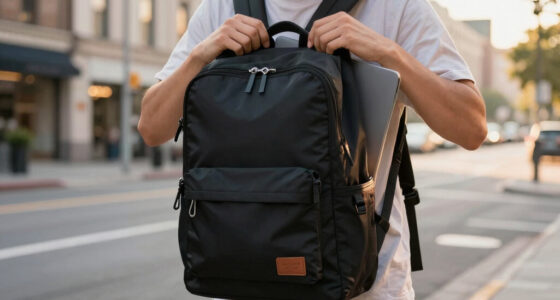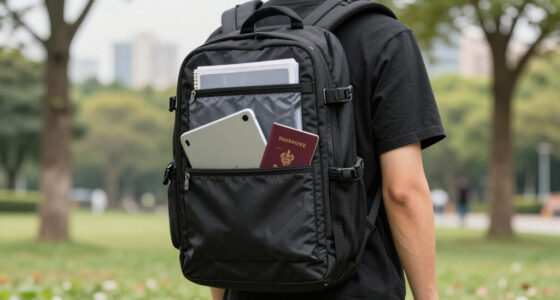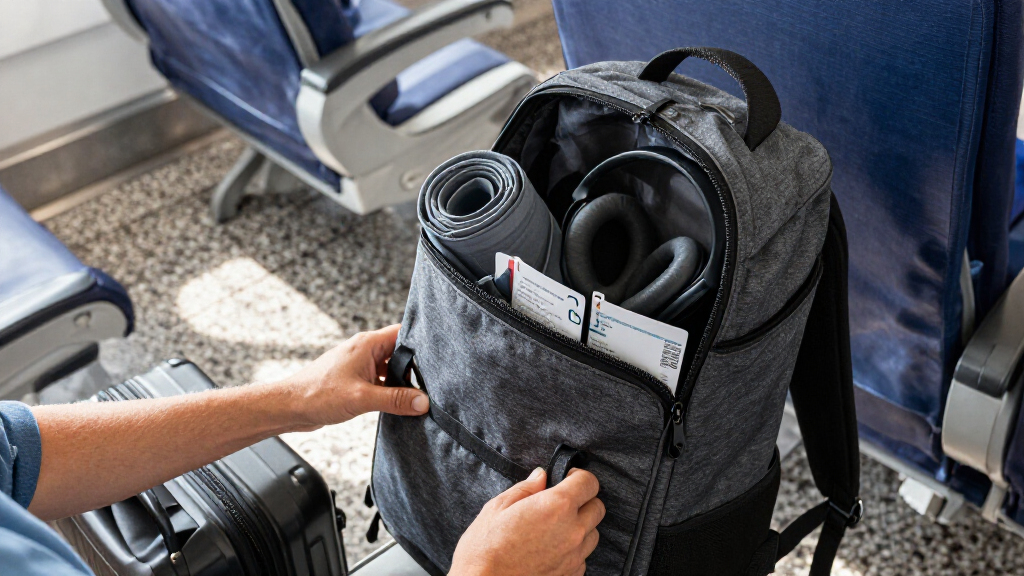

TL;DR
The 40x30x15cm Personal Item Travel Bag has a deal signal describing a significant drop below its typical price. Check the live price, then compare the bag’s stated dimensions with your airline’s current personal-item rules and your packing needs.
The 40x30x15cm Personal Item Travel Bag, also described as a 16x12x6-inch carry-on backpack, has a deal signal indicating a significant drop below its typical price. The signal labels it an all-time low, but that label does not tell you whether the bag will fit your particular airline’s sizer or hold everything you plan to bring. Those details deserve a check before you buy.

Get travel and outdoor gear delivered free with Prime
- Fast, free delivery on millions of items
- Prime Video, Amazon Music and more included
- Member-only deals all year
A personal item can be useful for keeping travel essentials close: think a book, headphones, a light change of clothes, or a small toiletry pouch on a short trip. The listed dimensions offer a starting point, not a guarantee of acceptance. Airline rules vary and may apply to packed bags, including bulging pockets. Use the live listing to review the current offer and product details, and compare the measurements with your route’s baggage policy.
The deal signal describes a significant drop below the backpack’s typical price and labels it an all-time low.
The listed dimensions are 40x30x15cm, also stated as 16x12x6 inches; compare them with each airline’s current personal-item rules.
Check the live listing, product details, and return terms before deciding whether the bag fits your trip.
What changed
The deal signal for this backpack describes a significant drop below its typical price and assigns an all-time-low label. That makes the listing worth checking if a compact travel bag was already on your shortlist. The alert itself does not establish the live price or guarantee that the offer will remain unchanged, so review the current listing before making a decision.
The product is identified as a 40x30x15cm personal item bag, with the equivalent dimensions also shown as 16x12x6 inches. Dimensions describe the bag’s outside measurements, not the space available for packing. Internal padding, seams, and compartments can reduce usable room, while a full outer pocket can make the packed bag bulge beyond its listed profile. Treat the deal as a prompt to check these details against your own packing list, rather than assuming the stated size tells you how much it will hold.
Deal labels describe the signal provided for this item; they are not a substitute for reviewing the listing and your own requirements. A useful comparison is a fare alert: it tells you when to look, while the route and terms determine whether the opportunity works for you. If you were already comparing compact bags, the alert may bring this one back into consideration; if you do not have a trip or need in mind, the label alone gives little reason to buy.
Popular right now

Dyson V9 Motorbar Cordless Vacuum

Apple AirPods Pro

Samsung 65-Inch 4K OLED Smart TV with Dolby Atmos, 120Hz Refresh Rate, and Amber Protection Bundle
As an affiliate, we earn on qualifying purchases.
Why it matters
A personal item is often the bag a traveler wants under the seat, with essentials reachable without opening an overhead bin. That can make a compact backpack practical on a short flight, a train connection, or a day when you want to keep documents and electronics close. The tradeoff is limited space: if you normally carry a bulky laptop, headphones, medication, and spare layers, fitting them into a small bag may mean repacking or leaving something behind. Consider what you need during the journey, not just whether the empty bag’s dimensions look convenient.
Airline baggage policies are not universal. One carrier or fare may allow a different personal-item size than another, and the route can matter too. For example, someone taking a connecting trip on two airlines should check both policies, not just the first flight’s allowance. Compare the stated dimensions with the most restrictive rule on your itinerary, and remember that an overfilled bag can measure larger than it does when empty. A listed match is only a useful first check: the airline’s sizer and how the packed bag fits under a seat determine whether it works in practice.
A lower price matters most when the item fits an actual need. If your current bag already fits your usual route and carries your essentials comfortably, replacing it may add little value. If you have been looking for a compact option, this reported drop may make the listing more relevant to review. Compare its confirmed features and return terms with alternatives you already own or are considering; the deal signal does not establish capacity, comfort, or durability.
Check the live price
Before buying, open the listing and confirm the offer currently shown. The deal signal is qualitative, and live offers can change; the shortcode below is the designated place for the current price display.
Live price:
Check the current price and listing details.
While there, verify that the product title and dimensions match the bag you intended to review. Check the available product information for materials, compartments, closure, and care guidance, especially if you need a protected pocket for a device or a place for travel documents. Those details affect how well the bag serves your routine: an accessible document pocket can save time at security, while a crowded compartment may make essentials harder to reach. Do not assume a feature is included unless the listing confirms it.
Finally, check the return terms and expected delivery details shown at checkout. Fit is hard to judge from a listing alone, and a bag that seems suitable on paper may not suit your packing style once loaded. Clear return terms can affect how comfortable you feel trying it, while delivery timing matters if your departure is near.
Measure for your itinerary
Use the listed 40x30x15cm dimensions as a comparison point against the baggage rules for each flight. Search the airline’s current policy for its personal-item size and how it measures bags. If the rule is displayed in inches, compare it with the stated 16x12x6-inch dimensions; if it is displayed in centimeters, use the metric dimensions. Matching the numbers is a helpful first screen, but it cannot guarantee that a packed bag will fit a sizer.
A realistic example is a traveler who packs a water bottle, sweater, and tablet into the main compartment, then uses an outer pocket for chargers. Those items can push fabric outward or change the bag’s shape. Check how you expect to pack it, including anything that might sit in exterior pockets. If your route includes multiple carriers, use the strictest personal-item limit you encounter so you are not surprised during a transfer.
If the dimensions sit close to an airline’s limit, consider whether your packing list can stay compact and whether the bag’s shape is likely to be easy to place under a seat. An allowance may also differ by fare, so confirm the rule attached to your ticket. The airline’s own rules are the reference for acceptance; product wording such as “personal item” does not replace them. If you cannot confirm a close fit, a smaller bag or one with a more flexible packing profile may reduce the chance of a last-minute repack.
Match the bag to your packing style
Dimensions do not describe every part of a bag’s usefulness. A traveler carrying only a few essentials may be well served by a compact backpack, while someone who packs a camera, bulky headphones, medication, and a spare layer may need a different layout or more capacity. Consider what needs to be reachable in transit and what can stay packed until arrival. A bag can meet an airline’s size limit and still be a poor fit if its usable space or organization does not suit those items.
For a short city break, you might want a place for a book, a cable, and a light shirt, with documents easy to retrieve at the airport. For a work trip, you may prioritize a device compartment and room for a notebook. These are examples of needs to check against the product listing, not claims about features this particular bag has. Look for clear listing details and images that address your requirements before deciding. If the listing leaves a key question unanswered, such as whether a device has a padded space, do not count that feature as part of the bag’s value.
Think about comfort as well as capacity. A heavily packed backpack can feel different from an empty one, particularly when walking through a terminal or changing trains. If you already own a bag that works, compare its approximate packed size and organization with the product information. Alternatives include continuing with that bag, using a smaller soft-sided daypack if you need less structure, or choosing a larger carry-on if your fare and route allow it. A deal is more useful when the bag solves a specific packing problem than when it simply looks like a bargain.
Make the offer decision calmly
A strong deal signal can create urgency, but a practical check can take only a few moments: confirm the live listing, compare dimensions with airline rules, and decide whether the bag’s described layout fits your packing list. That sequence helps distinguish a useful purchase from an impulse prompted by a price alert.
For example, if you have an upcoming flight with a strict under-seat allowance and the listed dimensions appear compatible, the bag may merit closer consideration. If your next trip is months away, your airline is undecided, or you need a feature that the listing does not clearly describe, waiting to gather that information may lead to a better choice. The signal does not establish future pricing or availability, so base the decision on the offer and details you can see at the time you check.
Keep the tradeoff in mind: a compact personal item can make essentials easier to carry, but space and airline compliance depend on how the bag is built, packed, and used. Review the current product information and the policies for your itinerary, then decide whether this particular offer fits your plans. The reported label says nothing on its own about construction quality or long-term wear, so check the materials and return terms if those affect your decision.
Frequently Asked Questions
What is the reported deal on this backpack?
The deal signal describes a significant drop below its typical price and labels it an all-time low. Check the live listing for the current offer; the signal does not guarantee that it remains unchanged.
What dimensions are listed?
The product title gives dimensions of 40x30x15cm and also states 16x12x6 inches. Compare those figures with the personal-item limits published by the airline or airlines on your itinerary.
Will it be accepted as a personal item on every airline?
Acceptance depends on the carrier’s rules, fare, and packed bag size. Check the current policy for each flight, especially if your trip includes multiple airlines, and do not rely on the product title alone.
What should I check on the product listing?
Confirm the product identity and dimensions, then review the available information about materials, compartments, care, and return terms. If you need a particular feature, make sure the listing actually describes it.
How do I check the current price?
Use the live listing through the check-price link in the article. Offers can change, so review what is displayed at the time you visit before deciding.
Conclusion
This backpack has a notable deal signal, and its listed dimensions make it straightforward to compare with your travel requirements. Check the live listing for the current offer, confirm the airline limits for every flight on your itinerary, and review the product details for the organization you need. A compact personal item can be handy for keeping essentials close, but a good purchase depends on fit, packing style, and the terms shown when you order. If those checks line up with your plans, the offer may be worth considering.