Use this guide to select and prepare a carry-on suitcase described as having 20-inch wheels or a 20-inch body. You’ll measure the full bag, compare it with your airline’s carry-on limits, check whether the wheels and handle work for your trip, and pack it for boarding. It is for first-time carry-on buyers and travelers replacing a small suitcase; allow 30–45 minutes, plus time to check your airline’s current rules.

Get travel and outdoor gear delivered free with Prime
- Fast, free delivery on millions of items
- Prime Video, Amazon Music and more included
- Member-only deals all year

Sweetcrispy 20 Inch Carry On Luggage, Suitcase with Spinner Wheels
- ✔ Size: 20 inches
- ✔ Dimensions: 13 × 9 × 21.5 inches
- ✔ Capacity: 35 liters

LIGHT FLIGHT 20-Inch Carry-On Luggage, Royal Blue
- ✔ Dimensions: 21.4 × 14.6 × 9 inches
- ✔ Capacity: 35 liters, expandable to 42 liters
- ✔ Weight: 6.8 pounds

Wrangler Hardside Spinner Carry-On Luggage, 20-Inch, Blue Heaven
- ✔ Dimensions: 14 × 9.5 × 22 inches
- ✔ Capacity: 38 liters
- ✔ Weight: 6.4 pounds
Difficulty: Beginner | Time: 30-45 minutes
What You’ll Need
Tools & Materials:
- Tape measure or ruler
- Bathroom or luggage scale
- Airline carry-on size and weight limits for your flight
- Items you plan to pack, for a test fit
Knowledge:
- Basic familiarity with your itinerary and airline
- Ability to lift and roll a packed suitcase
“20-inch” can refer to the suitcase body, and sellers may measure it differently. The wheels, handles, and other protrusions count toward the total outside dimensions for many airline checks. Airline limits vary by carrier, route, and fare, so use the rules for the airline operating each flight. Check every airline on a connecting itinerary.
Sweetcrispy 20 Inch Carry On Luggage, Suitcase with Spinner Wheels
The Sweetcrispy earns our top spot because it pairs expandable storage with the most clearly described interior organization in this group. Its wet and dry mesh compartments give us a practical way to separate items, while securing straps help keep clothing in place. That makes it a stronger choice for a traveler carrying toiletries, workout gear, or clothes that benefit from separation than LIGHT FLIGHT, whose description lists one main compartment. The TSA-approved lock also makes its security details more explicit than Wrangler’s zipper lock.Its four dual spinner wheels and adjustable telescopic handle suit travelers who expect to steer through terminals and crowded walkways. At 6 pounds, it is the lightest listed option here, though that advantage is modest and the weight may still be noticeable once packed. Its stated dimensions are 13 by 9 by 21.5 inches, which are useful to compare against airline limits, but buyers should verify how their carrier measures carry-ons. The tradeoff is a single listed navy color and less stated capacity detail than LIGHT FLIGHT’s 42-liter expanded figure or Wrangler’s 38 liters. Choose Sweetcrispy for adaptable, compartment-based packing; skip it if maximum documented volume or more color choice matters most.
Pros:
- Expandable interior includes wet and dry mesh compartments.
- Four dual spinner wheels support multidirectional movement.
- TSA-approved lock is specified.
- Listed weight is 6 pounds, the lowest of these three.
Cons:
- Only navy blue is listed.
- Weight can still add up when the suitcase is fully packed.
Best for: Travelers who want an expandable carry-on with separate wet and dry storage and a TSA-approved lock.
Not ideal for: Buyers who prioritize a wider color selection or the largest explicitly stated expanded capacity.
Bottom line: We recommend Sweetcrispy for its combination of spinner mobility, expansion, and useful interior separation.
“We recommend Sweetcrispy for its combination of spinner mobility, expansion, and useful interior separation.”
LIGHT FLIGHT 20-Inch Carry-On Luggage, Royal Blue
When packing flexibility is the priority, LIGHT FLIGHT makes the clearest case: its stated capacity grows from 35 to 42 liters with 20 percent expansion. That gives it the largest explicitly stated expanded volume in this lineup, ahead of Wrangler’s 38-liter listing and Sweetcrispy’s 35 liters. The added room can help on a return trip or when layers take up more space, but expansion also changes the suitcase’s depth, so we should check airline limits before relying on the extra volume.The four silent 360-degree spinner wheels and four-level adjustable aluminum handle make it a straightforward fit for travelers who want flexible steering and handle height. It also specifies a TSA combination lock and a five-year manufacturer warranty, giving buyers more stated support information than the other product descriptions provide. At 6.8 pounds, it is the heaviest of the three listed options; Sweetcrispy and Wrangler are lighter. Its ABS composite shell and single main compartment mean it trades interior separation for expandable capacity. We would choose it over Sweetcrispy when extra liters and warranty coverage lead the decision, but choose Sweetcrispy when distinct wet and dry storage matters more.
Pros:
- Expands from 35 to 42 liters.
- Four silent 360-degree spinner wheels.
- TSA combination lock is specified.
- Includes a five-year manufacturer warranty.
Cons:
- At 6.8 pounds, it is the heaviest listed option here.
- Single main compartment offers less separation than Sweetcrispy.
Best for: Travelers who value expandable volume and a specified manufacturer warranty for trips with variable packing needs.
Not ideal for: People who want a lighter listed suitcase or multiple built-in compartments to separate belongings.
Bottom line: We favor LIGHT FLIGHT when expansion to 42 liters and the stated warranty outweigh the extra listed weight and simpler interior.
“We favor LIGHT FLIGHT when expansion to 42 liters and the stated warranty outweigh the extra listed weight and simpler interior.”
Wrangler Hardside Spinner Carry-On Luggage, 20-Inch, Blue Heaven
Wrangler is the straightforward choice for travelers who want a roomy stated capacity without moving to a heavier listed case. Its 38-liter interior is larger on paper than the 35-liter standard capacity listed for Sweetcrispy and LIGHT FLIGHT, and its 6.4-pound weight sits between Sweetcrispy and LIGHT FLIGHT. Compression straps help keep clothing secure and flat, offering useful interior control even though the description does not list the separate wet/dry compartments found in Sweetcrispy.Like the others, it has four spinner wheels for steering in different directions, plus padded carry handles for lifting and a telescoping handle for rolling. The main compromise is security: Wrangler lists a zipper lock, while the other two specifically identify TSA-approved locks. Its dimensions are 14 by 9.5 by 22 inches, making it the tallest listed option; travelers should compare that measurement with their carrier’s carry-on rules. The ABS shell is described as water resistant, but no material can make this case immune to extreme pressure. Compared with LIGHT FLIGHT, Wrangler gives up the stated expansion and warranty in exchange for a larger listed base capacity and lower listed weight. It is a sensible pick for simple, strap-organized packing, but not for travelers who need a TSA-approved lock or built-in expansion.
Pros:
- 38-liter stated capacity is the largest base capacity listed.
- Listed weight is 6.4 pounds.
- Compression straps help secure clothing.
- Four spinner wheels and padded carry handles support rolling and lifting.
Cons:
- The listed zipper lock is not described as TSA-approved.
- At 22 inches tall, it is the tallest listed option and needs a careful airline fit check.
Best for: Travelers who want a 38-liter stated capacity, compression straps, and a relatively light listed weight.
Not ideal for: Buyers who require a TSA-approved lock, built-in expansion, or the shortest listed height.
Bottom line: Wrangler suits travelers who prioritize its stated 38-liter capacity and compression straps over expansion and TSA-approved locking.
“Wrangler suits travelers who prioritize its stated 38-liter capacity and compression straps over expansion and TSA-approved locking.”
As an Amazon Associate we earn from qualifying purchases.
Before You Start
Check the airline’s current carry-on rules before buying or packing. Find the permitted outside height, width, depth, and weight. Look for whether the listed dimensions include wheels and handles. If a carrier publishes a sizing guide or asks passengers to use a sizer, follow that guidance. A bag advertised as 20 inches is not automatically within every airline’s limit.
If you already own the suitcase, measure it empty before packing. If you are shopping, use the seller’s full outside measurements, then confirm the dimensions yourself when possible. Leave time to move items to a personal item or checked bag if the suitcase exceeds a limit.
Step-by-Step Instructions
Step 1: Check your airline’s limits
Open the carry-on baggage page for the airline operating your flight. Write down the maximum outside height, width, depth, and weight, along with any rules about wheels, handles, or personal items. Repeat this check for each airline on a multi-carrier itinerary. Use the flight’s current policy rather than a general size chart or a seller’s claim that a bag is “airline approved.”
Tip:Some airlines have different allowances by fare, route, or frequent-flyer status. Check the details attached to your booking.
Check: You have the applicable limits recorded for each flight, including the measurement method and weight rule.
Step 2: Measure the suitcase from the outside
Stand the empty suitcase upright on a level floor. Measure its height from the floor to the highest point, including wheels and the fixed handle housing. Measure the widest points across the front and the deepest points from front to back. Include pockets and other parts that stick out. Write down all three outside dimensions; don’t rely on the “20-inch” label alone.
Tip:Measure soft-sided pockets in their normal, unexpanded shape, then check whether they bulge when filled. A packed outer pocket can make a bag deeper than its listed dimensions.
Check: You have height, width, and depth measurements for the complete exterior, not just the suitcase shell.
Step 3: Compare the measurements with the limits
Compare each outside measurement with the corresponding airline maximum. Treat a bag that is over any one limit as a possible fit problem, even if its total dimensions seem small. Check the weight limit too, if the airline sets one. If shopping, select a suitcase whose published exterior dimensions meet the rules for your flights, allowing for measurement differences and bulging pockets.
Tip:Airline sizers can be rigid. A soft bag that compresses slightly may still be too large if it cannot fit without force.
Check: The suitcase is within the listed height, width, and depth limits and, when applicable, the weight limit.
Step 4: Inspect the wheels and handle
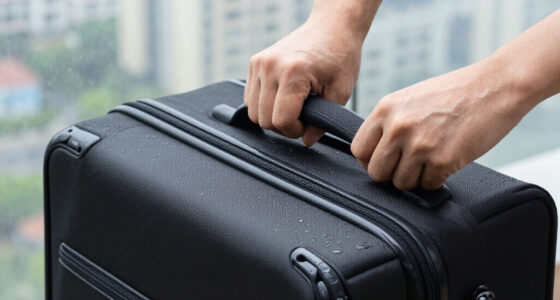
Roll the suitcase on a flat surface and across a threshold. Check that each wheel turns freely, tracks straight, and stays attached. Extend and retract the handle several times; it should lock into place without sticking. Lift the bag using its top and side handles to check that they feel secure. For spinner wheels, test turning in place and rolling in a straight line.
Tip:Four-wheel spinners are easy to move beside you on smooth floors, while two-wheel bags can be steadier on rough surfaces. Choose based on the routes you expect to walk.
Check: The suitcase rolls without wobbling or scraping, and its handles and wheel locks or retracting parts work reliably.
Step 5: Check access and storage features
Open every compartment and check the zippers, lining, compression straps, and any lock. See whether the main compartment opens fully enough for you to pack and retrieve items. Check that frequently needed items can go in an accessible pocket without making the exterior too deep. Confirm that any built-in lock is compatible with your travel needs and does not block access during inspection.
Tip:Do not assume a lock makes a bag secure or that every lock type is accepted in every location. Follow current airport and destination guidance.
Check: Zippers move smoothly, compartments hold your intended items, and no pocket or feature prevents the bag from meeting its size limit.
Step 6: Pack for your trip and weigh the bag
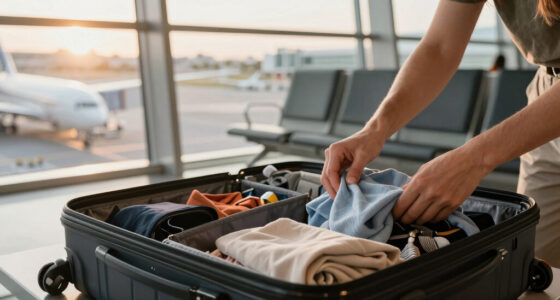
Place heavier items near the wheel end of a two-wheel suitcase or low and centered in a spinner. Use compression straps to keep clothing from shifting, but do not overfill the case or force the zipper closed. Keep documents, medication, valuables, and items needed during the flight accessible in line with airline and security rules. Weigh the packed bag and compare its weight with the airline’s allowance.
Tip:Check the current security rules for liquids, batteries, and restricted items on your route before packing them in either cabin or checked baggage.
Check: The suitcase closes without strain, rolls stably, and remains within the applicable weight limit.
Step 7: Test the packed bag before leaving
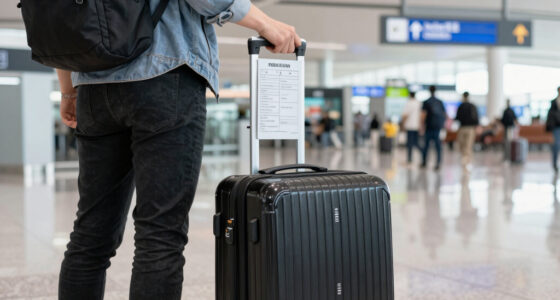
Roll the packed suitcase through a doorway and along the kind of flooring you expect at the airport. Lift it into a safe, low test position if you may need to place it in an overhead bin; do not lift above your safe reach. Recheck the exterior dimensions if packing has made a pocket bulge, and remove items if the bag is difficult to control or lift. Keep a backup plan for moving excess items to a personal item or checked bag.
Tip:Overhead bin space can run out even when a bag meets size rules. Gate staff may ask passengers to check a carry-on, so keep medication and valuables with you.
Check: You can roll and lift the bag safely, its packed shape remains within the airline limits, and essentials are accessible.
Common Mistakes to Avoid
- Treating “20-inch” as the full outside height. — Measure from the floor to the highest point, including wheels and fixed handle parts; check all three exterior dimensions.
- Using a generic airline size chart. — Check the current rules for the airline operating each flight and for the fare on your booking.
- Packing until the case bulges or the zipper strains. — Test the packed dimensions and weight; move items to another bag if the case expands beyond its permitted size.
- Assuming spinner wheels or a built-in lock work well without testing them. — Roll the case, test its handles and zippers, and verify that its features suit your route before travel.
Troubleshooting
Problem: The suitcase is taller or deeper than the airline limit.
Solution: Remove or reposition items that make pockets bulge, then measure again. If the empty bag itself exceeds the limit, use a smaller carry-on or check the suitcase.
Problem: The bag exceeds the weight allowance.
Solution: Weigh it on a level scale and remove heavier nonessential items. Move items to another bag only if that bag also meets its own size and weight limits.
Problem: A wheel wobbles, sticks, or scrapes.
Solution: Remove trapped debris and test the wheel again. If it still fails, arrange a repair or use another suitcase; a damaged wheel can affect both control and outside dimensions.
Problem: You cannot fit the packed case into the airline sizer.
Solution: Do not force it. Remove items or use a smaller bag. At the airport, ask airline staff about available checked-bag options and fees before proceeding.
What Success Looks Like
Your completed carry-on has measured exterior dimensions within the current limits for every airline on your itinerary. Its packed weight meets any applicable allowance, it closes without strain, and its wheels, handles, and zippers work. You can roll it under control and lift it safely. Keep essentials such as medication and valuables accessible in a bag that stays with you if the suitcase must be checked.
Next Steps
Before departure, recheck your airline’s baggage page in case its limits or your booking conditions changed. Place a luggage tag inside and outside the suitcase, keep a photo of it and its contents, and pack restricted items according to current security rules. After the trip, remove debris from the wheels, dry the case if it got wet, and store it with the handle retracted and zippers closed. Repeat the size and weight check whenever you change airlines or pack for a different itinerary.
Frequently Asked Questions
Does a 20-inch suitcase always count as a carry-on?
No. The label may describe the body alone, while airlines commonly assess the full outside dimensions, including wheels and handles. Compare measured height, width, and depth with the rules for your flight.
Do the wheels count toward carry-on dimensions?
Many airlines include wheels and protruding handles in the outside measurement. Check the carrier’s published method and measure the whole suitcase to avoid a size surprise.
Should I choose two wheels or four spinner wheels?
Choose based on where you will roll the bag. Spinners can turn easily on smooth airport floors; two-wheel cases may track steadily over uneven pavement. Test the style with a packed bag if possible.
What should I do if my carry-on is gate checked?
Before handing it over, remove medication, travel documents, valuables, batteries that must stay in the cabin, and anything you need during the flight. Follow the airline’s instructions about tagging and collection.