
TL;DR

Get travel and outdoor gear delivered free — and shop member deals
- Fast, free delivery on millions of items
- Access to Prime Big Deal Days deals on October 6–7
- Prime Video, Amazon Music and more included
Airline size rules for international flights include aircraft capacity, baggage limits, and safety standards. Staying aware helps you pack right and navigate regulations smoothly.
Ever shown up at the airport only to find your bag is just a little too big or your seat isn’t what you expected? Airline size rules for international flights aren’t just about passenger comfort—they’re about safety, efficiency, and regulations that can catch travelers off guard. Whether you’re a seasoned globetrotter or planning your first overseas trip, understanding these rules helps you pack smarter and avoid last-minute surprises.
In this guide, you’ll learn exactly what airline size restrictions cover—from baggage dimensions to aircraft types—and how recent changes in aircraft models and airport infrastructure influence these limits. Knowing the ins and outs means smoother check-ins, less stress, and a better travel experience.
What exactly are airline size rules for international flights?
Airline size rules for international flights encompass several critical aspects that directly affect your travel experience. They specify maximum dimensions and weights for both carry-on and checked baggage, which are essential for ensuring safety and efficient cabin management. For instance, airlines often cap carry-on bags at 22 x 14 x 9 inches (56 x 36 x 23 cm), but these restrictions are not arbitrary—they are dictated by the size of overhead bins and cabin space, which vary depending on aircraft type.
Aircraft capacity also plays a pivotal role. Larger planes like the Boeing 777 or Airbus A350 can carry over 300 passengers, necessitating stricter baggage limits and more precise safety regulations to manage weight distribution and balance. Smaller regional jets, with fewer seats, allow for slightly more relaxed baggage allowances but still adhere to safety standards that prevent overloading.
Understanding these parameters is crucial because they balance operational safety, passenger comfort, and airline efficiency. Overloading aircraft or exceeding baggage limits can compromise safety, cause delays, or incur costly fees. Therefore, airlines and regulators set these size rules carefully to optimize safety and service quality, while also considering airport infrastructure constraints. As a traveler, being aware of these standards helps you pack appropriately, avoid extra charges, and ensure your luggage fits within the aircraft’s safety envelope.
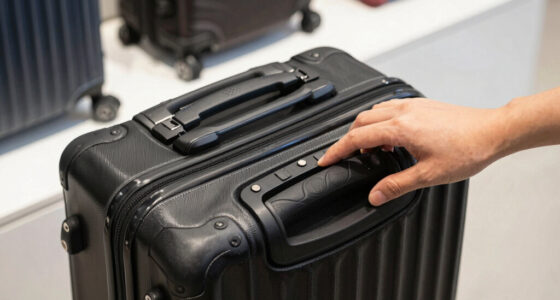
carry-on luggage with 22x14x9 inch dimensions
As an affiliate, we earn on qualifying purchases.
As an affiliate, we earn on qualifying purchases.
How aircraft size and type impact your travel experience
Aircraft size and type significantly shape your entire travel experience, influencing comfort, convenience, and baggage handling. Larger aircraft like the Boeing 787 Dreamliner or Airbus A350 are designed to maximize passenger capacity while maintaining safety and efficiency. These planes often feature larger overhead bins, but they also impose stricter baggage restrictions because more passengers mean more weight and space considerations. For example, a Boeing 787 typically allows carry-on bags of about 7 kg (15 lbs), but the larger capacity aircraft can sometimes enforce tighter limits to maintain balance and fuel efficiency.
Conversely, smaller aircraft such as regional jets are more agile and may have more lenient baggage policies, but often lack the same level of cabin comfort or amenities. The size and type of aircraft also determine the boarding process, seat pitch, and legroom—larger planes tend to offer more space but are often used on longer international routes where comfort is a priority.
Understanding how aircraft size impacts baggage limits helps travelers plan better. For instance, if you’re flying on a wide-body plane, you might be able to bring more luggage, but you should also be aware of stricter weight restrictions to avoid fees or delays. Moreover, the aircraft’s design influences how efficiently luggage is loaded and unloaded, which can affect your overall journey, especially during tight connections or busy airport times. Recognizing these nuances enables you to pack thoughtfully, select appropriate luggage, and anticipate the level of comfort and convenience your flight will offer.
airline approved checked baggage scale
As an affiliate, we earn on qualifying purchases.
As an affiliate, we earn on qualifying purchases.
Defining the progression of airline size regulations
Understanding airline size rules begins with recognizing the different factors that influence what is permitted on international flights. The progression starts with the aircraft’s design and capacity, which determine the physical space available for luggage and passenger seating. From there, safety standards set by aviation authorities establish maximum allowable weights and dimensions to ensure the aircraft’s stability during flight.
Next, airline policies adapt these regulations based on their fleet and route requirements. For example, an airline operating long-haul international flights with large aircraft will have specific baggage limits suited to those planes, while regional carriers may have more relaxed standards for shorter routes. As regulations evolve, especially with technological advances and infrastructure improvements, these limits can change, affecting what travelers can carry onboard.
Applying this knowledge, travelers should always check the specific airline’s policies before packing. By understanding the progression—from aircraft design to airline policies—you can better prepare your luggage, avoid surprises, and ensure a smoother travel experience. This progression emphasizes that airline size rules are not static but part of a dynamic system designed to balance safety, efficiency, and passenger convenience.
As an affiliate, we earn on qualifying purchases.
Frequently Asked Questions
Can I bring an oversized carry-on on international flights?
Most airlines allow oversized carry-ons only with prior approval or extra fees. However, the implications go beyond just paying extra; oversized bags may not fit in overhead compartments, leading to delays or the need to check the bag unexpectedly. Airlines enforce these rules to ensure safety, proper cabin management, and efficient boarding. To avoid inconveniences, always verify your airline’s specific baggage policies before packing and consider choosing a smaller, compliant bag. If you have a special need or larger item, contact the airline in advance to seek approval, which can save you time and prevent last-minute surprises at the gate.
How strict are airlines about baggage size and weight for international flights?
Airlines tend to enforce baggage size and weight limits quite strictly, especially on international routes where safety and aircraft performance are paramount. Exceeding these limits often results in additional fees or the need to re-pack at the airport, which can delay your journey. The strictness stems from safety regulations that govern aircraft weight and balance, as well as operational efficiency. For travelers, this means the importance of measuring luggage at home and packing smartly. Being within the prescribed limits not only avoids extra charges but also helps ensure your luggage can be safely loaded and unloaded, contributing to a smoother travel experience.
Do aircraft size rules differ between airlines?
Yes, aircraft size rules can vary between airlines due to differences in fleet composition, route networks, and safety policies. While international standards set by aviation authorities provide a baseline, individual airlines may have specific restrictions based on their aircraft models and operational procedures. For example, some low-cost carriers might have stricter baggage size limits to maximize cabin space, while full-service airlines may offer more generous allowances. Always review your airline’s specific baggage policies and aircraft details before booking or packing, as these differences can impact your packing strategy and overall travel experience.
Are there recent changes affecting airline size policies?
Recent technological advancements and infrastructure upgrades are influencing airline size and baggage policies. Newer aircraft models like the Boeing 777X and Airbus A350 offer increased capacity, fuel efficiency, and longer ranges, prompting airlines to expand their route offerings. However, these larger aircraft require compatible airport infrastructure, including larger gates and runway facilities. Additionally, health and safety protocols post-pandemic have led to changes such as increased spacing and reduced passenger limits, which indirectly affect baggage handling and aircraft capacity planning. Staying informed about these developments ensures travelers can adapt their packing and expectations accordingly, avoiding surprises and making smarter travel choices.
international flight baggage weight scale
As an affiliate, we earn on qualifying purchases.
As an affiliate, we earn on qualifying purchases.
Conclusion
Knowing airline size rules turns a potential headache into a smooth part of your trip. Packing within limits and understanding aircraft choices saves time, money, and stress. Next time you travel internationally, picture your luggage fitting perfectly in the overhead—and your journey feeling a little easier.
Remember: a small detail like accurate measurements can make all the difference. Keep your bags within size limits, stay updated, and travel smarter.
Fall Picks
fall essentials
As an affiliate, we earn on qualifying purchases.