TL;DR

Get travel and outdoor gear delivered free with Prime
- Fast, free delivery on millions of items
- Prime Video, Amazon Music and more included
- Member-only deals all year
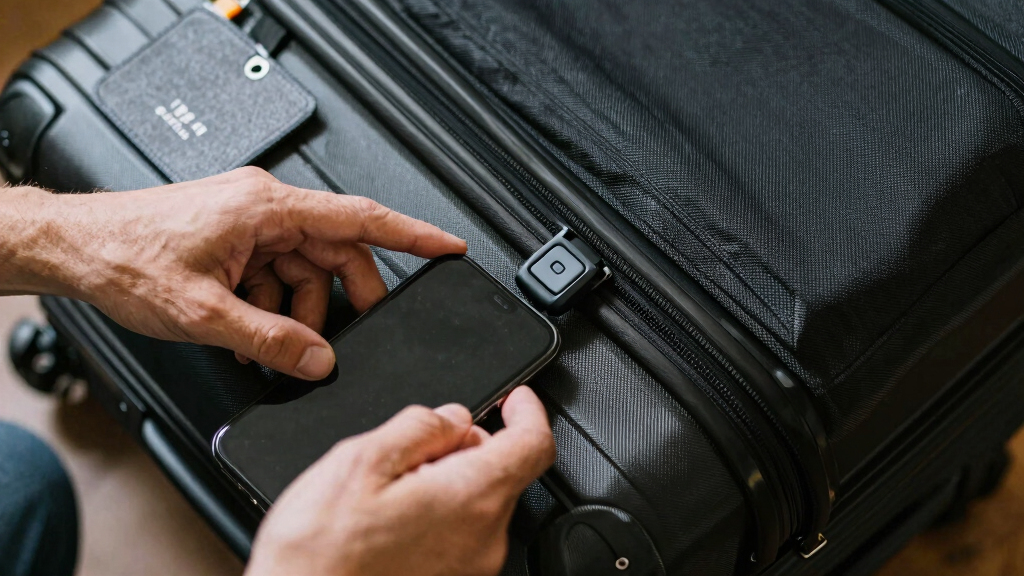
Luggage trackers that work with your phone mainly rely on Bluetooth crowdsourcing or cellular GPS. Apple’s AirTag dominates for iPhone users, while Samsung’s SmartTag2 is best for Galaxy owners. Android users now have more options thanks to Google’s Find My network, but the ecosystem lock-in remains key.
Imagine arriving at your destination, eager to grab your checked bag, only to find it missing. It’s frustrating. But what if you could see exactly where your luggage is, right from your phone? That’s where luggage trackers come in.
They’ve evolved beyond simple tags. Today’s best options use your phone’s ecosystem—Apple, Samsung, or Android—to ping your baggage’s location. The right choice depends on what device you carry daily. In this guide, I’ll walk you through the most reliable trackers, their features, and how they fit into your travel routine.
Your phone ecosystem—Apple, Samsung, or Android—dictates the best luggage tracker for you.
Bluetooth crowd networks like Apple’s Find My and Google’s new Android network offer reliable, subscription-free luggage tracking in dense areas.
GPS trackers are better for remote or off-grid locations but come with ongoing costs and recharging needs.
Most trackers are durable enough for travel, with IP67 ratings common among top models.
Always verify airline policies before packing trackers in checked luggage, but most now permit them.
Why Your Phone Ecosystem Matters for Luggage Tracking
Each phone ecosystem has its own tracking network, which is the backbone of reliable luggage location. For iPhone users, Apple’s Find My network taps into over a billion Apple devices worldwide. Samsung’s SmartThings Find leverages Samsung Galaxy phones, and Google’s Find My Device network connects Android phones.
Because these networks depend on nearby phones to report location, your tracker’s effectiveness hinges on how many compatible devices are around. At airports and city centers, dense crowds mean better coverage. In remote areas, tracking can become less precise or delayed.
For example, an AirTag in a busy airport can be pinpointed within a few meters, thanks to Apple’s vast network. Meanwhile, a Tile in an area with fewer Tile users might struggle to give you updates. That’s the ecosystem lock-in in action—your choice of phone directly influences how well your luggage can be tracked.
As an affiliate, we earn on qualifying purchases.
How Bluetooth Crowdsourcing and GPS Differ for Reliable Tracking
Bluetooth trackers like AirTag, Tile, and Samsung SmartTag rely on crowdsourcing—your phone pinging the tracker to nearby devices, then relaying its location through a network. They don’t have GPS chips. This means they need other people’s phones to work.
GPS trackers, like Tracki or LandAirSea, use cellular signals to send real-time location updates. They work anywhere with cellular coverage but cost more—often $15–$25 monthly—and need recharging.
Imagine your luggage gets lost in a remote mountain region. A GPS tracker can still report its location via satellite, but a Bluetooth-only tracker like AirTag can’t. Conversely, in a busy city or airport, Bluetooth trackers often find your bag faster because of the dense phone crowd.
As an affiliate, we earn on qualifying purchases.
The Best Phone-Compatible Luggage Trackers in 2025
Here’s a clear comparison of the top trackers based on phone ecosystem, features, and price:
| Tracker Model | Price Range | Size & Weight | Compatibility | Range & Accuracy | Battery & Rechargeability | Water Resistance | Special Features |
|---|---|---|---|---|---|---|---|
| Apple AirTag | $29 (single), $99 (4-pack) | 1.26″ diameter, 11g | iPhone only (Find My) | Ultra Wideband (UWB) for precision within centimeters | CR2032 coin cell, ~1 year, user-replaceable | IP67 water/dust resistant | Item sharing, Precision Finding, tight integration with Apple ecosystem |
| Samsung Galaxy SmartTag2 | $29 | 1.5″ x 0.7″, 15g | Samsung Galaxy only | Bluetooth + UWB on compatible phones | Replaceable battery, up to 500 days | IP67 | SmartThings routines, button for smart home commands |
| Google Find My Device Trackers (Chipolo, Pebblebee) | $28–35 | Credit card size or small keyring | Android only (Find My Device network) | Bluetooth, crowdsourced network | Rechargeable or replaceable batteries, 6–12 months | IP67 or IPX7 | Most now support multi-device sharing, some have rechargeable options |
| Tile Mate / Slim / Pro | $20–35 | Varies: 1.5″ circle, slim card | Cross-platform (iOS + Android) | Bluetooth, network ~400 ft (Pro) | Replaceable batteries; Tile Pro lasts about a year | IP53/IP67 depending on model | SOS alert, community finding network much smaller than Apple/Google |
Choosing depends on your phone. iPhone users should prioritize AirTag—its vast network and UWB precision make it unbeatable. Galaxy owners get SmartTag2 for tight integration. Android users now have better options, but the network size still lags behind Apple and Google.
Bluetooth luggage tracker for Android
As an affiliate, we earn on qualifying purchases.
As an affiliate, we earn on qualifying purchases.
Recent Advances That Make Tracking Smarter and More Reliable
In 2024, two big shifts changed luggage tracking:
- Google’s Find My Device network rolled out, creating an Android equivalent to Apple’s. It’s crowdsourced, encrypted, and grows with every new Android device, making Android tracking more viable globally.
- Airline support for AirTags expanded. Major airlines now accept live location links sent via iOS, turning your AirTag into an airline-approved bag locator. No more need to rely solely on airport staff or lost baggage counters.
Plus, Apple and Google announced a standard warning system—your phone alerts you if an unknown tracker is traveling with you. This helps prevent stalking and unauthorized tracking, adding a safety layer to luggage monitoring.
GPS luggage tracker for remote locations
As an affiliate, we earn on qualifying purchases.
As an affiliate, we earn on qualifying purchases.
Will Your Tracker Survive the Airport and Weather?
Most trackers are built tough enough for travel. IP67 water resistance and dustproof ratings mean they shrug off rain, splashes, and dust storms. For example, the SmartTag2 can handle a downpour on the runway or a spilled coffee in the car.
Battery life varies. AirTags last about a year on a CR2032 coin cell, which is user-replaceable. SmartTag2 can last up to 500 days with a replaceable battery. Rechargeable options like Pebblebee typically need charging every few months.
In reality, your luggage might get thrown, dragged, or exposed to rain. Durable design and sealed batteries keep your tracker working through it all—just check the IP rating before buying.
Do You Need a Subscription or Extra Fees?
Most Bluetooth trackers don’t require subscriptions. Apple, Samsung, and Google’s crowd networks are free to use. You just buy the device and set it up.
GPS trackers, however, often need cellular plans. That means monthly fees—around $10–$20—plus recharging or replacing batteries. If you prefer a no-cost, hassle-free option, Bluetooth trackers are your best bet.
For example, an AirTag costs less upfront and has no ongoing fees, making it perfect for luggage. GPS trackers are better if you often travel to remote areas without dense phone networks.
What Should You Do Before Buying a Luggage Tracker?
Check your phone’s ecosystem — iPhone, Android, or mixed household. That determines whether AirTag, SmartTag2, or a cross-platform Tile is best.
Verify airline policies. Most now allow Bluetooth trackers in checked luggage, but it’s always good to double-check. Also, consider where you travel most—urban hubs versus remote wilderness.
Decide on the features you want: precision locating, water resistance, sharing, or rechargeable batteries. Matching your needs to the right device saves money and frustration.
Frequently Asked Questions
Can I put an AirTag in checked luggage? Is it allowed?
Yes. Airlines and regulators permit small Bluetooth trackers like AirTag in checked bags. They’re fully legal and TSA-compliant, especially since airlines are now integrating AirTag location links into their baggage systems.
Do luggage trackers actually work? Will one find my lost bag?
Generally, yes—especially in airports and cities with dense phone networks. Bluetooth trackers rely on crowdsourcing, so they’re most effective where many compatible phones are nearby. Remote areas may pose challenges, but they’re still your best shot for quick recovery.
What’s the Android equivalent of an AirTag?
Samsung’s SmartTag2 is the closest, working within the Galaxy ecosystem. For broader Android use, Google’s Find My network now supports third-party trackers like Chipolo and Pebblebee, which tap into the Android crowd source.
Do I need a subscription for these trackers?
Most Bluetooth trackers and the crowdsourced networks they use are free. GPS trackers, however, typically require a cellular plan, costing around $10–$20 monthly. Choose based on how remote your travels frequently take you.
How long do batteries last, and are they replaceable?
AirTags last about a year on a CR2032 coin cell, which you can replace yourself. SmartTag2 batteries last up to 500 days. Rechargeable devices like Pebblebee often need charging every 2–3 months. Check the specs before buying for your travel style.
Conclusion
Choosing the right luggage tracker isn’t just about features; it’s about matching it to your phone’s ecosystem and travel habits. With recent tech advances, tracking your baggage has become more reliable and seamless than ever—if you pick the right device.
Think of it as adding a safety net to your travel routine. Your next trip might just include a connected bag that tells you exactly where it is—no stress, no surprises.
Halloween Picks
halloween
As an affiliate, we earn on qualifying purchases.