TL;DR

Get travel and outdoor gear delivered free with Prime
- Fast, free delivery on millions of items
- Prime Video, Amazon Music and more included
- Member-only deals all year
A quality digital luggage scale, accurate within 0.1 lb, helps you stay under airline weight limits. Weigh your bags at home and pack smarter to avoid costly fees. A $10 scale can save you hundreds.
Imagine arriving at the airport, ready to check in, only to discover your bag exceeds the weight limit. The surprise fees? Usually $50 to $200+ per bag. That sticker shock can ruin your trip before it even begins.
Investing in a good luggage scale costs as little as $8 and can pay for itself in one trip. Whether you’re traveling domestically or heading overseas, knowing your bag’s weight keeps you in control—no more last-minute repacking or unexpected charges.
Choose a digital luggage scale with 0.1 lb / 50 g accuracy and at least 110 lb / 50 kg capacity.
Always weigh your bag at home, leaving a buffer of 1–2 lbs below the airline limit.
Distribute heavy items into your carry-on or personal bag to avoid overweight charges.
Use the weight lock and hold functions for precise readings—don’t rely solely on quick lifts.
Stay aware of airline and country-specific carry-on weight limits, which are tightening worldwide.
Best Luggage Scales for Avoiding Overweight Fees
Arriving at check-in to discover your bag exceeds the weight limit is a $50–$200+ sting per bag — enough to sour a trip before it begins. A quality digital luggage scale, accurate within 0.1 lb, costs as little as $8 and can pay for itself in a single avoided fee. Weigh at home, pack smarter, stay in control.
What to Look For in a Luggage Scale
Accuracy is king — even small errors can push you unknowingly over the limit. Beyond that, the right feature set turns a $10 gadget into a dependable travel companion. Here is what actually matters before you buy.
Accuracy ±0.1 lb / 50 g
The most important spec. Small inaccuracies cause surprise fees or forced repacking at the airport. High precision lets you trust the reading near tight limits.
110 lb / 50 kg Minimum
Covers every airline limit with room to spare. High-capacity 165 lb / 75 kg models are gaining fans among overseas movers and heavy packers.
Weight Lock / Hold
You can’t read the screen while lifting. The display freezes the reading — often with a beep — once the bag is steady, killing fluctuations.
Tare + lb/kg Unit Toggle
Tare zeroes out a strap or container. One-tap unit switching keeps you fluent whether the airline posts limits in pounds or kilos.
Backlit LCD Display
Essential in dim hotel rooms and on early-morning departures. A clear, glowing readout reduces misreading errors when it counts.
CR2032 or USB-Rechargeable
Most run on a coin cell with auto-off to save battery. USB-rechargeable models ($15–$25) are the fast-growing eco-friendly segment.
How to Use a Luggage Scale Like a Pro
The way you lift and read the scale directly affects accuracy. Four simple steps — practice them at home so the method is automatic when it counts at the airport.
Loop the strap
Wrap it around the luggage handle, secure and snug. Slipping straps mean inaccurate readings.
Lift smoothly
Raise the bag off the ground with a steady, controlled motion. Jerks skew the measurement — keep your body stable.
Hold until it locks
Don’t rush. Wait for the display lock or beep, and activate the hold function to stabilize the reading.
Compare to the limit
48 lb against a 50 lb limit? Safe. 52 lb? Shift dense items to your carry-on or wear the bulky jacket.
Digital vs. Analog — Which Fits Your Travel Style?
Digital scales dominate for a reason, but analog still has a niche. The honest breakdown:
| Feature | Digital Scale | Analog Scale |
|---|---|---|
| Accuracy | ✓ Within 0.1 lb / 50 g | ~ Less precise, often ±0.5 lb |
| Readability | ✓ Clear digital display, unit toggle | ✗ Dial interpretation is subjective and error-prone |
| Power | ~ Battery (usually CR2032) or USB | ✓ None — mechanical springs |
| Durability | ~ Fragile if dropped, needs batteries | ✓ Robust, shrugs off rough handling |
| Price Range | $8–$30 | $5–$15 |
| Best For | ✓ Frequent flyers, strict limits, precision packers | ~ Casual use, backup scale, battery-free purists |
One Fee Buys the Scale — Several Times Over
With fee inflation pushing overweight charges ever higher across major US carriers, the cost-avoidance case for a $10 scale keeps getting stronger.
A single overweight fee typically runs 3–10× the price of the scale that prevents it. Fees apply per bag, each way — round trips double the exposure.
The Avoided-Fee Ledger
Keep Bags Below Limits — No Last-Minute Surprises
Airport scales and home scales can disagree. These four habits build a safety margin into every trip.
Weigh twice — before and after packing
Check the empty bag, then the fully packed one including exterior pockets. No bathroom scale? Weigh yourself, then yourself holding the bag, and subtract.
Leave a 1–2 lb buffer
Calibration and environment differ between scales. Aiming for 48 lb against a 50 lb limit keeps you safe even if readings don’t perfectly align.
Distribute weight deliberately
Shoes and books ride in the checked bag; electronics, toiletries and liquids go carry-on. Even distribution also protects zippers and handles.
Cut the dead weight
Duplicate chargers, extra clothes, bulky souvenirs add grams without value. Overweight at the gate? Shift dense items to your personal item — far cheaper than the fee.
Stricter Checks, Smarter Scales
Airlines — especially budget carriers like Spirit, Frontier, Ryanair and easyJet — are weighing carry-ons more aggressively, with 7–10 kg limits now enforced at the gate. USB-rechargeable scales are replacing coin-cell models, and high-capacity 165 lb / 75 kg units serve travelers moving overseas. The scale isn’t just for checked bags anymore — and it’s TSA-permitted in both.
Pack
Fill the bag completely, exterior pockets included
Weigh
Lift smoothly, wait for the lock or beep
Adjust
Shift dense items to carry-on if you’re over
Buffer
Land 1–2 lb under the posted airline limit
Save
Walk past the fee desk — $50–$200+ stays in your pocket
What to Look for in a Luggage Scale to Get Accurate Readings
When shopping for a luggage scale, accuracy is king. Look for models that measure within approximately 0.1 lb / 50 g. This precision is crucial because even small inaccuracies can cause you to unknowingly exceed weight limits, leading to unexpected fees or having to repack at the airport. High accuracy ensures you can trust your measurements, especially when nearing tight weight restrictions.
Capacity matters too. Most scales max out at 110 lb / 50 kg—more than enough for any airline limit. Features like a weight lock or hold function are valuable because they allow you to stabilize the reading once the bag is steady, preventing fluctuations from affecting your measurement. This is especially helpful if your luggage shifts or if you need a moment to note the reading.
Additional features like a backlit LCD improve readability in dim airport lighting, reducing errors. A lightweight, compact design makes it easy to carry and store, which is essential for travelers who pack light and want minimal added bulk. Reliable power sources—most use CR2032 coin cells—are important to ensure the scale remains ready when you need it, though USB-rechargeable options are increasingly popular for convenience and sustainability.
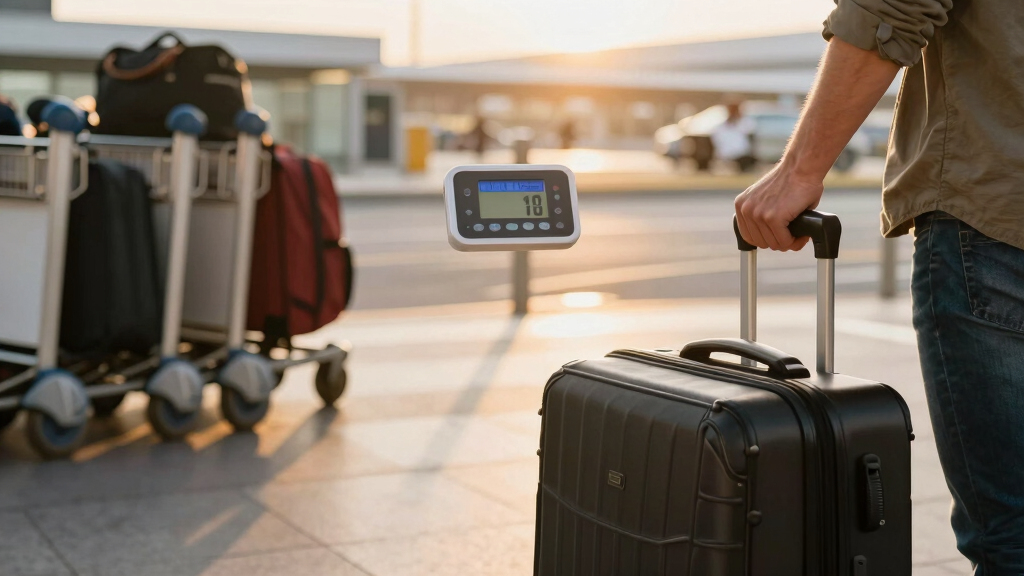
For example, the Etekcity digital hanging scale is a budget-friendly pick that ticks all these boxes, weighing just 3.5 oz and offering 110 lb capacity with 0.1 lb accuracy. Choosing a model with these features means you’ll have dependable, precise measurements that help prevent surprises at check-in and maintain your travel budget.
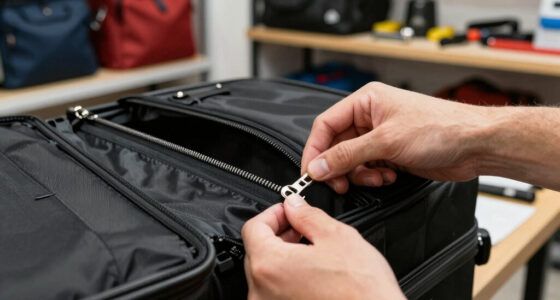
digital luggage scale with 110 lb capacity
As an affiliate, we earn on qualifying purchases.
As an affiliate, we earn on qualifying purchases.
How to Use a Luggage Scale Like a Pro — 4 Simple Steps
- Loop the strap around your luggage handle. Ensure it’s secure and snug to prevent slipping, which could lead to inaccurate readings.
- Lift the bag smoothly off the ground. Use a steady, controlled motion to avoid jerks that might skew the measurement. Keep your body stable for consistent results.
- Hold until the display locks or beeps. Don’t rush this step; patience ensures an accurate reading. If your scale has a hold function, activate it to stabilize the measurement before reading.
- Read the weight, then compare it to your airline’s limit. If you’re close to the limit, consider redistributing items or removing unnecessary weight. For example, if your bag reads 48 lbs and your airline limit is 50 lbs, you’re within safe margins. But if it’s 52 lbs, shifting heavier items into your carry-on or wearing bulky clothing can help avoid extra fees.
Remember, consistent technique matters. The way you lift and read the scale affects accuracy. Practicing a few times at home can help you develop a reliable method for when it counts at the airport.
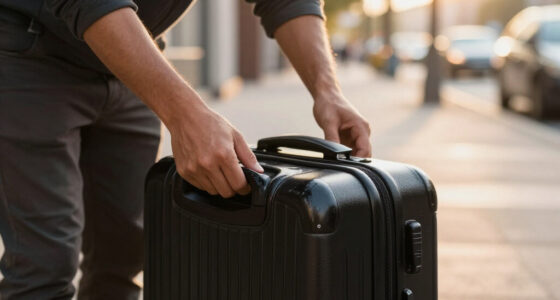
accurate travel luggage weight scale
As an affiliate, we earn on qualifying purchases.
As an affiliate, we earn on qualifying purchases.
Comparison Table: Digital vs. Analog Luggage Scales — Which Fits Your Travel Style?
| Feature | Digital Scale | Analog Scale |
|---|---|---|
| Accuracy | Within 0.1 lb / 50 g | Less precise, often ±0.5 lb |
| Readability | Easy digital display, unit toggle | Requires interpretation of dial, which can be subjective and error-prone |
| Power | Battery (most use CR2032) | None, mechanical springs |
| Durability | Fragile if dropped, needs batteries | Robust, no batteries, less susceptible to damage from rough handling |
| Price Range | $8–$30 | $5–$15 |
As an affiliate, we earn on qualifying purchases.
Smart Tips to Keep Your Bags Below Limits Without Last-Minute Surprises
- Weigh your bag at home—before packing and again after. Use your bathroom scale by weighing yourself with and without the bag, then subtract. This double-check minimizes surprises and helps you adjust your packing plan accordingly.
- Leave a 1–2 lb buffer below the airline limit. Airport scales and home scales can differ slightly due to calibration or environmental factors, so a small margin ensures you’re safe even if the readings aren’t perfectly aligned. This buffer is a practical safeguard against unexpected overages and fees.
- Distribute weight evenly. Heavy items like shoes and books should go into the checked bag, while electronics, toiletries, and liquids stay in your carry-on. Proper distribution not only helps you stay within weight limits but also maintains balance, making your luggage easier to handle and reducing strain on zippers and handles.
- Remove unnecessary items. Extra clothes, duplicate chargers, bulky souvenirs, or non-essential gadgets add weight without value. Packing only what you need reduces the risk of exceeding limits and makes your bag lighter and more manageable. Think of it as smart shopping — less clutter, less stress.
For example, if your airline’s limit is 50 lbs, aim to pack at 48 lbs at home. This way, even if your scale is slightly off or if you pick up a few last-minute items, you’ll still remain within the acceptable range, avoiding costly overweight fees and last-minute repacking at the airport.
best luggage scale for avoiding overweight fees
As an affiliate, we earn on qualifying purchases.
As an affiliate, we earn on qualifying purchases.
Latest Trends: USB-Rechargeable Scales & Stricter Weight Checks
USB-rechargeable luggage scales are transforming travel prep by offering eco-friendly, cost-effective alternatives to traditional battery-powered models. These scales often feature a built-in rechargeable battery, eliminating the need for disposable coin cells, which is better for the environment and reduces ongoing costs. They typically cost $15–$25, making them a worthwhile investment for frequent travelers who want reliable, hassle-free measurements.
Airlines are stepping up their weight checks, especially on budget and international flights, where carry-on limits of 7–10 kg are common. Stricter enforcement means that travelers who rely on guesswork or outdated scales risk being caught off guard at the gate, incurring fees or having to repack. Having an accurate, portable scale allows you to verify your baggage weight beforehand, reducing stress and avoiding delays.
With fee inflation—overweight baggage in the US can cost $50–$200+—investing in a high-capacity, accurate scale becomes a smart move. Models capable of handling up to 165 lb / 75 kg are gaining popularity among travelers with heavier loads, shipping needs, or those who prefer to be over-prepared rather than caught off guard by strict weight limits. Staying ahead of these industry trends empowers you to travel confidently and avoid unexpected costs.
Frequently Asked Questions
Are luggage scales accurate?
Yes, quality digital luggage scales are accurate within about 0.1 lb / 50 g. Accuracy depends on a steady lift and fresh batteries. Cheap models may be less precise, so invest in a reputable brand for peace of mind.
How do you properly weigh a bag with a luggage scale?
Loop the strap around your luggage handle, lift steadily, and hold until the display locks or beeps. Read the weight and compare it to your airline’s limit. Adjust as needed by redistributing or removing items.
What happens if my bag exceeds the weight limit at the airport?
You can pay the overweight fee—often $50–$200—or reduce weight by shifting items into your carry-on, wearing heavier clothes, or removing unnecessary stuff. Repacking at the airport adds stress but can save you money.
Can I use a bathroom scale instead of a luggage scale?
Yes, by weighing yourself with and without the bag, then subtracting. It’s less precise and awkward, but it works in a pinch. A dedicated luggage scale is more straightforward and reliable.
Do airlines weigh carry-on bags?
Increasingly yes, especially on budget airlines and international flights. Limits of 7–10 kg are common. A good scale helps you stay within these limits and avoid gate rejections or fees.
Conclusion
Carrying a good luggage scale is a small investment that pays off big time. It keeps you confident, prepared, and, most importantly, money-safe.
Next time you pack, weigh smart. Visualize the airport scene—bags in hand, hefty fees avoided. That’s the real travel win.
Evergreen bestsellers Picks
bestsellers
As an affiliate, we earn on qualifying purchases.