
TL;DR

Get travel and outdoor gear delivered free — and shop member deals
- Fast, free delivery on millions of items
- Access to Prime Big Deal Days deals on October 6–7
- Prime Video, Amazon Music and more included
Carry-on luggage with spinner wheels uses four wheels that rotate in multiple directions, so you can roll the case upright beside you on smooth floors. Before you buy, compare its exterior size—including wheels and handles—and empty weight with the strictest airline rules on your itinerary; choose two wheels instead if rough sidewalks or slopes are a regular part of your trip.
A spinner carry-on can glide beside you through an airport, then suddenly feel like a shopping cart with a wobbly wheel on a cobbled street. That contrast tells you what matters: four-wheel maneuverability is useful, but it doesn’t make every bag right for every route.
This guide explains how spinner wheels work, where they help, and where two-wheel luggage can do better. You’ll also get a practical way to check airline dimensions, weight, durability, and packing layout before you spend money. A bag labeled “carry-on size” is not guaranteed to fit every airline or fare.
Think of the decision as matching a suitcase to your real trip, not to a product label. A smooth terminal and an old-town street ask different things of your wheels.
Measure the full outside dimensions of your packed carry-on, including wheels and handles; don’t rely on the advertised shell size.
Check current cabin-bag and weight rules for every operating airline and fare on your itinerary.
Choose spinner wheels for easy movement on smooth floors; compare two-wheel cases for rough streets, slopes, and exposed travel routes.
Inspect wheel attachment, handle wobble, zippers, repair options, and warranty coverage before buying.
Compare empty weight and expanded dimensions with your packing needs and the airline’s limits.
What spinner wheels do—and why airport floors suit them
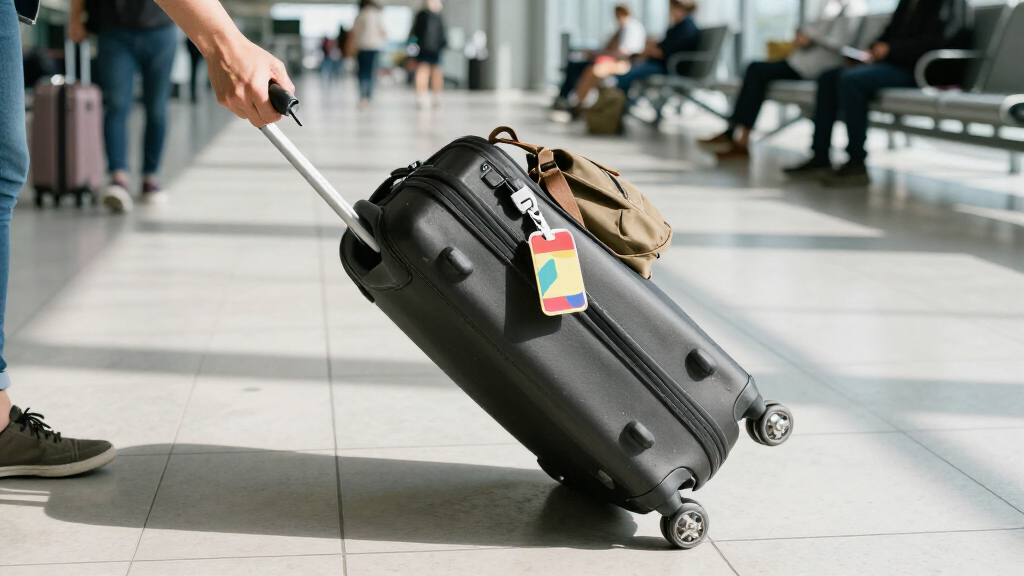
Carry-on luggage with spinner wheels has four wheels that rotate in multiple directions, letting the case roll upright beside or in front of you. Unlike a two-wheel case, which you usually tilt and pull behind, a spinner can change direction without a wide turn. That makes it easier to weave through a boarding queue or pause beside a café table.
On a polished terminal floor, spinner luggage has four points of contact with the ground and can roll in any direction; many models use four wheels that rotate in multiple directions. The feel is more like guiding a small cart than towing a suitcase. If you’re walking to Gate 32 with a coffee in one hand and your passport in the other, being able to nudge the bag sideways can make the trip less awkward.
The trade-off is that you need room beside the case, and the wheels project beyond its body. In a packed aircraft aisle, you may still need to pull or lift it; in a narrow hotel corridor, a bag rolling freely can bump into walls. Easy movement is the benefit, not a promise that you’ll never lift the bag.
A spinner can also roll away on a slope if you let go. Set it on level ground, keep a hand on the handle in a queue, and don’t treat upright standing as a parking brake. If you’re choosing between spinner luggage and a two-wheel case, picture the whole route—not just the terminal.
carry-on luggage with spinner wheels
As an affiliate, we earn on qualifying purchases.
As an affiliate, we earn on qualifying purchases.
When spinner wheels beat two wheels—and when they don’t
Spinner wheels are usually easier on smooth, level floors, while two-wheel luggage tends to track more steadily over rough ground. The better choice depends on the surfaces and spaces you’ll cross, not on which design looks more modern. A central-station concourse and a cobblestone lane are two very different tests.
| Trip condition | Spinner carry-on | Two-wheel carry-on |
|---|---|---|
| Wide airport terminal | Rolls upright and turns easily beside you | Needs tilting and pulling behind |
| Crowded queue or tight corner | Can shift sideways without a broad turn | May need more room to swing around |
| Cobblestones or cracked sidewalks | Small exposed wheels can snag or rattle | Larger wheels often track more reliably |
| Sloped pavement | May roll away if released | Often steadier when tilted and held |
| Maximum packing space | Wheel housings can take up room | May have more interior space in a similar shell |
For example, if your trip runs from a parking garage through an airport to a hotel beside a paved plaza, spinner wheels can save repeated tilting. If your hotel sits up a narrow lane of uneven stone, two larger wheels may offer a calmer ride. One design makes turning easier; the other can handle rough patches better.
Don’t assume that four wheels make a suitcase more durable or lighter. Wheels add weight and sit where knocks can reach them, while a two-wheel model may protect its wheels more within the case body. If your route is mostly indoors, a spinner’s convenience can outweigh those limits; if it includes long stretches outdoors, test wheel size and construction carefully.
As an affiliate, we earn on qualifying purchases.
How to check whether a spinner carry-on fits your flight
Check the strictest airline size and weight limits on your itinerary, then measure the complete bag with its wheels and handles. There is no single worldwide carry-on allowance, and a bag marketed as “carry-on size” may not qualify on every airline, route, or fare. Treat the operating carrier’s current rules as the answer—not a retailer’s general label.
- List every operating airline. A connecting flight can use a smaller aircraft or a different carrier with tighter cabin-bag limits. Check each leg, including basic-economy restrictions.
- Find the cabin-bag dimensions and weight cap. Rules may differ by fare, route, and aircraft. Check the airline’s official site close to booking and again before departure.
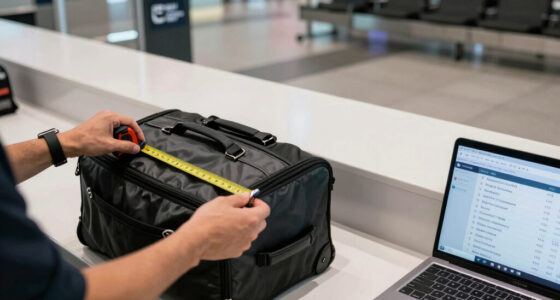
- Measure the outside of the packed case. Include the wheels, handles, and any other protruding parts. Measure height, width, and depth at their widest points.
- Compare empty weight with the allowance. A heavy case leaves less room under an airline weight cap for clothes, shoes, and a charger.
- Leave a margin when you can. A bag that barely meets a published limit may be harder to fit in a sizer if its soft sides bulge or you expand it.
For instance, a traveler flying one airline outbound and a regional partner home shouldn’t check only the first flight’s limit. A case that fits the main cabin sizer can still be too large for the return segment. Verify visa, entry, and health requirements with official sources before booking as well; those rules can change independently of your luggage plans.
Dimensions and weight limits vary, so don’t rely on an assumed universal maximum or a product name alone. If the case has an expansion zipper, compare its expanded dimensions too. Expansion gives you packing room, not a free pass through a strict sizer.
As an affiliate, we earn on qualifying purchases.
Which wheel, handle, and shell details deserve a close look
Look for firmly attached wheels, a steady telescoping handle, and materials that suit the way you travel. These parts take daily wear: wheels bump curbs, handles twist in crowded aisles, and shells collect the scuffs and knocks of overhead-bin life. A glossy finish can look sharp under store lights, but practical construction matters more after a dozen trips.
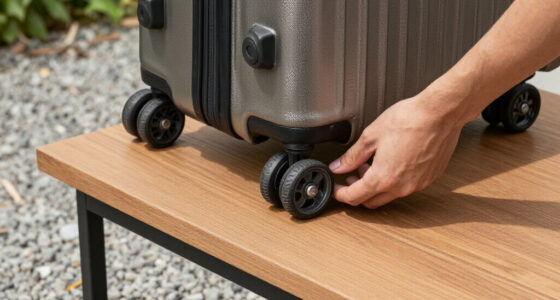
Test each wheel by rolling the empty case on a flat floor, turning it in several directions, and listening for scraping or uneven rattling. A wheel that rolls smoothly in a shop may still struggle on rough pavement, so consider wheel size and how much of the assembly is exposed. Check whether the wheels appear replaceable and whether the maker offers repair guidance or parts; when a wheel is damaged, repairability can determine whether a suitcase gets a second life or becomes unusable. Larger wheels may cope better with rougher flooring, while recessed wheels can have more protection but take up interior room.
Extend and retract the handle a few times. It should move without sticking, and some play is normal, but a handle that wobbles sharply can make a loaded bag feel difficult to guide. That matters because you steer and stabilize the case through this connection: excess movement can make small corrections feel imprecise, especially when the bag is heavy. Then inspect zippers, seams, locks, and grab handles. A weak zipper can turn a manageable weekend trip into a scramble at the baggage sizer.
Hard shells create a firm barrier and wipe clean easily, but they can show scratches or crack after a hard impact. Soft-sided bags may offer exterior pockets and some flexibility, though contents can have less protection from crushing or moisture. The choice is a trade-off rather than a simple durability ranking: a firm shell can shield packed items from pressure, while a flexible bag may be easier to fit into a crowded space but can bulge beyond its stated dimensions. Picture packing a laptop and glass souvenir: padding and careful placement matter more than choosing a shell type by reputation alone.
Warranty wording deserves a real read, too. Check what damage is covered, how long coverage lasts, and whether repairs are available where you live. A warranty that excludes ordinary wheel wear may offer less help than a repairable wheel assembly and accessible service. The practical value is in how easily you can get a specific failure fixed, not simply in the number of years printed on the warranty.
lightweight carry-on with four wheels
As an affiliate, we earn on qualifying purchases.
As an affiliate, we earn on qualifying purchases.
How to pack a spinner without wasting space or adding risk
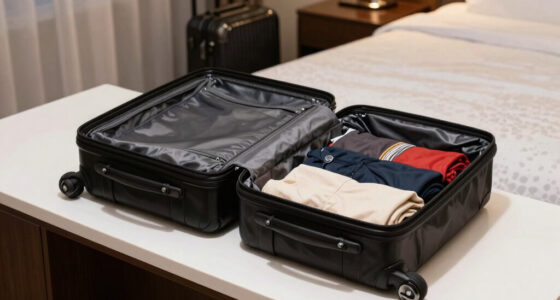
Pack by weight and shape, and leave room for the wheel housings and the airline’s size limit. Spinner wheels and their mounting points can reduce useful space inside the shell, even when two cases have similar outside dimensions. This means exterior size alone doesn’t tell you how much clothing a bag holds: the wheel structure can create awkward corners that don’t usefully fit bulky items. A neatly packed case can still become too bulky if an expansion panel is full or a soft side bows outward.
Imagine a three-night work trip: put shoes at the wheel end, roll shirts tightly beside them, and keep a laptop in a padded sleeve near the handle side. That arrangement keeps hard items from pressing against delicate gear and makes the case easier to balance. Balance matters because a top-heavy or unevenly loaded spinner is more likely to tip when standing and can feel less controlled as you steer it. Use pockets for things you need at security, but don’t stuff them until the front panel bulges.
Compare the bag’s empty weight with the airline’s cabin weight allowance before packing. A heavier spinner leaves less capacity for your belongings, particularly on flights with a stated cabin weight cap. For example, if two bags have similar outside dimensions but one is noticeably heavier empty, that difference comes directly out of the allowance available for your clothes and other items. Weigh the packed bag at home if the limit is tight; a bathroom scale is better than guessing from how heavy the handle feels.
- Check expansion before you rely on it. Measure the expanded case and verify it still fits the applicable rules. An expanded bag may have more capacity but can cross a size limit, so the extra space is useful only if you can still take it into the cabin.
- Keep fragile items cushioned. Hard shells don’t prevent every impact, and soft-sided bags may offer less protection from crushing. Place delicate items away from the edges and wheel housings, where knocks can be transmitted into the case.
- Keep the load balanced. Uneven packing can make a standing spinner tip or roll more easily on a sloped surface. Distributing weight also reduces the effort needed to guide it.
- Clean the wheels after rough trips. Remove hair, grit, and threads that can snag or create a gritty grinding sound. Debris can interfere with smooth rolling and, if left in place, contribute to wear.
USB ports, compression panels, recycled fabrics, and built-in trackers are available on some models, but their value depends on your routine. A USB port generally needs a separate power bank, and product designs vary. Check current product details and airline battery rules before relying on a charging feature; keep any removable battery accessible and follow the carrier’s current policy.
Who should choose spinner luggage—and who should skip it
Choose a spinner if your trips involve smooth floors, frequent tight turns, and a bag you can keep beside you. Skip it, or compare two-wheel alternatives, if your route regularly crosses cobblestones, broken sidewalks, steep slopes, or long outdoor stretches. The right choice is about your path from home to hotel, not just the airport in the middle.
Take a traveler with a short connection and a crowded terminal. A spinner can pivot beside them while they check a gate display, then roll alongside in the queue without swinging behind their knees. That convenience is real. But if their hotel is up a rough stone lane, the same small wheels may rattle and snag where larger two-wheel wheels would roll more reliably.
Think through these realistic alternatives rather than shopping by wheel count alone:
- A two-wheel carry-on: Worth comparing for rough pavement and more protected wheels. You’ll need to tilt and pull it, which can be less comfortable in a crowded aisle.
- A lightweight soft-sided spinner: Can provide pockets and easier access to small items. Check the empty weight, outside bulge when packed, and how much crush protection your belongings need.
- A hard-shell spinner: Gives you a firm outer barrier and a surface that’s easy to wipe. Inspect wheel attachment, shell durability, and whether scratches or impact damage concern you.
None of these categories guarantees a particular price, size, weight, or warranty; those details vary by exact model. Compare the manufacturer’s specifications and warranty for the specific case in front of you. A spinner is not automatically an upgrade: it’s a useful design for a particular mix of surfaces, space, and packing needs.
Frequently Asked Questions
Are spinner carry-ons allowed on every airline?
No. Carry-on size and weight rules vary by airline, route, aircraft, and fare. Check the current cabin-bag policy for every operating carrier on your itinerary.
Do the wheels count toward a carry-on’s size limit?
Often, yes. Measure the case at its widest and tallest points, including wheels and handles, then compare those measurements with the airline’s published rules. A shell-only measurement may miss the parts that stick out.
Are spinner wheels better than two wheels?
Spinners are often easier to steer on smooth, level floors, while two-wheel cases can track more reliably over rough surfaces. Choose based on the full route: airport concourses favor easy turning, while cobbles and cracked sidewalks can favor larger two-wheel designs.
Can spinner luggage roll away when it is standing?
Yes. A spinner may roll on a slope, and its stability depends on the surface, handle position, and how the bag is packed. Keep a hand on it in queues and don’t leave it unattended on slanted ground.
How do I make spinner wheels last longer?
Avoid dragging the case over rough ground when you can, clear hair and grit from the wheels, and avoid overloading the bag. Check the maker’s care and repair guidance, especially if the wheels can be replaced or serviced.
Conclusion
Buy a spinner carry-on for the route you actually travel. If most of your journey runs across smooth airport floors and crowded terminals, four-way movement can make the bag easier to guide; if rough pavement dominates, a two-wheel case may serve you better. Check the strictest airline limits, measure the wheels and handles, and test the hardware before you decide.
The best suitcase is not the one that glides prettiest across a showroom floor. It’s the one that still rolls where your trip gets rough.
Fall Picks
fall essentials
As an affiliate, we earn on qualifying purchases.