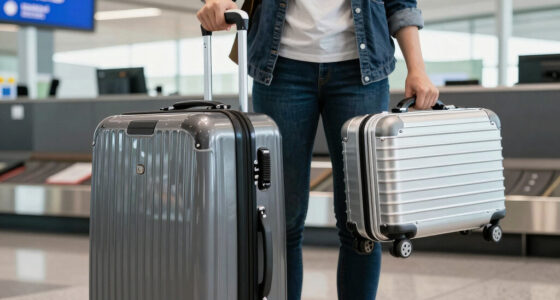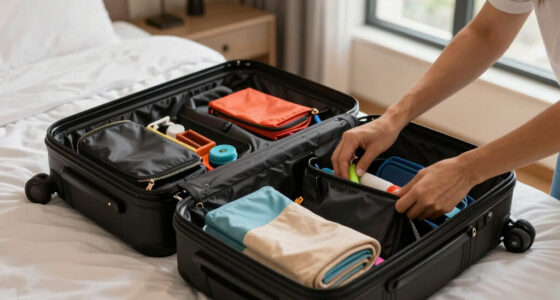
This guide helps you choose, fit, pack, and verify a carry-on travel backpack before you travel. It is for travelers who want to use one backpack as a cabin bag, whether they are taking a short trip or carrying a personal item alongside a larger cabin bag. No specialist packing experience is needed. Allow 45-90 minutes to compare the bag with your airline’s rules, pack it, and test its fit. Airline limits vary, so check the rules for every flight on your itinerary before you buy or pack.

Get travel and outdoor gear delivered free — and shop member deals
- Fast, free delivery on millions of items
- Access to Prime Big Deal Days deals on October 6–7
- Prime Video, Amazon Music and more included

tomtoc Travel Backpack 40L TSA Carry-On Bag Flight Approved, PFAS Free
- ✔ Capacity: 40 liters
- ✔ Dimensions: 20.47 x 12.99 x 9 inches
- ✔ Weight: 1,200 g

MATEIN Carry on Backpack, Extra Large Expandable Travel Backpack for Men
- ✔ Capacity: Up to 45L expandable; also listed as 40 liters
- ✔ Dimensions: 19 x 13 x 8 inches
- ✔ Weight: 2.2 lbs (0.89 kg)
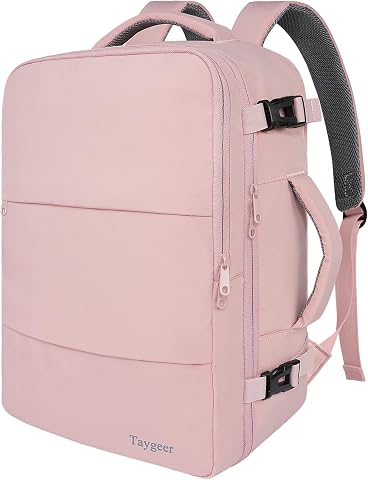
Taygeer Travel Backpack for Women, TSA Carry-On Approved
- ✔ Dimensions: 16.8 x 11 x 7 inches
- ✔ Weight: 0.79 kg (1.74 lbs)
- ✔ Laptop compatibility: Fits up to 15.6-inch laptop
Difficulty: Beginner | Time: 45-90 minutes, plus time to check airline rules
What You’ll Need
Tools & Materials:
- A soft measuring tape or ruler
- A household or luggage scale
- Your airline’s carry-on and personal-item size and weight limits
- Your trip itinerary and expected weather
- Packing cubes or small pouches, if available
Knowledge:
- How many days you will travel and what activities you have planned
- Whether your ticket includes an overhead-bin carry-on, a personal item, or both
- Which items you need to keep accessible during the flight
Check the baggage rules for each airline and flight segment, including any connecting flights operated by another carrier. A backpack sold as “carry-on size” is not guaranteed to meet a particular airline’s limits. Measure the bag when packed, including handles, wheels if present, and bulging pockets. Do not rely on a bag’s advertised capacity alone.
tomtoc Travel Backpack 40L TSA Carry-On Bag Flight Approved, PFAS Free
The tomtoc Travel Backpack 40L is our most balanced choice when one carry-on has to manage clothes, tech, and airport transitions. Its listed 40-liter capacity is paired with seven pockets and compartments, so the bag offers more structure than the MATEIN’s three-compartment layout. A dedicated laptop sleeve accommodates devices up to 17 inches, giving this pick a clear advantage for travelers carrying a larger computer. TSA-friendly access is useful when a laptop needs to be presented at security, although airport procedures and screening requirements can vary.Compared with the Taygeer, the tomtoc has a larger listed laptop limit and an explicitly described padded back panel and straps, which make it the more convincing option for tech-heavy trips. Taygeer counters with a shoe bag and wet pocket, so it may suit travelers who prioritize separating specific items. MATEIN is the better alternative if expandable capacity and hideaway straps matter more than a stated laptop sleeve. The tomtoc’s 20.47 x 12.99 x 9-inch dimensions are the largest listed here, however, and its 1,200-gram weight is not the lightest. We should check airline limits before packing it to capacity, and hand-wash-only care is less convenient than a wipe-clean finish.Recycled PET fabric gives the bag a material distinction, while its water-resistant construction offers some protection from light exposure rather than a guarantee against heavy rain. For travelers who want one organized bag with a laptop-first layout, tomtoc offers the strongest overall balance; those who need the smallest profile or simplest cleaning routine should compare the alternatives.
Pros:
- 40L capacity with seven pockets and compartments for organized packing
- Dedicated TSA-friendly laptop sleeve fits devices up to 17 inches
- Padded back panel and shoulder straps support more comfortable carrying
- Uses recycled polyester fabric and has a water-resistant finish
Cons:
- Largest listed dimensions in this comparison may challenge stricter airline limits
- At 1,200 g, it is heavier than the Taygeer
- Hand-wash-only care takes more effort
Best for: Travelers who carry a laptop up to 17 inches and want structured organization for a flight-focused one-bag setup.
Not ideal for: Minimal packers seeking the smallest listed dimensions, or anyone who needs machine-washable, low-maintenance care.
Bottom line: For travelers who need laptop-focused organization and substantial carry-on capacity, the tomtoc is the most complete choice, provided its dimensions suit the airline.
“For travelers who need laptop-focused organization and substantial carry-on capacity, the tomtoc is the most complete choice, provided its dimensions suit the airline.”
MATEIN Carry on Backpack, Extra Large Expandable Travel Backpack for Men
The MATEIN Carry on Backpack is the choice for travelers who want room to adjust their packing rather than commit to one fixed volume. Its expandable design reaches up to 45L, exceeding the stated 40L capacities of the tomtoc and the less precisely specified Taygeer. That flexibility can help when a trip includes an extra layer or souvenirs, but a fully expanded bag is also more likely to push against an airline’s size rules. The listed dimensions are 19 x 13 x 8 inches, so checking the carrier’s current limits matters even before expansion.Unlike the tomtoc, MATEIN is designed around hideaway shoulder straps and a convertible form, which can be useful when we want to carry it differently through a terminal or stow the straps. A luggage strap also helps attach the backpack to rolling luggage. Its 2.2-pound listed weight is between the tomtoc and Taygeer, and water-resistant polyester adds basic protection from splashes. The supplied details list five pockets and three compartments, fewer organizing sections than either competitor’s stated layout; that simpler division may suit broad packing, but it provides less evidence of dedicated separation for tech or damp items.The most important caveat is the lack of a specified padded laptop compartment. Travelers who carry a computer should not assume the protection matches the tomtoc’s explicit sleeve or Taygeer’s stated device fit. MATEIN is also described as requiring hand washing or wiping, so care is not especially hands-off. We rank it behind tomtoc because its expandable volume and convertible carry are compelling but come with less laptop-specific detail. Choose it when adjustable packing space is the priority, not when dedicated tech organization leads the decision.
Pros:
- Expandable design provides up to 45L of stated storage
- Hideaway shoulder straps support a convertible carry setup
- Luggage strap helps attach the backpack to rolling luggage
- Water-resistant polyester and a listed 2.2-pound weight suit travel use
Cons:
- No padded laptop compartment is specified in the supplied details
- Three listed compartments offer less organization than tomtoc’s seven
- Expanded capacity can make airline fit more difficult to judge
Best for: Travelers who want expandable packing space, a luggage strap, and hideaway shoulder straps for flexible airport carry.
Not ideal for: Laptop-dependent travelers who need a clearly specified padded sleeve, or flyers who want to pack the bag full without checking size limits.
Bottom line: MATEIN is the strongest fit for travelers who value flexible volume and convertible carry more than a clearly defined laptop setup.
“MATEIN is the strongest fit for travelers who value flexible volume and convertible carry more than a clearly defined laptop setup.”
Taygeer Travel Backpack for Women, TSA Carry-On Approved
The Taygeer Travel Backpack stands out for travelers who prefer to give different belongings their own places. Its large multi-compartment layout includes a shoe bag and wet pocket, useful for separating footwear or damp items from clean clothes. That specific packing support is something the other two listings do not explicitly describe. At 16.8 x 11 x 7 inches, it is also the most compact by listed dimensions, while its 1.74-pound weight makes it the lightest in this comparison. Those figures make Taygeer appealing when we want a capable personal carry without the tomtoc’s larger listed footprint.Its 180-degree zipper opens the bag for a TSA-friendly security check, and it can be carried as a backpack or handbag. A luggage strap adds another airport-friendly option. For laptop carry, however, the stated fit is up to 15.6 inches, smaller than tomtoc’s 17-inch compatibility; MATEIN does not supply a laptop fit or dedicated sleeve in its provided details. The Taygeer’s listed dimensions are a useful point of comparison, but the product description also calls it large-capacity, and a fully packed bag may feel bulky despite its relatively compact measurements.This is not the pick for someone seeking a minimal, feature-light bag: its multiple compartments and separate wet and shoe storage are most valuable when we actively use them. It may also feel heavy once fully packed, despite its low empty weight, and the available color details are limited. Compared with MATEIN, Taygeer gives clearer separation features and a stated laptop size; compared with tomtoc, it trades a larger laptop fit and ergonomic detail for a lighter, more compact listed form. We recommend it for organized packing with separate-item storage, especially when those details matter more than maximum laptop capacity.
Pros:
- Lightest listed weight in this comparison at 1.74 lbs
- Shoe bag and wet pocket help keep selected items separate
- 180-degree zipper supports quick security access
- Can be carried as a backpack or handbag and includes a luggage strap
Cons:
- Laptop fit is limited to devices up to 15.6 inches
- May feel bulky when fully packed despite its lighter empty weight
- Compartment-heavy layout may be unnecessary for minimalist packers
Best for: Travelers who want a lighter, compact-listed backpack with separate storage for shoes and wet items.
Not ideal for: Minimalists who prefer an uncluttered main compartment, or travelers carrying laptops larger than 15.6 inches.
Bottom line: Taygeer is a practical choice for travelers who value separate shoe and wet-item storage in a lighter, compact-listed carry-on.
“Taygeer is a practical choice for travelers who value separate shoe and wet-item storage in a lighter, compact-listed carry-on.”
As an Amazon Associate we earn from qualifying purchases.
Before You Start
Decide whether your backpack will be your only cabin bag or your personal item. Airlines may set different dimensions for these categories, and some basic fares do not include an overhead-bin bag. Also check weight limits, which can be strict on some routes. Keep required medication, travel documents, valuables, and items needed during the flight easy to reach. Follow airport security rules for liquids, batteries, and other restricted items; rules can differ by country and airport.
Step-by-Step Instructions
Step 1: Check your airline’s baggage allowance
Open the baggage page for each airline on your itinerary and find the rules that apply to your ticket. Record the maximum length, width, depth, and weight for an overhead-bin bag and, if relevant, a personal item. Check whether the allowance changes with your fare, route, or cabin class. If you have a connection, check the operating carrier’s rules as well as the airline that sold the ticket.
Tip:Save a screenshot or note of the limits. Airline baggage pages can be hard to find again while packing.
Check: You have a clear list of applicable size and weight limits for every flight segment.
Step 2: Choose the right backpack type
Decide how you will carry and access your belongings. Choose a backpack with shoulder straps that adjust to your torso and a padded back if you will walk with it for extended periods. Look for a clamshell opening if you want to pack it like a suitcase, or a top-loading design if you prefer a simpler shape. Pick an exterior that can compress or flatten when not full, and favor a design with a secure laptop compartment only if you need to carry a laptop.
Tip:Do not choose by liters alone. Two bags with the same stated capacity can have different external dimensions, shapes, and usable space.
Check: The bag matches how you travel, has comfortable straps, and can fit within the airline limits you recorded.
Step 3: Measure and test the empty bag
Place the backpack on a flat surface and measure its height, width, and depth. Include fixed handles and any rigid parts. Check whether external pockets, straps, or compression buckles add to the dimensions. Compare each measurement with the strictest limit on your itinerary. If the bag is close to the limit, ask the seller whether it compresses and test it before removing tags or losing the option to return it.
Tip:Soft-sided bags can squeeze into a measuring frame only when they are not overpacked. A rigid frame or packed-out pocket may prevent that.
Check: The bag’s measured dimensions are within the relevant limits, with room to pack without creating a large bulge.
Step 4: Plan a realistic load
Write a short packing list based on the number of days, weather, and activities. Set out clothing, toiletries, electronics, documents, and any special equipment before putting items in the backpack. Plan to rewear suitable clothing or do laundry if that reduces the load. Separate items that must stay on your person or meet special transport rules, such as passports, medication, and spare lithium batteries.
Tip:Make the list for your actual trip rather than packing for every possible situation. Heavy “just in case” items quickly consume both weight and space.
Check: Every item has a specific use, and the full load appears to fit without forcing the zippers or expanding the bag beyond its limits.
Step 5: Pack heavy and bulky items carefully
Place heavier items, such as shoes or a laptop, close to your back and near the middle of the backpack. Put lighter clothing and soft items around them to fill gaps. Roll or fold clothing according to what fits your bag, and use packing cubes or pouches to group outfits and small items. Keep liquids in a sealed, leak-resistant pouch and follow the security rules for your departure airport.
Tip:A heavy item at the bottom or far from your back can make the backpack pull backward and feel uncomfortable.
Check: The load sits evenly, heavy items are supported near your back, and small essentials are grouped rather than loose.
Step 6: Keep flight essentials accessible
Put your passport or identification, boarding information, medication, wallet, headphones, and any permitted in-flight essentials in pockets you can reach without unpacking the main compartment. Store electronics where you can remove them if airport screening requires it. Keep liquids and restricted items arranged for inspection under the rules at your airport. Do not put critical medication or valuables in a bag you plan to check at the gate.
Tip:Use one dedicated pocket or pouch for travel documents so you do not have to search through clothing at security or boarding.
Check: You can reach your documents, medication, and other immediate needs while the backpack is closed.
Step 7: Weigh, measure, and adjust the packed backpack
Close every compartment without pulling hard on the zippers. Weigh the packed bag using a luggage or household scale, then compare the result with the strictest applicable weight limit. Measure the packed bag again, including bulging pockets and loose straps. Remove nonessential items or redistribute them if the bag is too heavy or too large. Tighten compression straps only enough to secure the contents without distorting the bag.
Tip:Leave a small margin below a strict limit when possible. Home scales and airport checks may not give exactly the same reading.
Check: The packed backpack is within the relevant weight and dimensions and closes without strain.
Step 8: Wear the backpack and rehearse boarding
Adjust both shoulder straps so the bag sits close to your back, then use the sternum strap or hip belt if the design has one and they feel comfortable. Walk around for several minutes, bend, and lift the bag as you would when boarding. Practice taking out your travel documents and laptop without scattering other items. If your ticket includes an overhead-bin bag, confirm how the backpack will fit alongside any other cabin item you plan to bring.
Tip:Do not carry all the weight on one shoulder for the test. Adjust the straps and remove unnecessary items if the bag feels unstable or painful.
Check: The bag stays secure during movement, does not cause sharp discomfort, and you can retrieve flight essentials quickly.
Common Mistakes to Avoid
- Putting documents or medication under clothing in the main compartment. — Store immediate and essential items in an accessible pocket or pouch, and keep them with you.
Troubleshooting
Problem: You cannot find an item quickly at security or boarding.
Solution:
Repack documents, medication, and items that may need inspection into a dedicated accessible pouch or pocket. Keep prohibited or restricted items out of the backpack and follow your airport’s screening instructions.
What Success Looks Like
Your backpack is ready when it fits within the size and weight rules for every flight, closes without pressure, and stays comfortable when worn. Its contents are arranged so heavier items rest near your back, while travel documents, medication, and flight essentials remain easy to reach. You can identify where each item is and remove items required for screening without unpacking the entire bag.
Next Steps
Before leaving, recheck airline baggage rules and security requirements in case your itinerary or operating carrier changes. Charge devices, pack any last-minute items into their planned places, and weigh the bag once more. At the airport, follow staff directions if a bag-size check or gate check is required. After the trip, empty the backpack, dry it fully if it became damp, and note anything you did not use so you can adjust the packing list next time.
Frequently Asked Questions
What size backpack counts as a carry-on?
There is no single size that applies to every airline. Check the dimensions for your specific ticket and flight, including connecting segments. Measure the backpack packed, not only the empty bag.
Can I take a backpack and a personal item?
That depends on your fare and airline. Some tickets include an overhead-bin bag and a separate personal item; others include only a personal item or charge extra for a larger bag. Check the allowance on your booking before you pack two bags.
How do I stop my backpack from being too heavy?
Pack from a trip-specific list, remove items you can buy or borrow at your destination, and weigh the loaded bag at home. Put heavy items near your back for comfort, but remember that rearranging weight does not change the total weight.
Should I use packing cubes in a carry-on backpack?
Use them if they help group clothing and keep the bag orderly. Choose cubes that fit the backpack’s shape and avoid filling them so tightly that the backpack bulges or becomes difficult to close.
What should I keep in an easy-to-reach pocket?
Keep identification, travel documents, medication, wallet, and items you may need during the flight accessible. Follow your airport’s requirements for liquids and electronics, and keep valuables or essential medication with you rather than in a bag that could be checked.
Fall Picks
fall essentials
As an affiliate, we earn on qualifying purchases.