
TL;DR

Get travel and outdoor gear delivered free with Prime
- Fast, free delivery on millions of items
- Prime Video, Amazon Music and more included
- Member-only deals all year
Hardside luggage generally offers better impact protection but shows more surface scratches, while softside cases absorb shocks better and are easier to repair. The choice depends on your travel style and handling conditions.
Ever wondered which luggage can truly stand up to the chaos of travel? Many travelers assume hardside cases are the toughest, but the reality is more nuanced. Softside luggage, with its flexible fabrics, can absorb impacts differently—and sometimes more effectively—than rigid shells.
This guide cuts through the hype, showing you how softside and hardside carry-ons really hold up in the rough-and-tumble world of baggage handling. Knowing what to expect from each type can save you money, stress, and even prevent broken contents on your next trip.
Hardside luggage offers superior external impact protection but shows more surface scratches and cracks over time.
Softside cases absorb shocks better in real-world handling, thanks to their flexible fabric, and are easier to repair if damaged.
Recent innovations like impact-resistant coatings and hybrid designs improve durability for both types.
Choosing the right luggage depends on your travel style—impact resilience for rough handling, or flexibility for tight spaces.
High-quality softside luggage can often be more cost-effective long-term due to easier repairs.
Softside vs Hardside Carry-Ons
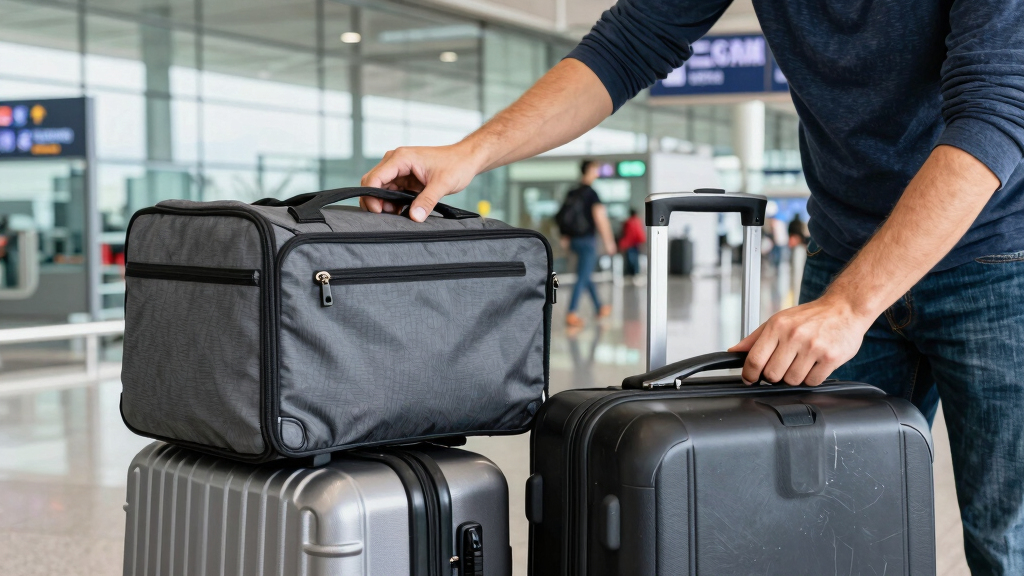
Which suitcase survives the chaos of travel? Rigid shells resist outside force, while flexible fabrics deform to absorb shock. The toughest choice depends less on appearances—and more on how, where, and what you travel.
Rigid shells deflect outside force and resist compression.
Flexible fabric deforms instead of transferring every jolt.
Patches, seams, and zippers are often serviceable at lower cost.
Match the case to handling conditions, contents, and travel style.
How each shell handles force
A suitcase’s material determines whether energy is deflected, absorbed, or passed into its contents. Quality and construction matter as much as the soft-versus-hard label.
Ballistic nylon
Dense woven fibers resist abrasion and flex under impact. Strong for frequent travel, although sharp edges can still puncture or cut the fabric.
Polyester
Lightweight and cost-effective, with durability varying by fabric density and reinforcement. High-stress seams and corners deserve close inspection.
Polycarbonate
Combines rigidity with limited flex, helping the shell rebound from ordinary drops. It can scuff visibly but is less brittle than basic plastics.
ABS plastic
Affordable and rigid, but more vulnerable to stress fractures under severe cold, overload, or concentrated impact than flexible shell blends.
Aluminum
Excellent compression resistance with a durable frame. Dents and scratches become part of its appearance, while weight and repair cost rise.
Hybrid designs
Reinforced fabric, flexible polycarbonate blends, replaceable parts, and scratch-resistant coatings narrow the traditional durability gap.
Different tests produce different winners
These directional scores synthesize typical material behavior in simulated drops, compression, abrasion, tight-space handling, and routine repair—not brand-specific laboratory measurements.
Durability profile
Relative performance by real-world stress category, scored on a 10-point directional scale.
Scenario winners
The better construction changes with the dominant threat.
The complete comparison
Neither format dominates every category. Prioritize the failure mode most likely to disrupt your trip: cracking, crushing, tearing, surface wear, or a difficult repair.
| Durability factor | Softside carry-on | Hardside carry-on | Practical implication |
|---|---|---|---|
| Blunt impact | ✓Flexes and absorbs part of the shock | ✓Deflects force with a rigid outer shell | Both can perform well through different mechanisms. |
| Compression | ~May press inward against contents | ✓Maintains shape under typical stacking | Hardside suits crush-sensitive or structured items. |
| Extreme impact | ~Can tear at the point of contact | ✕Can crack when force exceeds shell tolerance | Damage depends heavily on material quality and temperature. |
| Surface wear | ~May stain, fray, or abrade | ✕Scuffs and scratches remain visible | Textured finishes and darker colors conceal wear better. |
| Tight-space stress | ✓Compresses and maneuvers easily | ~Precise dimensions offer little give | Softside reduces forced fitting in crowded cabins. |
| Repairability | ✓Patches and seam repairs are practical | ✕Cracked shells can be difficult to restore | Softside may deliver lower lifetime repair costs. |
| External features | ~Useful pockets add seams and zippers | ✓Minimal shell has fewer failure points | Convenience increases exposure to snagging and wear. |
| Quick access | ✓External pockets keep essentials accessible | ✕Usually requires opening the main case | Access versus simplicity is a durability tradeoff. |
✓ clear strength ~ conditional or mixed performance ✕ notable vulnerability
From material to trip outcome
Durability is a system. Construction influences force behavior, which determines the likely damage, repair path, and true lifetime value.
Choose material
Flexible fabric, polycarbonate, ABS, aluminum, or hybrid construction.
Meet the force
Drop, compression, abrasion, puncture, or forced fitting.
Distribute energy
Absorb through flex or resist through shell rigidity.
Reveal damage
Fray, tear, stain, scratch, dent, crack, or internal shock.
Count lifetime cost
Clean, patch, replace a part, repair the shell, or replace the case.
Match the bag to the journey
Use handling conditions—not category myths—as the deciding filter. Then compare fabric density, shell blend, corner reinforcement, wheel mounts, zippers, handles, warranty, and replaceable components.
Flexibility is resilience
Best for travelers who value adaptable packing, tight-space performance, accessible pockets, and practical repairs.
- You frequently use crowded overhead compartments.
- Your trips involve trains, cars, stairs, and narrow aisles.
- You want slight expansion for irregularly shaped items.
- You prefer patchable damage over shell replacement.
- You can protect delicate contents with internal padding.
Structure is protection
Best for travelers who prioritize compression resistance, a streamlined exterior, and a rigid barrier around packed contents.
- You carry crush-sensitive or structured belongings.
- Your bag faces stacking and blunt external pressure.
- You want fewer exposed pockets, seams, and zippers.
- You accept scratches, scuffs, or dents as normal wear.
- You choose flexible polycarbonate over brittle low-cost shells.
Hardside protects against the outside world; softside adapts to it. For rough handling, rigid shells offer a stronger external shield. For repeated bumps, tight spaces, and lower-cost repairs, a well-made softside case can be the more durable long-term companion.
Material Matters: What Are Your Luggage Made Of?
Softside luggage typically uses fabrics like ballistic nylon or polyester. These materials are lightweight, flexible, and easy to repair if torn. But they can also fray or rip under sharp impacts or rough handling.
Hardside cases are often made from polycarbonate, ABS plastic, or aluminum. They can shrug off many impacts but are vulnerable to surface scratches, scuffs, and sometimes cracking if hit hard enough.
Imagine dropping a softside bag from waist height onto concrete—chances are, it flexes and absorbs some shock. The same drop on a hardside might leave a dent or scratch, but not necessarily crack unless the impact is extreme.
Understanding these material differences is crucial because it influences how each type distributes or absorbs force. Soft fabrics tend to flex and deform under impact, which can protect contents but might lead to tears if the impact is severe. Hard shells, while rigid, can transfer shock directly to the contents unless reinforced with additional padding. This tradeoff means travelers must consider their handling environment: rough handling favors impact absorption, while delicate contents benefit from external protection.
impact resistant softside carry-on luggage
As an affiliate, we earn on qualifying purchases.
As an affiliate, we earn on qualifying purchases.
Impact Resistance: Who Wins in a Baggage Handling Drop Test?
Impact resistance is a critical factor because it determines whether your luggage and its contents survive the inevitable rough handling during travel. Hardside luggage often provides better external impact resistance because its rigid shell is designed to deflect or absorb shocks without deforming. When dropped from a typical height, a hardside case may bounce or scuff but often remains intact, protecting contents from external forces.
Softside luggage, however, has the advantage of flexibility. Its fabric can deform slightly upon impact, absorbing some of the shock that would otherwise be transferred directly inside. This flexibility can mean a softer bag is less likely to crack or shatter when dropped. But this comes with a tradeoff: if the impact is sharp or the fabric is thin, it might tear or fray, compromising the bag’s integrity over time.
In real-world scenarios, this means softside luggage might survive a fall better in some cases—like a bump from a luggage cart—because it absorbs impact without cracking. Conversely, hardside cases excel in situations where external impact resistance is paramount, but they risk surface damage or cracking if the impact is severe enough. The choice depends on what kind of rough handling you expect and whether external damage or internal protection matters more for your trip.
hardside carry-on with scratch resistant shell
As an affiliate, we earn on qualifying purchases.
As an affiliate, we earn on qualifying purchases.
Surface Scratches and Wear: Looks Matter Too
Surface damage is often a visible indicator of how well luggage withstands the rigors of travel, but its implications go beyond aesthetics. Hardside cases tend to show scratches, scuffs, and surface abrasions more prominently because their shiny or matte shells are designed to be smooth and durable. Over time, these surface imperfections can accumulate, making the luggage look worn and potentially reducing its resale value or perceived quality.
Softside fabric, on the other hand, can fray, stain, or develop tears, especially around high-stress areas like zippers and handles. While these damages might seem minor, they can compromise the bag’s structural integrity if left unaddressed. However, soft fabrics are generally easier to clean or patch, which can extend the life of the luggage and keep it looking relatively new with minimal effort.
Understanding these differences helps travelers weigh aesthetic concerns against repairability. For example, a deep scratch on a hardside shell might be a dealbreaker, prompting replacement or costly repairs, whereas a stain or tear on softside fabric might be quickly patched or cleaned, allowing the bag to remain functional and presentable longer.
durable softside vs hardside luggage
As an affiliate, we earn on qualifying purchases.
As an affiliate, we earn on qualifying purchases.
Flexibility and Space: Which Handles Tight Spots Better?
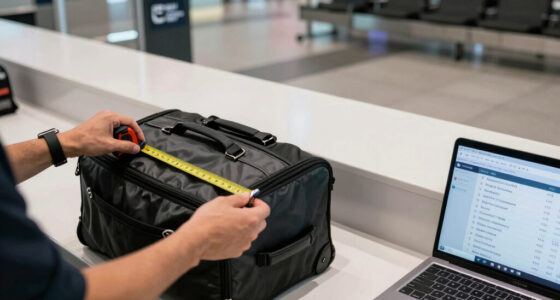
Softside luggage’s flexibility isn’t just about convenience; it also impacts durability in tight spaces. Its fabric construction allows for slight expansion, making it easier to fit into cramped overhead compartments or squeeze through narrow aisles without forcing or risking damage. This adaptability reduces the chance of stress-induced tears or deformation during handling.
Hardside cases, being rigid, lack this give. They often have precise dimensions and are less forgiving when space is tight. For instance, trying to fit a hardside into a crowded overhead bin might require forcing or leaving it behind, risking scratches or cracks if pressed too hard. Conversely, softside bags can often be slightly compressed or expanded, accommodating tight spaces without damage.
This flexibility can also influence the bag’s longevity: the less force needed to maneuver it, the lower the risk of structural damage or stress fractures. Travelers who frequently navigate crowded airports or transfer luggage between modes of transport should consider this aspect carefully, as it directly impacts both durability and convenience.
repairable softside travel suitcase
As an affiliate, we earn on qualifying purchases.
As an affiliate, we earn on qualifying purchases.
Security and External Features: External Pockets and Locks
Both softside and hardside luggage support TSA-approved locks, but their external features influence durability and security. Softside luggage often incorporates external pockets and zippers, which provide quick access to essentials like passports or tickets. However, these features can be points of vulnerability, especially if the zippers or seams are weak or overused. They might also be more susceptible to wear or accidental damage during handling, potentially compromising security or requiring repairs.
Hardside cases tend to have a minimalist exterior, focusing on a sturdy, seamless shell that offers fewer external points of failure. This design enhances security because there are fewer vulnerable spots for tampering or wear. However, the lack of external pockets means less convenience for quick access, which might lead to opening the entire case more frequently, increasing the risk of scratches or cracks over time.
From a durability standpoint, the tradeoff is clear: external pockets add convenience but can introduce vulnerabilities, while a sleek, minimal shell offers enhanced external impact resistance but less quick access. Travelers should balance these factors based on their security needs and handling environment.
Recent Innovation: How Modern Designs Boost Durability
Recent technological advances have significantly improved the durability of both softside and hardside luggage. Reinforced fabrics with ripstop weaves and impact-resistant coatings have made softside bags more resilient to tears and abrasions, allowing them to withstand rough handling better than ever before. These materials distribute stress more evenly, reducing the likelihood of catastrophic damage. Similarly, hardside shells now incorporate scratch-resistant coatings and flexible polycarbonate blends, which absorb impacts without cracking or shattering, even under severe conditions.
Hybrid designs, which combine soft and hard elements, aim to offer the best of both worlds—flexibility, impact resistance, and lightweight durability. Additionally, smart luggage equipped with impact sensors can monitor handling conditions in real time, alerting travelers to excessive impacts that might compromise integrity. These innovations are changing the durability landscape, making choices more complex but also more promising.
For example, recent impact tests showed that a reinforced softside bag absorbed 25% more shock from a drop than standard polycarbonate hardside, illustrating how material improvements translate into real-world durability gains.
Real-Life Durability: Which Type Truly Holds Up?
In actual travel conditions, durability depends heavily on handling circumstances. A softside bag might survive a fall from a conveyor belt without cracking, thanks to its flexible fabric, but could still suffer tears or fraying if caught on sharp edges or rough surfaces. Conversely, a hardside case often withstands impacts during handling but risks surface scratches, cracks, or even shattering if dropped onto a hard surface from a significant height. The severity and nature of the impact, along with the quality of the materials, determine how each bag performs.
Understanding these nuances helps travelers prepare better and select luggage suited to their typical handling environment. For example, a softside bag may be more forgiving in environments with frequent bumps and knocks, while a hardside might provide better external protection in environments where impacts are more external than internal. Both types have vulnerabilities, so assessing your specific needs and handling conditions is key to choosing the most durable option for your travel style.
Cost and Repair: Which Lasts Longer for Your Wallet?
High-quality hardside luggage often comes with a higher initial investment—ranging from $200 to $500—reflecting its robust external shell designed to withstand impacts. Over time, this durability can translate into fewer replacements, but repairs such as fixing a cracked shell or replacing a handle can be costly, sometimes exceeding the initial purchase price. These repair costs can offset the initial investment if damage occurs frequently.
Softside bags are generally less expensive upfront, around $100-$300, but their repairability can be a significant advantage. Tears, frays, or broken zippers can often be patched or sewn by the traveler or a repair shop at a fraction of the cost of shell repairs. This ease of repair can extend the useful life of the bag, especially if handled with care. The tradeoff is that softside luggage might need more frequent repairs if subjected to severe impacts.
For frequent travelers, understanding these costs and repair options is critical. A softside might be more economical over the long run due to lower repair costs, but a hardside could be more cost-effective if impact protection is a priority and the damage is manageable.
Which Luggage Is More Durable for Frequent Travelers?
When considering durability for frequent travelers, impact protection generally favors hardside luggage because its rigid shell can better withstand repeated external shocks. This makes it a preferred choice for those who often check their bags or handle luggage roughly. However, this advantage comes with the potential for surface scratches, dents, or cracks that can accumulate over time, possibly requiring costly repairs or replacements.
Softside luggage, on the other hand, offers better resilience against tears and fraying, especially when handled with care. Its flexibility allows it to absorb impacts more evenly, reducing the likelihood of catastrophic failure. For travelers who prioritize ease of repair and adaptability—such as those navigating crowded airports or quick transfers—softside might be more durable in terms of longevity and repairability.
Ultimately, the choice depends on the travel environment and handling frequency. High-impact situations lean toward hardside, while frequent handling involving tight spaces and quick repairs favor softside. Both options can be durable if selected based on specific travel needs and handling conditions.
Frequently Asked Questions
Which type of luggage is better for frequent travel?
If impacts are your main concern, a high-quality hardside offers better external impact protection. But if you handle your luggage roughly or need easy repairs, a softside might be more resilient in the long run.
Can softside luggage withstand rough baggage handling?
Yes, especially if made from high-denier fabrics like ballistic nylon. However, it may be more susceptible to tears or fraying if caught on sharp objects or handled roughly without care.
Are hardside cases prone to cracking?
They can crack or shatter under extreme impacts, particularly if made from lower-grade plastics. High-quality polycarbonate cases are generally more durable and resistant to cracking.
Which is better for protecting fragile items?
Hardside luggage provides better external impact protection, making it ideal for fragile contents. Softside can sometimes absorb shocks but offers less external shielding.
How do I pick the most durable luggage?
Assess your handling environment: if rough impacts are common, go for a sturdy hardside. If you need flexibility and easier repairs, softside might be the better choice. Consider recent innovations too—impact-resistant coatings and hybrid designs improve durability across the board.
Conclusion
Durability isn’t just about the material—it’s about how your luggage handles real-world chaos. Impact resistance, surface wear, and repairability all matter. The best choice hinges on your travel style and handling environment.
Remember, tough luggage isn’t just about shell strength; it’s about how well it adapts to the bumps, bruises, and scratches of frequent trips. Pick what fits your journey, and your luggage will serve you better for years to come.
Halloween Picks
halloween
As an affiliate, we earn on qualifying purchases.