TL;DR

Get travel and outdoor gear delivered free with Prime
- Fast, free delivery on millions of items
- Prime Video, Amazon Music and more included
- Member-only deals all year
Luggage trackers don’t replace airline claims but can drastically cut your wait time. Proper placement, understanding their limits, and using new features like airline sharing links make them worth your investment. They give you a fighting chance to find your bag faster, especially in busy airports or city settings.
Ever had your luggage vanish and feel that sinking panic? Now, imagine having a secret weapon: a tiny device that whispers where your bag is, even if it’s stuck in transit. That’s what luggage trackers promise. But to truly turn them into your travel allies, you need to understand how they work — and how to use them right.
Forget the hype. This isn’t about gadget obsession. It’s about practical, measurable steps that can save you hours, stress, and maybe even a lost bag fee. Ready to make your luggage smarter? Let’s break down exactly how to do it.
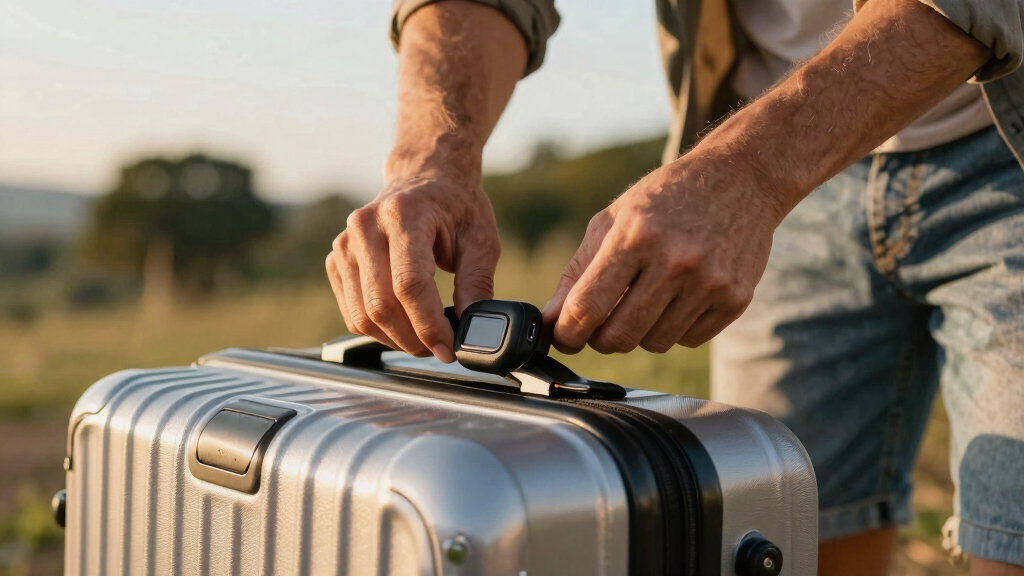
Place your tracker inside the bag, not on the outside, to prevent loss or theft.
Use the new airline-sharing features to get faster, official updates on your bag’s location.
Crowdsourced Bluetooth trackers excel in urban environments but struggle in remote or rural areas.
Always test your tracker before traveling and keep screenshots of location history.
Be honest about limitations: trackers show *where* your bag is, not *when* it got there or how long it will take to retrieve.
Smart Travel · Field Guide 07
How to Use Luggage Trackers Effectively
A tracker doesn’t replace the airline claim — it cuts your wait and gives you leverage. Proper placement, honest limits, and new airline sharing links turn a coin-sized gadget into a recovery tool. Forget the hype: this is the practical playbook.
“A tracker tells you where your bag is. The airline still controls when you get it back.”
The one rule to remember01 — The Secret Behind the Magic
Two Technologies, One Job
Bluetooth tags have no GPS and no cellular radio — passing phones anonymously relay their location. GPS/cellular trackers report their own position via LTE and satellites, anywhere, for a subscription fee. Pick based on where you actually travel.
| Spec | Crowdsourced Bluetooth | GPS / Cellular |
|---|---|---|
| Examples | AirTag, SmartTag, Tile, Chipolo | Tracki, LandAirSea, GEGO |
| How it locates | Nearby iPhones / Galaxy devices relay position anonymously | Own GPS + LTE/2G uplink, works anywhere with coverage |
| Battery | ~1 year on a CR2032 coin cell | Days to weeks — needs frequent recharging |
| Subscription | None | Required (monthly / annual) |
| Sweet spot | Busy hubs, big cities, dense airports | Remote routes, rural areas, long overland hauls |
| Blind spot | Regional airports & remote areas — few phones pass by | Bulkier, costlier, metal holds can still block signal |
▼ Crowdsourced relay effectiveness by environment — the more phones nearby, the faster the update
Crowdsourced relay strength by environment
02 — When the Belt Stops Turning
The 5-Step Recovery Protocol
Your tracker is a supplement, never a replacement, for the official claim. Used in the right order, location data turns a vague complaint into a provable case.
File the PIR first
Lodge the airline’s delayed-baggage report immediately. No report, no claim — tracker or not.
Read the map
Still at origin? On a later flight? At a residence? Each location dictates a different next move.
Share an official link
Generate a Share Item Location link (iOS 18.2) — United, Delta, Lufthansa & more plug it into tracing.
Document everything
Screenshot location history, keep claim receipts — evidence for Montreal Convention compensation.
Escalate smart
Bag stationary for days? Push the airline. Shows at a home? Call police — never retrieve it yourself.
See the location as a story of your bag’s journey, not a dot on a map — moving, stalled, or stranded tells you whether to wait, escalate, or involve authorities.
03 — Setup, Rules & Honest Limits
Pack It Right, Expect It Honestly
Most failures are self-inflicted: dangling tags, dead batteries, untested alerts. And even a perfect setup has real physical limits — know both sides before you fly.
Inside, never outside
Tuck the tag in a liner pocket or sewn-in pouch. External tags get torn off by conveyors and spotted by thieves. One tracker per checked bag.
Name it like you mean it
Label each tag in the app — “Black Samsonite – checked” — so multi-bag trips don’t turn into guesswork at the carousel.
Test before you pack
Confirm a fresh battery and that separation / left-behind alerts are active. A dead tracker is just a plastic coin.
Cleared for checked bags
CR2032 cells hold under 0.3 g of lithium — TSA allows tags in carry-on and checked luggage. GPS units with big batteries follow powerbank watt-hour rules.
Anti-stalking by design
Tags chirp and trigger “unknown tracker” alerts only when separated from you. Travelling with your bag, they stay silent — the safeguard protects you too.
Where it can fail
Metal ULD containers block updates for hours; small airports go dark; and a tracker shows where — never when it arrives or how long retrieval takes.
Signal to Suitcase
From Ping to Recovery
Tag beacons
Silent Bluetooth ping
Phone relays
Anonymous passersby
Network updates
Find My / Find My Device
You locate it
Map + history timeline
Share the link
Airline tracing workflow
Bag recovered
Faster, provable handoff
How Luggage Trackers Actually Work — The Secret Behind the Magic
Luggage trackers like Apple AirTags, Tile, and Samsung Galaxy SmartTags don’t have GPS or cellular radios. Instead, they depend on nearby phones to relay their location. When your bag passes by someone with an iPhone or Galaxy device, that phone anonymously sends its location back to you.
Imagine walking through a busy airport. Your AirTag’s signal hits a passing iPhone. That phone then updates the tracker’s position in the Find My network, giving you a recent location. But if you’re in a remote mountain town or a tiny regional airport, few phones pass by — and the tracker’s usefulness drops sharply.
GPS/cellular trackers like Tracki or LandAirSea report their location via LTE or satellite. They work anywhere, but they require a subscription, are bulkier, and need recharging every few days. Knowing your choice depends on where you travel most and whether you prefer a small coin cell or a bigger, more capable device.
As an affiliate, we earn on qualifying purchases.
Placement Tricks That Keep Your Tracker Safe and Effective
The best spot for your luggage tracker? Inside your suitcase, tucked in a liner pocket or sewn-in pouch. External tags, like on handles or zippers, are tempting but get torn off or stolen. Think of it like hiding a key in a secret pocket — visible enough to find but protected from damage.
For checked luggage, use one tracker per bag. If you often travel with multiple bags, label each tracker clearly in the app. For example, ‘Black Samsonite – checked’ makes it easy to identify the right bag on your phone.
Before your trip, always test the tracker. Confirm the battery is fresh, and that the alerts for separation and left-behind status are active. This way, you won’t be caught off guard when you’re desperate to locate your bag.
Proper placement is crucial because it affects signal strength and durability. Placing the tracker inside the bag shields it from environmental damage and reduces the risk of theft, but it also can hinder signal transmission if the bag is in a metal cargo hold. Balancing accessibility with protection is key — consider a hidden pocket that’s still reachable when needed.
As an affiliate, we earn on qualifying purchases.
How to Use Location Data to Speed Up Your Bag Recovery
When your bag goes missing, the location data from your tracker can be your biggest asset. First, file the airline’s delayed baggage report — your tracker is a supplement, not a replacement. If your tracker shows the bag sitting at the airport or on a later flight, you gain a huge advantage in communicating with airline staff.
For example, if your tracker indicates the bag is still in the origin airport, you can prove it’s not lost forever. Or if it shows up at a residence, you know it’s possibly stolen, and police should be involved.
Keep screenshots of the tracker’s location history and receipts. These can help with compensation claims under the Montreal Convention, which typically covers up to around $1,700. Understanding the timeline of your bag’s location helps you build a stronger case — for instance, if it’s been stationary in one place for days, or if it appears to be moving unexpectedly, these details are invaluable for claims and recovery efforts.
Interpreting this data allows you to make smarter decisions: whether to wait, escalate with the airline, or involve authorities. The key is to see the location not just as a point on a map but as a story of your bag’s journey, which can influence your next steps significantly.
As an affiliate, we earn on qualifying purchases.
Rules, Safety, and Privacy — What You Need to Know Before Packing Your Tracker
Luggage trackers are mostly approved by airlines, as they use small lithium coin cells (like CR2032). These batteries are under 0.3 grams of lithium, so airlines allow them in checked luggage. Still, always double-check specific airline policies before packing.
GPS trackers with bigger batteries fall under powerbank rules — check watt-hour limits. Remember, privacy matters. AirTags emit sounds and alerts to nearby phones if separated from their owner — a safety feature, but also a privacy safeguard. They won’t beep or trigger stalking alerts while traveling with you.
For example, if your bag is stolen, the tracker can help authorities identify its location. But if you’re worried about accidental alerts or privacy, know that the system is designed to protect you, not stalk or spy on others.
Be aware that some countries or airlines may have restrictions or require disclosure of tracking devices. Always research your specific destinations and carriers to avoid legal issues or confiscation. The implications of privacy are significant: while these tools are designed for your safety, misuse or misunderstandings can lead to privacy breaches or legal complications. Staying informed helps you use trackers responsibly and confidently.
As an affiliate, we earn on qualifying purchases.
Limitations You Should Be Honest About — When Trackers Can Fail
Bluetooth trackers rely on proximity. Inside metal luggage, signals can lag or be blocked altogether. This means, if your bag is in a cargo hold or a ULD container, the tracker might not update for hours or days.
At small regional airports or rural areas, few phones pass by, making crowdsourced location updates nearly useless. GPS trackers can help here but need power and coverage.
Remember: a tracker gives you a *where*, but not a *when*. Airlines control the *when* — your tracker only shows where the bag is now, not where it was last week or if it’s en route. This means you should always consider the limitations of the technology and not rely solely on it for critical moments. Understanding these constraints helps you set realistic expectations and avoid frustration when the tracker doesn’t provide immediate or complete answers.
Recent Innovations Making Trackers More Useful Than Ever
Apple’s “Share Item Location” feature (iOS 18.2, late 2024) is a game-changer. Airlines like United, Delta, and Lufthansa now let you generate a temporary link to share your tracker’s location. This speeds up recovery, especially when combined with airline baggage apps.
Android users gain a similar boost with Google’s Find My Device network launched in 2024, creating a crowdsourced location system for compatible tags. Plus, new hardware like UWB in AirTags and SmartTags improves accuracy at baggage claim — think of it as a laser pointer to your bag’s exact spot.
These updates turn a simple Bluetooth device into a powerful tool for fast recovery, especially in busy airports or unfamiliar cities. They also reduce the guesswork and waiting time, making the entire process smoother and more reliable. Embracing these innovations means you’re leveraging the latest tech to maximize your chances of quick recovery and peace of mind.
Frequently Asked Questions
Are AirTags allowed in checked luggage?
Yes, AirTags are permitted in checked luggage. They use small lithium coin cells (CR2032), which airlines and regulators classify as safe under existing rules. Always check your airline’s policies, but generally, these devices are accepted.Do luggage trackers actually work in airports and cities?
Absolutely. Bluetooth trackers depend on nearby phones to relay their location. In busy airports or urban areas with lots of passing devices, they update frequently. In remote areas, their usefulness drops, but they still provide valuable clues.Should I buy a Bluetooth tracker or a GPS one?
It depends. Bluetooth trackers like AirTags are small, cheap, and last about a year. GPS trackers work anywhere with cellular coverage but cost more and need monthly subscriptions. For most travelers, a Bluetooth tracker is enough for everyday use.Do I need a subscription for my luggage tracker?
No, most Bluetooth trackers like AirTags and Tile don’t require subscriptions. GPS trackers with cellular connectivity usually do, often around $10–$20 per month. Decide based on how often you travel and your need for real-time updates.Can a tracker help get my lost bag back faster?
Yes. If the tracker shows your bag sitting at the airport or on a flight, airline staff can use that info to locate it quickly. Sharing the location with your airline via new features can cut down recovery time and reduce stress.Conclusion
Think of luggage trackers as your digital co-pilots, not magic wands. They won’t prevent your bag from going astray, but they can give you a clear, real-time picture when things go wrong. The key is smart placement, understanding their limits, and leveraging new airline integrations.
Next time you pack, slip a tracker inside and set it up. A small step that could save hours of frustration and turn a lost bag into a quick fix. It’s not just about gadgets — it’s about smarter, calmer travel.
Halloween Picks
halloween
As an affiliate, we earn on qualifying purchases.