TL;DR

Get travel and outdoor gear delivered free with Prime
- Fast, free delivery on millions of items
- Prime Video, Amazon Music and more included
- Member-only deals all year
Airline carry-on weight restrictions vary wildly—some airlines have strict limits as low as 7 kg, others have none. Enforcement is inconsistent, so packing smart and verifying policies before travel is key. Understanding these rules helps you avoid fees and gate-checks.
Airline carry-on weight limits vary from 7 kg to no limit at all, depending on region and airline.
Most US airlines focus on size, rarely weighing bags, while Asian and budget airlines enforce strict weight checks.
Always weigh your bag before heading to the airport to avoid fees or gate-checks.
Recent policy changes increasingly emphasize gate weighing and fee unbundling, so stay updated.
Packing smart—wear heavier clothes, use a luggage scale, and distribute weight—can save you money and stress.
Understanding Airline Weight Restrictions for Carry-Ons
There is no universal carry-on weight limit. One airline may cap your cabin bag at 7 kg, another may allow 23 kg, and many major US carriers publish no weight ceiling at all. The safest strategy is simple: verify the current fare rules, measure the bag, and weigh it before leaving home.
More than an arbitrary number
Carry-on limits help airlines manage cabin safety, aircraft performance, handling demands, and fare economics. The exact balance differs by carrier—which is why the rules differ too.
Bin safety
Overhead bins have load ratings. Excessively heavy bags can damage fittings or cause injury if they shift or fall.
Weight balance
Aircraft loading affects fuel use, performance calculations, and operational efficiency.
Safe handling
Passengers and crew may need to lift bags overhead, making manageable weight an important safety factor.
Fare revenue
Unbundled fares turn cabin and checked baggage into paid options, particularly on budget routes.
From tightly capped to effectively uncapped
Weight and size are separate tests. Even without a weight cap, your bag must usually fit the airline’s sizer and be manageable enough to place safely in the overhead bin.
Illustrative published allowances
Where you fly changes how you pack
These are broad patterns and illustrative examples—not guaranteed rules. Airlines can change allowances by route, aircraft, cabin, fare bundle, or loyalty status.
| Market or example | Typical weight approach | Enforcement pattern | What to watch | Preparation level |
|---|---|---|---|---|
| Asia-Pacific | 7 kg is common | ✓Gate or check-in weighing | Carry-on and personal item may be combined | Weigh everything |
| European network carriers | Often 8–10 kg | ~Varies by carrier | Fare and cabin differences | Verify booking |
| European budget carriers | Size-led or paid allowance | ✓Sizers and gate checks | Priority status and bag entitlement | Check fee bundle |
| Major US carriers | Usually no weight cap | ~Weight checks are rare | Size, fare restrictions, lifting ability | Measure first |
| British Airways example | Up to 23 kg published | ~Size still applies | Passenger must manage the bag safely | Confirm itinerary |
| easyJet example | No published weight cap | ✓Strict dimensions | Bag type depends on purchased allowance | Use the sizer dimensions |
Illustrative policy snapshot: always verify the operating airline’s current baggage page and your exact fare before travel.
One heavy bag, several possible outcomes
Enforcement is inconsistent, but the cost of being selected for a check can be high—especially when payment is required at the gate.
Repack
Move dense items to a permitted personal item, remove non-essentials, or wear heavier clothing.
Pay a fee
Gate baggage charges can exceed the price of a checked bag booked earlier online.
Gate-check
Your bag may be sent to the hold, requiring valuables, medication, batteries, and travel documents to be removed.
Five checks before the airport
A two-minute check at home protects against fees, delays, and opening your suitcase on the terminal floor.
Verify
Check the operating carrier, route, fare class, and personal-item rule.
Measure
Include wheels, handles, exterior pockets, and expanded sections.
Weigh
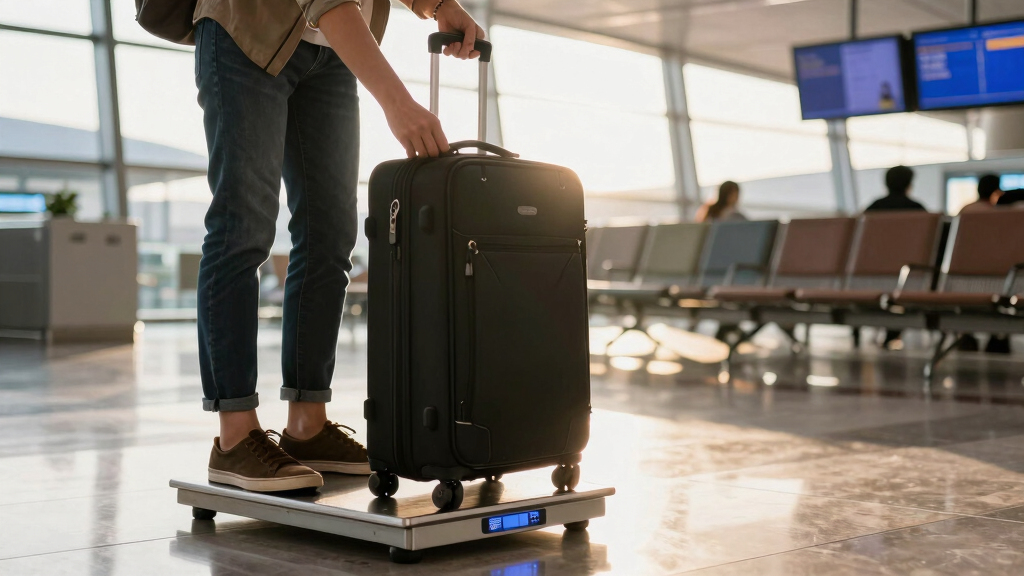
Use a digital luggage scale after the final item is packed.
Redistribute
Move permitted dense items and keep essentials accessible.
Recheck
Allow margin for duty-free items, souvenirs, or route changes.
Your suitcase consumes the allowance
The rulebook keeps moving
Developments reported through early 2025 show that cabin-bag policy is increasingly tied to consumer regulation, gate enforcement, and fare unbundling.
Check entitlement, dimensions, and weight as three separate rules. Verify the operating airline’s live policy, weigh the finished bag, and plan for stricter enforcement than you encountered on your last flight.
Why Do Airlines Have Carry-On Weight Limits Anyway?
Airlines impose weight limits to keep overhead bins safe, balance aircraft weight, and control costs. Overloaded bins can cause damage or injuries during turbulence, and excessive weight affects fuel efficiency, which directly impacts operational costs and ticket prices. By setting weight limits, airlines aim to prevent these issues and ensure safety and efficiency. Understanding this helps travelers realize that these limits aren’t arbitrary—they’re about safety, cost management, and smooth operations. When travelers respect these restrictions, it minimizes delays and last-minute adjustments, making the journey smoother for everyone.
Regional differences are stark. Asia-Pacific carriers like Cathay Pacific enforce strict 7 kg limits, often weighing bags at the gate, emphasizing safety and efficiency. Conversely, US airlines like Delta rarely weigh carry-ons, prioritizing passenger convenience. Budget airlines often have lower or no published weight limits, but they may weigh bags at the gate to enforce fees. Recognizing these differences allows travelers to adapt their packing strategies accordingly, reducing the risk of surprises and extra charges.
digital luggage scale for carry-on
As an affiliate, we earn on qualifying purchases.
As an affiliate, we earn on qualifying purchases.
How Much Do Airlines Actually Limit Your Carry-On Weight?
Understanding the typical weight limits helps travelers plan better, but why does the variation matter? For example, a strict 7 kg limit on some Asian carriers means you must pack very carefully, prioritizing essentials and choosing lightweight items. Larger allowances, like 10 kg, provide more flexibility but still require thoughtful packing. On the other hand, airlines with no stated weight limits, like many US carriers, often rely solely on size restrictions, which might tempt travelers to pack heavier than they realize, risking overweight baggage fees or delays. Knowing these limits and their enforcement methods helps you weigh the tradeoffs—whether to pack light and risk less inconvenience or to carry more at the potential cost of fees or gate checks. Each airline’s policy reflects their operational priorities—strict enforcement reduces delays, while leniency emphasizes convenience—so understanding the implications enables smarter packing and less stress during your journey.
Most European carriers stick around 8-10 kg, balancing safety with convenience, while budget airlines like Ryanair don’t specify weight but limit size, which can lead to surprises if you overpack. US legacy carriers usually don’t set weight limits, only size constraints, meaning you might assume more flexibility. However, some airlines do weigh at check-in or the gate, especially during busy travel times or for certain fare classes. Recognizing these nuances allows you to make informed decisions—either packing lighter to avoid extra charges or being prepared to pay if you choose to carry more—ultimately giving you control over your travel experience.
lightweight carry-on suitcase with wheels
As an affiliate, we earn on qualifying purchases.
As an affiliate, we earn on qualifying purchases.
What Happens if Your Carry-On Is Overweight?
If your bag exceeds the airline’s weight limit, the consequences can vary but are often inconvenient and costly. Airlines may ask you to repack or redistribute items, pay a hefty fee, or gate-check your bag. The implications go beyond immediate inconvenience—overweight bags can cause delays, disrupt boarding procedures, and lead to unexpected expenses that strain your travel budget. For instance, a passenger with a 9 kg bag on a carrier with a 7 kg limit might face a charge of $50 or more or be forced to check it at the gate, possibly losing access to items during the flight. Ignoring these warnings can result in refusal to board or additional charges, which might be higher than checked baggage fees. Being prepared with a luggage scale and understanding your airline’s policies helps you avoid these issues, ensuring a smoother, stress-free experience.
Furthermore, consistently overweight baggage can impact airline operations, causing delays and reducing efficiency. Travelers who understand the implications are better positioned to pack appropriately, avoiding last-minute surprises that can ripple through their travel plans. The tradeoff between packing more and risking extra costs emphasizes the importance of strategic packing—sometimes sacrificing a few non-essentials or choosing lighter alternatives can save money and time. Ultimately, awareness of these consequences encourages smarter packing habits, leading to a more relaxed journey.
clothing compression bags for packing
As an affiliate, we earn on qualifying purchases.
As an affiliate, we earn on qualifying purchases.
Should You Weigh Your Bag Before You Fly?
Absolutely. Using a digital luggage scale at home allows you to gauge your bag’s weight accurately, preventing surprises at the airport. This simple step can save you money, time, and stress by enabling you to remove or redistribute heavy items beforehand. For example, if your bag exceeds the limit, shifting heavier toiletries or electronics into your personal item, or wearing bulkier clothes on the plane, can make a significant difference. Weighing your luggage at home also helps you understand the weight of your bag itself—some hard-shell cases weigh 3-4 kg empty, which can eat into your allowance. Recognizing these factors enables you to pack efficiently and avoid the hassle of last-minute adjustments, fees, or gate-checking. Ultimately, proactive weighing empowers you to make smarter choices, ensuring your carry-on stays within limits and your journey remains smooth.
Investing in a portable luggage scale is a small but impactful decision, especially for frequent travelers or those flying with strict regional rules. It encourages mindful packing, helps identify heavier items, and fosters a habit of conscientious travel. By weighing your bag before leaving home, you gain peace of mind, reduce the risk of unexpected fees, and streamline your airport experience—making your trip more enjoyable from start to finish.
As an affiliate, we earn on qualifying purchases.
How Do Regional Rules Impact Your Packing Strategy?
Understanding regional differences in airline policies is crucial for tailored packing strategies that save you money and prevent inconvenience. For example, Asian airlines like Cathay Pacific enforce strict 7 kg limits and weigh bags at the gate, emphasizing safety and operational efficiency. This means you need to prioritize ultra-lightweight essentials and consider the weight of every item. European airlines like KLM allow 8-10 kg but may charge fees for excess, so packing smart—using lightweight clothing and minimal accessories—becomes essential. In contrast, US airlines often focus solely on size restrictions, with many not weighing carry-ons at all, offering more flexibility but also risking heavier bags slipping through if you’re unaware. Recognizing these differences helps you decide what to pack, how to distribute weight, and whether to carry extra items, ultimately reducing surprises and costs during your trip. Adjusting your packing approach based on regional policies ensures a smoother experience, whether you’re traveling to or from Asia, Europe, or North America.
For instance, if flying with an Asian airline, aim for the lightest possible essentials, and consider using a luggage scale at home. When flying domestically within the US, focus primarily on size restrictions, but stay aware of potential weight checks during busy periods. This regional awareness allows you to optimize your packing, balancing convenience, cost, and safety—making your journey more predictable and less stressful.
Recent Changes You Should Know About (2024–2025)
Airlines and regulators are actively reshaping baggage rules, with recent policy shifts that can significantly impact your packing. The EU is pushing for standardization of cabin baggage rights, proposing at least one free personal item plus a small carry-on to reduce confusion and promote fairness across airlines. Meanwhile, several Asia-Pacific carriers have expanded gate-weighting programs, making weight checks more common and strict, which means travelers need to be more vigilant. These changes aim to improve safety and operational efficiency but can also lead to increased fees and stricter enforcement for travelers unprepared. Additionally, fare unbundling continues—more airlines now restrict or charge for carry-ons, especially on basic economy fares—encouraging travelers to pack smarter or pay extra. Larger overhead bins on newer aircraft provide more space, but airlines haven’t relaxed weight restrictions, emphasizing the importance of staying updated. Monitoring these evolving policies helps you adapt your packing and avoid surprises at the airport.
Staying informed about recent policy changes is critical because they often reflect broader industry trends toward efficiency and safety. For example, stricter gate weighing means you should prioritize lightweight packing and consider the implications of fee unbundling, which can significantly increase travel costs if overlooked. Always verify the latest policies directly with your airline before packing to ensure compliance and avoid last-minute frustrations. Being proactive in understanding these shifts allows you to plan accordingly, select appropriate luggage, and travel with confidence, regardless of evolving regulations.
Quick Tips to Pack Light and Stay Under Limits
- Use a luggage scale to check weight at home, ensuring you stay within limits and avoid surprises at the airport.
- Wear your heaviest shoes and jacket on the plane to save space and weight in your carry-on.
- Pack versatile clothing that can serve multiple purposes, reducing the total number of items needed.
- Distribute weight between your carry-on and personal item to balance load and maximize space.
- Remove unnecessary items or liquids exceeding 100 ml to prevent exceeding weight or size restrictions.
For example, swapping a bulky sweater for a lightweight one and wearing it during travel can significantly reduce your bag’s weight. Choosing multi-use clothing and packing strategically ensures your carry-on remains within limits, making your journey smoother and more enjoyable. Smart packing not only saves money but also reduces stress, helping you start your trip on the right foot.
By adopting these practical tips, you can avoid last-minute packing dilemmas, reduce the risk of fees, and enjoy a more relaxed travel experience. Remember, every kilogram saved counts toward a hassle-free journey—so pack thoughtfully and plan ahead.
Frequently Asked Questions
Do US airlines have weight limits for carry-ons?
Most US airlines do not set specific weight limits for carry-ons. They primarily enforce size restrictions. However, if your bag is overweight, they might ask you to check it or pay a fee, especially if you’re traveling on a low-cost fare or during busy travel times.
Does my duty-free shopping count toward my carry-on weight?
Usually, yes. Duty-free purchases are considered part of your carry-on. If your bag is already near the limit, adding duty-free items could push it over. Pack these items carefully, and consider placing them in your personal item if possible.
Can I combine carry-on allowances with my travel partner?
Generally, airlines do not allow combining allowances. Each passenger must adhere to their own size and weight limits. However, sharing space or redistributing items between bags is fine as long as each bag meets the individual rules.
What should I do if my bag is just a few grams over the limit?
Use a portable luggage scale at home. If slightly over, remove or redistribute some items, or wear heavier clothing. If you’re close, it’s better to adjust before arriving at the airport than to face a fee or the inconvenience of gate-checking.
Conclusion
Knowing your airline’s weight rules isn’t just a detail—it’s your secret weapon for a smoother trip. Pack with precision, verify policies, and you’ll glide through check-in and boarding. Imagine the relief of stepping onto your flight knowing you’re within the limits—ready for your adventure, stress-free.Halloween Picks
halloween
As an affiliate, we earn on qualifying purchases.