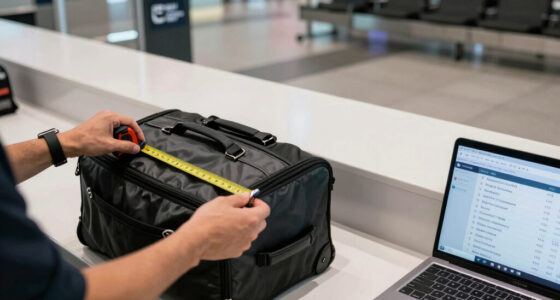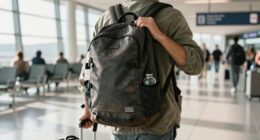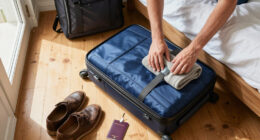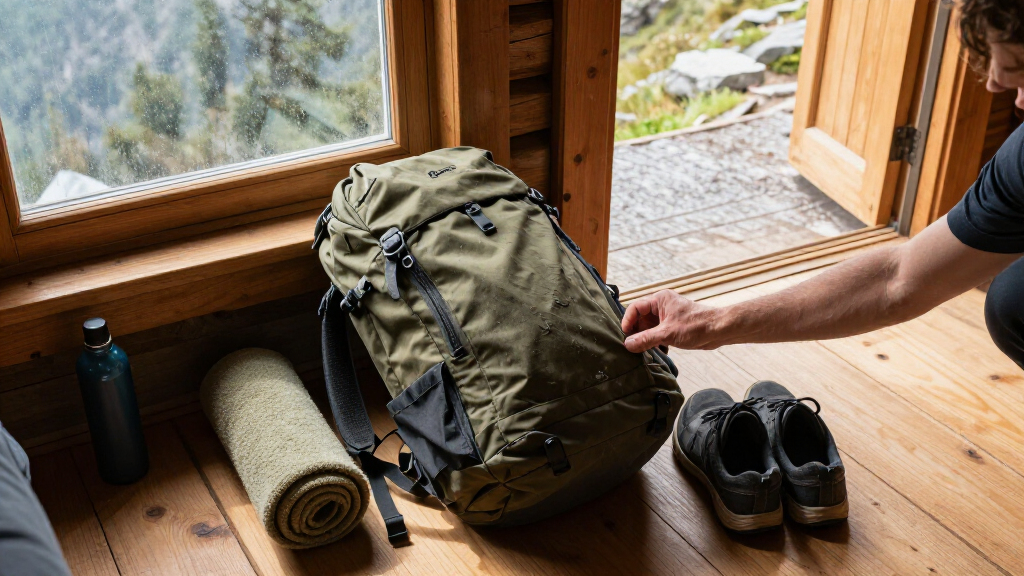

Choosing between a 35L and a 45L carry-on travel backpack is a decision about more than packing space. The smaller bag is easier to manage through crowded stations and more likely to fit under strict cabin-bag limits; the larger bag can reduce packing compromises on longer trips, but may approach or exceed some airlines’ size limits once fully loaded. Capacity labels are approximate, and a bag’s actual dimensions, shape, and how much it is packed matter just as much.

Get travel and outdoor gear delivered free — and shop member deals
- Fast, free delivery on millions of items
- Access to Prime Big Deal Days deals on October 6–7
- Prime Video, Amazon Music and more included

tomtoc Travel Backpack 40L TSA Carry-On Bag Flight Approved, PFAS Free
- ✔ Capacity: 40 L
- ✔ Dimensions: 20.47 x 12.99 x 9 in
- ✔ Weight: 1,200 g

MATEIN Carry on Backpack, Extra Large Expandable Travel Backpack for Men
- ✔ Capacity: Up to 45 L when expanded
- ✔ Dimensions: 19 x 13 x 8 in
- ✔ Weight: 2.2 lb (0.89 kg)
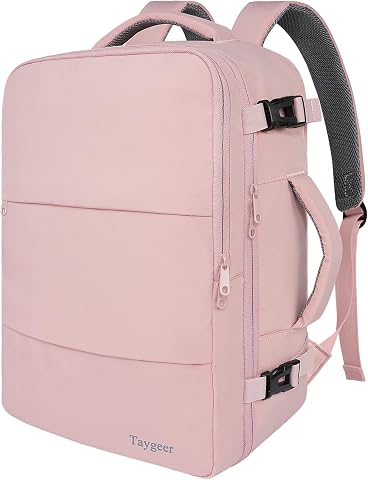
Taygeer Travel Backpack for Women, TSA Carry-On Approved
- ✔ Dimensions: 16.8 x 11 x 7 in
- ✔ Weight: 1.74 lb (0.79 kg)
- ✔ Laptop compatibility: Up to 15.6 in
For a short trip, light packers, or travelers who want a bag that stays manageable on foot, 35L is usually the safer choice. Choose 45L if you travel for longer stretches, carry bulkier clothing or equipment, and have checked the relevant airline rules. The comparison below focuses on the tradeoff that matters most: useful extra capacity versus everyday carry comfort and cabin-fit flexibility.
At a Glance
| Criteria | 35L carry-on travel backpack | 45L carry-on travel backpack | Winner |
|---|---|---|---|
| Packing capacity | More restrained capacity; encourages a compact packing list | More room for extra outfits, layers, shoes, or work and activity gear | B |
| Airline fit flexibility | Generally easier to keep within cabin limits, but dimensions still vary by model | Greater risk of exceeding limits, especially on strict airlines or when overpacked | A |
| Carry comfort when loaded | Usually lighter and less bulky to carry through airports and on foot | Can become heavy and awkward when filled; fit matters more for comfort | A |
| Organization and access | Can offer the same pockets and clamshell layout, with less room for bulky items | Often provides more usable packing volume, though pockets depend on the model | Depends |
| Versatility beyond travel | More manageable for commuting and everyday use | Can work for extended travel but is less convenient as an everyday bag | A |
| Value for different trip lengths | Better value when a small capsule wardrobe covers the trip | Worth the added cost or bulk when the extra capacity replaces another bag | Depends |
tomtoc Travel Backpack 40L TSA Carry-On Bag Flight Approved, PFAS Free
The tomtoc 40L earns our top spot by combining a substantial main compartment with the clearest laptop and security-screening setup in this lineup. Its description specifies a dedicated, TSA-friendly laptop compartment that accommodates devices up to 17 inches. For travelers who carry a larger laptop and want it easier to access at screening, that is a more concrete advantage than MATEIN’s general multi-compartment description, which does not mention a laptop sleeve.Organization is another reason to choose tomtoc. It lists seven pockets and compartments, along with a large main section, giving packers more ways to keep travel essentials separated than a simple open compartment. The recycled-PET fabric may also appeal to shoppers who want a bag made with recycled material. That said, the listed dimensions are 20.47 x 12.99 x 9 inches, so we would check a specific airline’s cabin-bag allowance rather than rely on the carry-on label alone. At 1,200 g, it is not the lightest option; MATEIN is listed at 2.2 lb, while Taygeer is 1.74 lb.Compared with Taygeer, tomtoc is the better fit when a laptop compartment and all-around pocket organization take priority over a named shoe bag and wet pocket. Compared with MATEIN, it offers more explicit laptop-focused detail, while MATEIN has the advantage of an expandable design and hideaway shoulder straps. We would skip tomtoc if the priority is the lightest possible bag, a smaller stated footprint, or machine-friendly cleaning: the provided care guidance is hand wash only, and its dimensions call for a careful fit check.
Pros:
- Dedicated TSA-friendly laptop compartment fits devices up to 17 inches.
- Seven listed pockets and compartments help separate travel essentials.
- Made from recycled PET fabric and described as water resistant.
- Padded back panel and straps are intended to improve carrying comfort.
Cons:
- Listed dimensions of 20.47 x 12.99 x 9 inches may exceed some airlines’ cabin-bag limits.
- At 1,200 g, it is heavier than the listed Taygeer.
- Hand-wash-only care is less convenient than a machine-washable bag.
Best for: Carry-on travelers who bring a laptop up to 17 inches and want structured organization plus TSA-friendly access.
Not ideal for: Travelers who prioritize minimum bag weight, machine washing, or a compact profile without checking airline-specific size limits.
Bottom line: For a laptop-carrying traveler who values screening access and organization, tomtoc is the most complete choice here, provided its dimensions suit the airline.
“For a laptop-carrying traveler who values screening access and organization, tomtoc is the most complete choice here, provided its dimensions suit the airline.”
MATEIN Carry on Backpack, Extra Large Expandable Travel Backpack for Men
The MATEIN carry-on backpack is the capacity-first pick. Its expandable design increases storage to as much as 45L, which makes it useful when a trip’s return packing is likely to be bulkier than the outbound load. Hideaway shoulder straps let the bag shift between backpack and other carry arrangements, while a luggage strap provides another way to secure it to rolling luggage. Compared with the tomtoc, MATEIN emphasizes adaptable volume and carrying modes rather than a specified large-laptop compartment.There is an important size tradeoff behind that flexibility. The supplied dimensions are 19 x 13 x 8 inches, and an expanded bag can be harder to fit within a particular airline’s cabin allowance. We would confirm the rules for the intended carrier and consider how much the bag will protrude when packed. Its listed weight is 2.2 lb: lighter than tomtoc’s 1,200 g by the supplied figures, but heavier than Taygeer’s 1.74 lb. The water-resistant polyester is useful for ordinary travel exposure, though water resistance should not be read as waterproof protection.MATEIN lists five pockets and three compartments, a simpler arrangement than tomtoc’s seven of each. That may suit travelers who prefer flexible space to a more segmented layout. The product description does not specify a padded laptop sleeve, however, so laptop protection is less certain than with tomtoc. Taygeer is the more compelling alternative for travelers who want a named shoe bag and wet pocket; MATEIN is better for those who would rather have expandable volume and stowaway straps. Cleaning also takes a little care: the stated method is hand washing or wiping.
Pros:
- Expandable design provides up to 45L of stated storage.
- Hideaway shoulder straps and a luggage strap support flexible airport carrying.
- Water-resistant polyester offers some protection from everyday splashes.
- At 2.2 lb, it is lighter than the listed tomtoc weight.
Cons:
- Listed dimensions of 19 x 13 x 8 inches should be checked against the airline’s limits.
- The description does not specify a padded laptop compartment.
- Hand washing or wiping is required for care.
Best for: Travelers who want expandable packing space, hideaway shoulder straps, and a bag that can attach to rolling luggage.
Not ideal for: Those who need a clearly specified padded laptop compartment, a highly segmented interior, or a bag with dimensions they can assume will fit every airline.
Bottom line: MATEIN makes the most sense when adjustable packing room and convertible carry matter more than laptop-specific organization.
“MATEIN makes the most sense when adjustable packing room and convertible carry matter more than laptop-specific organization.”
Taygeer Travel Backpack for Women, TSA Carry-On Approved
The Taygeer Travel Backpack is the most specialized organizer in this group. Its shoe bag and wet pocket give travelers designated places for items they may not want loose beside clothes or electronics. That makes it a practical match for gym-to-airport trips, a change of shoes, or damp clothing after an activity. The 180-degree zipper is designed to open for security checks, and the bag can be carried as a backpack or handbag. A luggage strap adds convenience when rolling a suitcase.Its 16.8 x 11 x 7-inch dimensions are shorter and shallower than the listed MATEIN and tomtoc sizes, which may make it an attractive option for travelers who prefer a less bulky profile. Still, airline limits differ, so dimensions alone cannot guarantee acceptance. At 1.74 lb, Taygeer is the lightest of the three by the supplied weights, although a large load can still feel heavy on the shoulders. Its water-resistant construction is useful for light exposure, but the description does not establish waterproof performance.Compared with tomtoc, Taygeer gives more explicit separation for shoes and wet items, while tomtoc is the clearer choice for a larger laptop because it specifies compatibility up to 17 inches. Compared with MATEIN, Taygeer trades expandable capacity for a more compact stated size and a lighter listed weight. It fits travelers who like to sort belongings into distinct zones; minimal packers may find those extra compartments unnecessary, and the product’s listed capacity does not provide a volume figure to compare directly with the 40L and up-to-45L options.
Pros:
- Includes a shoe bag and wet pocket for separating specific items.
- 180-degree opening is intended to make security checks easier.
- Can be carried as a backpack or handbag and includes a luggage strap.
- At 1.74 lb, it has the lowest listed weight among these three.
Cons:
- No total capacity in liters is provided for direct volume comparison.
- May feel too large for minimalist travel despite its shorter listed height.
- Laptop compatibility is specified as 15.6 inches, below tomtoc’s stated 17-inch limit.
Best for: Travelers who want separate storage for shoes and wet items, convertible carrying, and a lighter listed bag weight.
Not ideal for: Minimalist packers who prefer one simple compartment or travelers who need a clearly stated large-laptop capacity or total volume.
Bottom line: Choose Taygeer when dedicated shoe and wet-item storage matter more than expandable capacity or a larger laptop sleeve.
“Choose Taygeer when dedicated shoe and wet-item storage matter more than expandable capacity or a larger laptop sleeve.”
As an Amazon Associate we earn from qualifying purchases.
Key Differences
The capacity difference is the clearest reason to choose 45L: it gives you more room for clothing changes, colder-weather layers, a second pair of shoes, or trip-specific gear. That extra room can make a long itinerary easier, especially when laundry access is uncertain. It can also tempt you to pack more than you can comfortably carry. A nominal 45L bag does not guarantee a particular airline will accept it as cabin baggage, and a bag that is not full can still be too large if its frame or exterior dimensions exceed the limit.
The 35L option trades some packing freedom for a smaller, more flexible carry. It is easier to move with, less likely to dominate a seat or overhead bin, and more practical on trips that involve stairs, buses, or long walks between stops. A 45L bag is the better tool when you genuinely need its volume and can confirm cabin compatibility; otherwise, the smaller bag is the more reliable one-bag choice for many travelers. For either size, check the exact product dimensions and your airline’s rules rather than relying on liters alone.
Detailed Comparison
Packing capacity (45L carry-on travel backpack wins — major)
The 45L backpack wins on raw room, a moderate-to-major advantage depending on the trip. Its extra space can hold more outfits, warmer clothing, or specialized equipment without requiring tightly edited packing. That is useful for longer trips, changing climates, or travelers who prefer options. The 35L bag calls for a more deliberate list and often favors versatile clothing and laundry during the trip. For a weekend or a week with access to laundry, the smaller capacity may be ample; for a multiweek trip with bulky items, the extra volume can be meaningful.
Airline fit flexibility (35L carry-on travel backpack wins — moderate)
The 35L bag usually has the advantage, but this is a moderate rather than guaranteed win because capacity does not specify exterior measurements. Its smaller profile makes it easier to fit cabin rules and overhead spaces across different airlines. A 45L bag may still qualify when its design is compact and it is not overfilled, but it leaves less margin for strict limits. Measure the specific backpack, including handles and other protrusions, and compare those dimensions with the airline’s current allowance. If you fly low-cost carriers or change airlines often, the smaller bag reduces uncertainty.
Carry comfort when loaded (35L carry-on travel backpack wins — moderate)
The 35L pack tends to win by a moderate margin because there is less space—and often less reason—to carry a heavy load. A compact bag is easier to keep close to the body and manage in crowds, on transit, or up stairs. A well-designed 45L backpack can have supportive straps and a hip belt, but those features do not remove the weight of extra contents or the bulk of a larger frame. If you must walk substantial distances with your bag, choose the size you can carry comfortably when packed, not the one that looks convenient when empty.
Organization and access (minor difference)
There is no reliable size-based winner here, so the result depends on the specific bag. Both capacities can come with clamshell openings, laptop sleeves, compression straps, and multiple compartments; a larger volume does not automatically mean better organization. A 35L layout may be simpler to pack and less prone to loose items disappearing into a large main compartment. A 45L design may offer more room to separate gear, but extra compartments can also take space from the main cavity. Compare pocket placement, access to essentials, and whether the bag opens in a way that suits your packing routine.
Versatility beyond travel (35L carry-on travel backpack wins — moderate)
The 35L backpack is usually more versatile for commuting, day-to-day errands, and occasional overnight trips, a moderate advantage. It is less cumbersome on public transport and easier to store when not traveling. A 45L bag can serve as a single travel bag for longer journeys, but its bulk may make it inconvenient as an everyday carry. Some 35L bags are still too large or travel-specific for regular commuting, so check the dimensions and harness. If you want one pack for both workdays and short trips, the smaller capacity is generally the more adaptable starting point.
Value for different trip lengths (moderate difference)
Neither size is automatically better value. A 35L pack offers more useful value to light packers and short-trip travelers if its smaller capacity means they avoid carrying unnecessary weight and can use it regularly. A 45L pack earns its added cost or bulk when the extra room lets you bring necessary gear in one bag rather than paying to check luggage or carrying a second bag. If you buy a larger pack and routinely leave much of it empty—or fill it with items you do not need—the added capacity has little practical value. Match volume to real packing needs.
35L carry-on travel backpack: Pros and Cons
Pros:
- Smaller profile is generally easier to manage in crowded transport and tight spaces.
- More likely to suit stricter cabin-bag allowances, subject to the model’s actual dimensions.
- Encourages a lighter, more deliberate packing list.
- More practical for commuting and short trips.
Cons:
- Less room for bulky clothing, extra shoes, or specialized equipment.
- May require laundry or careful outfit planning on longer trips.
- Can feel cramped if the traveler carries work gear alongside personal items.
45L carry-on travel backpack: Pros and Cons
Pros:
- More capacity for longer trips, layers, and bulky or activity-specific gear.
- Can help travelers keep everything in one bag instead of adding a second.
- Offers more flexibility when the itinerary includes varied weather or activities.
Cons:
- More likely to exceed restrictive cabin dimensions, depending on the model and airline.
- Can become heavy and awkward to carry when filled.
- Less convenient for daily commuting and tight overhead or storage spaces.
- Extra volume may encourage overpacking.
Who Should Choose What
Choose 35L carry-on travel backpack if:
- You usually travel for a weekend or a week and can rewear clothes or do laundry.
- You fly on airlines with strict or changing cabin-bag limits.
- You walk, use public transit, or climb stairs with your backpack often.
- You want one bag that can also work for commuting or short overnight trips.
Choose 45L carry-on travel backpack if:
- Your trips are longer and you need more clothing, layers, or activity gear.
- You have confirmed the exact backpack’s dimensions fit the airlines you use.
- You prefer carrying one larger bag over splitting belongings between bags.
- You can manage the loaded weight and do not need the backpack for everyday commuting.
Skip both if: If you routinely carry bulky specialist equipment or need more than a typical cabin allowance permits, consider a larger checked bag or a purpose-built gear pack instead of forcing everything into either size.
Value for Money
Paying more for a 45L bag is worthwhile only when its capacity solves a real packing problem. If the additional space lets you bring necessary work equipment, cold-weather clothing, or trip gear in one bag, the premium can be justified—provided the bag fits your airline’s cabin rules and remains comfortable when loaded. If the larger bag forces you to check it, adds fees, or becomes tiring to carry, its extra volume may cost more than it saves.
For travelers who pack light, take shorter trips, or use several airlines, a 35L backpack is often the better value even if it costs the same. You get a more manageable bag that is likely to see more everyday use. Do not pay extra for liters you will not use; compare construction, harness comfort, access, and warranty alongside capacity.
Final Verdict
For most travelers choosing one cabin backpack, the 35L option is the safer recommendation: it is easier to carry, more adaptable outside vacation, and gives you more room to meet restrictive airline limits. Choose 45L when you have a specific need for its extra capacity—not simply because more space sounds useful—and verify the bag’s dimensions before buying. The deciding factor is whether your usual packing list genuinely needs the additional volume. If it does, and the larger pack fits your routes, choose 45L; if not, choose 35L and enjoy the lighter, less restrictive carry.
Frequently Asked Questions
Is a 45L backpack allowed as a carry-on?
Sometimes, but the capacity figure alone cannot answer that. Airlines set limits by exterior dimensions and may enforce them differently, particularly on smaller aircraft or lower-cost fares. Check the specific backpack’s measurements against each airline’s current cabin-bag allowance, and leave room for the bag to compress rather than overstuffing it.
Is 35L enough for a week-long trip?
For many travelers, yes. A compact clothing plan, versatile layers, and laundry access can make 35L workable for a week. It may not be enough if you need bulky shoes, formal outfits, specialized equipment, or several climate-specific layers. Your packing list matters more than the trip’s length by itself.
Does a 45L backpack hold exactly one-third more than a 35L bag?
The nominal capacity is about one-third higher, but usable space varies by shape, compartments, and how each manufacturer measures volume. Exterior dimensions also affect whether the bag can be carried in the cabin. Compare internal layout and measurements rather than treating the liter label as a precise packing guarantee.
Which size is better for international flights?
A 35L pack is the safer general choice when itineraries include multiple airlines with different limits. A 45L can work if every carrier permits its actual dimensions and you can carry it comfortably. Confirm the rules for each flight, especially when a ticket includes only a personal item rather than a full cabin bag.
Halloween Picks
halloween
As an affiliate, we earn on qualifying purchases.