
This guide helps you select a carry-on suitcase with spinner wheels, check that it fits your airline’s cabin-bag rules, pack it, and test it before travel. It is for travelers who want to use a four-wheel upright suitcase in the aircraft cabin, including first-time carry-on users. No specialist skills are needed. Allow 30–60 minutes to check requirements, organize your belongings, and test the packed bag; shopping for luggage may take longer.

Get travel and outdoor gear delivered free with Prime
- Fast, free delivery on millions of items
- Prime Video, Amazon Music and more included
- Member-only deals all year

Wrangler 22.5-Inch Hardside Spinner Carry-On Luggage, Black
- ✔ Material: ABS hard shell
- ✔ Dimensions: Listed as 22.5 × 13.75 × 8.5 inches; verify due to conflicting carry-on dimension information
- ✔ Weight: 6.4 pounds

Amazon Basics 21-Inch Expandable Hardside Carry-On Luggage with Spinner Wheels, Black
- ✔ Material: ABS hard shell
- ✔ Dimensions: 14.8 × 10 × 21.7 inches including wheels; item dimensions 13.6 × 9.5 × 20.9 inches
- ✔ Weight: 7.7 pounds

LIGHT FLIGHT 20-Inch Carry-On Luggage, Royal Blue
- ✔ Material: ABS hardside
- ✔ Dimensions: 14.6 × 9 × 21.4 inches
- ✔ Weight: 6.8 pounds
Difficulty: Beginner | Time: 30–60 minutes, plus time to shop if needed
What You’ll Need
Tools & Materials:
- Airline website or booking details showing your baggage allowance
- Tape measure
- Carry-on suitcase with spinner wheels, or a shortlist of models
- Luggage scale or household scale, if your airline sets a weight limit
- Packing cubes or small bags, if available
Knowledge:
- The airline and fare you will travel on
- The length of your trip and the items you need to bring
- Basic awareness that airlines can set different cabin-bag size and weight limits
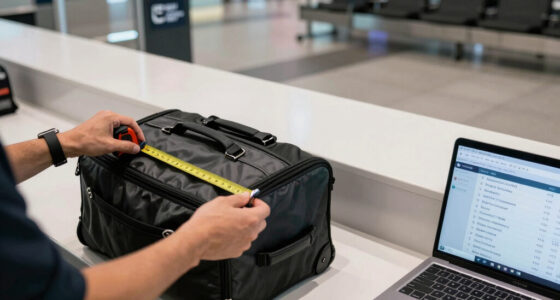
Check the baggage rules for every airline on your itinerary, including any connecting or operating carrier. A ticket may include only a smaller personal item, while a full-size carry-on may require a different fare or an additional fee. Measure the entire suitcase, including wheels, handles, and other parts that stick out. Do not assume that a bag marketed as “carry-on size” will meet every airline’s rules.
Wrangler 22.5-Inch Hardside Spinner Carry-On Luggage, Black
The Wrangler 22.5-Inch Spinner earns our overall spot by pairing the lowest listed weight here, 6.4 pounds, with a stated 38-liter capacity. That combination leaves more of the bag’s weight allowance available for belongings than the heavier Amazon Basics option, while its four spinner wheels offer the multidirectional rolling setup shared by all three picks. Compression straps help keep clothes in place, and padded carry handles give us another way to lift it when rolling is not practical.Its advantage is straightforward: useful stated capacity without adding much listed weight. LIGHT FLIGHT is the stronger choice if we want an included TSA-approved lock and the option to expand from 35 to 42 liters; Amazon Basics offers more dedicated pockets. The Wrangler instead keeps the pitch focused on a roomy, lightweight shell with basic clothing control.There is an important caveat for carry-on shoppers: the supplied product information identifies conflicting carry-on dimensions. We would verify the exact product measurements and compare them with the airline’s current allowance before relying on the stated 22.5-inch size. The built-in lock is a convenience, but no lock type is specified here, so buyers who want a TSA-approved combination lock should favor LIGHT FLIGHT. This is the best fit for travelers who value low weight and straightforward packing, not for anyone who needs clear dimension documentation or several small-item compartments.
Pros:
- Lowest listed weight in this comparison at 6.4 pounds
- 38-liter stated capacity
- Four spinner wheels and a telescoping handle
- Compression straps and padded carry handles
Cons:
- Supplied carry-on dimension information is conflicting
- Only two pockets are listed
- Lock type is not specified
Best for: Travelers who want a lightweight hardside case with a comparatively generous stated capacity and simple compression-strap organization.
Not ideal for: Travelers who need unambiguous measurements before booking or specifically want a stated TSA-approved lock and multiple interior pockets.
Bottom line: Choose the Wrangler for low listed weight and useful stated capacity, provided you confirm its dimensions before flying.
“Choose the Wrangler for low listed weight and useful stated capacity, provided you confirm its dimensions before flying.”
Amazon Basics 21-Inch Expandable Hardside Carry-On Luggage with Spinner Wheels, Black
When we care more about separating small items than keeping the suitcase as light as possible, the Amazon Basics 21-Inch Expandable makes the strongest case. Its interior divider and three zippered pockets give us more ways to keep accessories, toiletries, and folded items from becoming one loose pile. The ABS shell is described as scratch-resistant, and the case can expand by up to 25% when a trip calls for extra room.Compared with the Wrangler, this bag gives us more stated interior organization but weighs 7.7 pounds—1.3 pounds more—and its listed storage volume is 34 liters, below the Wrangler’s stated 38 liters. LIGHT FLIGHT is the more attractive choice if we want an included TSA-approved lock and its stated capacity reaches 42 liters when expanded. Amazon Basics instead prioritizes pockets and a divider, making the packing layout its clearest distinction.Expansion is useful, but we should treat it as occasional flexibility rather than guaranteed overhead-bin room: opening the case increases its depth, so fit needs checking when it is expanded. The supplied dimensions include both an overall measurement with wheels and smaller item dimensions, which helps clarify what is being measured, though airline limits still vary. There is no built-in lock, and the water-resistant description does not provide a rating for heavy-rain conditions. This is a sensible match for travelers who value compartments and spare packing capacity more than the lowest carry weight.
Pros:
- Expands to provide up to 25% more packing space
- Interior divider and three zippered pockets
- Scratch-resistant ABS shell
- Four multidirectional spinner wheels
Cons:
- Heaviest listed option at 7.7 pounds
- No built-in lock
- Water resistance is not specified for heavy rain
Best for: Travelers who prefer a divider and several zippered pockets for keeping smaller belongings organized.
Not ideal for: Weight-conscious packers or travelers who require an included built-in lock or expect to use expansion while keeping a strict carry-on profile.
Bottom line: Pick Amazon Basics when interior organization matters more than minimizing suitcase weight or having an included lock.
“Pick Amazon Basics when interior organization matters more than minimizing suitcase weight or having an included lock.”
LIGHT FLIGHT 20-Inch Carry-On Luggage, Royal Blue
LIGHT FLIGHT 20-Inch is the most flexible pick when the amount we pack changes from trip to trip. It starts at a stated 35 liters and expands to 42 liters, while weighing 6.8 pounds—only slightly more than the Wrangler and notably less than Amazon Basics. A TSA-approved combination lock is included, giving it a clearer security advantage than the other two descriptions, which do not specify a TSA-approved lock.Its four silent 360-degree spinner wheels and compression straps make it well suited to travelers who want easy directional movement and a way to restrain clothes as the case fills. Compared with the Wrangler, LIGHT FLIGHT trades a little listed weight for expansion and a specified lock. Compared with Amazon Basics, it has a lower listed weight and more stated maximum capacity, but fewer pockets: two rather than three, and the supplied description does not mention an interior divider.The expansion option is also the key caution. More room can make packing easier, but an expanded case may exceed a particular airline’s cabin allowance, so we should check both the airline’s rules and the bag’s dimensions before travel. The stated measurements are 14.6 × 9 × 21.4 inches, and the product information notes that airline limits vary. Water resistance is mentioned without a specific rating, so we would not treat it as a heavy-rain solution. This model best serves travelers who want a balance of manageable weight, extra capacity, and a specified lock; it is less compelling for those who prefer more built-in pocket organization.
Pros:
- Expands from 35 to 42 liters
- TSA-approved combination lock
- Listed weight of 6.8 pounds
- Four silent 360-degree spinner wheels
Cons:
- Expanded size may not fit every airline’s cabin limits
- Only two pockets are listed
- Water resistance has no specific rating
Best for: Travelers who want a TSA-approved lock and the option to increase packing capacity without choosing the heaviest bag.
Not ideal for: Travelers who need a clear guarantee of fit across airlines, prefer more than two pockets, or need a specific water-resistance rating.
Bottom line: Choose LIGHT FLIGHT for the best combination of expandable room and specified lock, while checking fit before using the expansion.
“Choose LIGHT FLIGHT for the best combination of expandable room and specified lock, while checking fit before using the expansion.”
As an Amazon Associate we earn from qualifying purchases.
Before You Start
Decide whether your priority is more packing room, lower weight, durability, or a lower price. Spinner wheels make an upright bag easy to roll on smooth floors, but they extend beyond the suitcase body and can be more exposed to knocks than recessed wheels. Check the manufacturer’s measurements and compare them with your airline’s published limit before buying or packing. If you already own the bag, measure it while it is packed, because bulging fabric or overfilled pockets can change its outer dimensions.
Keep medicines, travel documents, valuables, and items you may need during the flight easy to reach. Follow the airport security rules that apply to your route for liquids, batteries, and restricted items. The airline and airport rules take priority over any general packing advice.
Step-by-Step Instructions
Step 1: Check the baggage allowance for your itinerary
Open the baggage information for each airline on your booking and find the allowance for an overhead-bin carry-on. Record the maximum dimensions, whether wheels and handles count, any weight limit, and whether your fare includes the bag. Check the personal-item allowance separately; it does not automatically replace a full-size carry-on.
If airlines on the same trip have different limits, plan around the strictest one unless you will check the bag for a particular leg. Save or note the relevant rules so you can check them again before departure.
Tip: Look up the rules for the operating carrier when a partner airline sold your ticket. Fare type and route can affect what you may bring.
Check: You have written down the permitted carry-on dimensions, weight limit if any, and whether your ticket includes the bag.
Step 2: Choose a suitcase that fits the limits
Compare the suitcase’s total outside dimensions with the airline’s limits, counting wheels, handles, and external pockets. Choose a bag with some clearance rather than one that matches the limit exactly; measurements can vary slightly, and a packed soft-sided case can swell. Check the empty weight too, especially if the airline limits the total weight.
Inspect the spinner wheels by rolling the empty bag in several directions on a flat surface. Check that all four wheels turn freely, sit securely, and do not scrape the case. Extend and retract the handle, test the zippers, and look for sturdy stitching, protected corners, and a useful warranty. Choose a color or add a distinctive, removable identifier so you can recognize the case without obscuring required labels.
Tip: A hard shell can protect contents from pressure, while soft-sided luggage may offer more flexibility and outside pockets. Neither type changes the airline’s size limit.
Check: The bag’s measured outside dimensions fit the strictest allowance, and the wheels, handle, and closures work smoothly.
Step 3: Measure and weigh the packed bag
Pack a trial load, close every zipper, and measure the suitcase at its widest, tallest, and deepest points. Include protruding wheels, handles, and bulges. Compare each measurement with the airline’s limit. If a weight limit applies, weigh the full bag using a luggage scale or a household scale; for a household scale, weigh yourself first and then weigh yourself holding the suitcase, then subtract the first reading.
Remove items or switch to a smaller bag if the packed case exceeds a limit. Do not rely on squeezing the bag into a sizing frame: a tightly forced case may not be accepted, and overpacked fabric may spring back out.
Tip: Leave room for the case to close without pressure. A bulging zipper can fail and may push a soft-sided bag beyond the permitted depth.
Check: The closed, packed bag stays within each applicable size and weight limit.
Step 4: Sort items before packing
Lay out clothing, toiletries, electronics, documents, and medication before putting anything in the suitcase. Remove duplicates and items you can buy at your destination. Keep travel documents, medication, valuables, and anything needed during the flight in an accessible personal item, subject to the airline’s allowance and security rules.
Separate liquids and gels according to the airport’s current screening rules. Check battery and restricted-item requirements for your route, especially for spare lithium batteries and power banks. Do not pack prohibited items in a carry-on, and do not assume a rule is the same at every airport.
Tip: Put essential medication and important documents where you can reach them without unpacking the main suitcase.
Check: You have a defined packing list, and restricted or security-sensitive items have been checked against the rules for your journey.
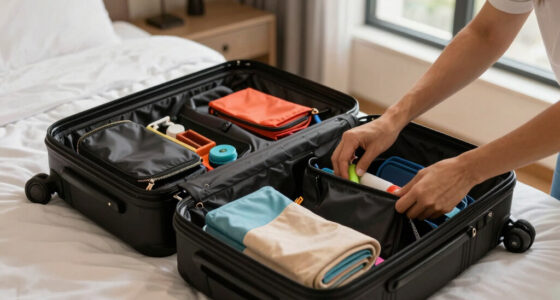
Step 5: Pack the suitcase for balance and access
Place heavier items low and near the suitcase’s wheel end so the bag is less likely to tip when upright. Put shoes or other firm items around the edges, and use packing cubes or folded clothing to fill gaps without forcing the case shut. Keep delicate items cushioned between soft clothing, and avoid placing breakables against the shell.
Pack items needed first or during the journey near the top or in a permitted accessible pocket. Distribute weight rather than loading one side heavily. Close the bag gently and check that fabric, straps, or zipper pulls are not caught in the closure.
Tip: Do not attach loose straps where they can catch in wheels, escalators, or moving walkways. Secure them before rolling.
Check: The suitcase closes without strain, stands upright without tipping, and its contents do not shift noticeably when you lift it.
Step 6: Test the wheels, handle, and carrying grip
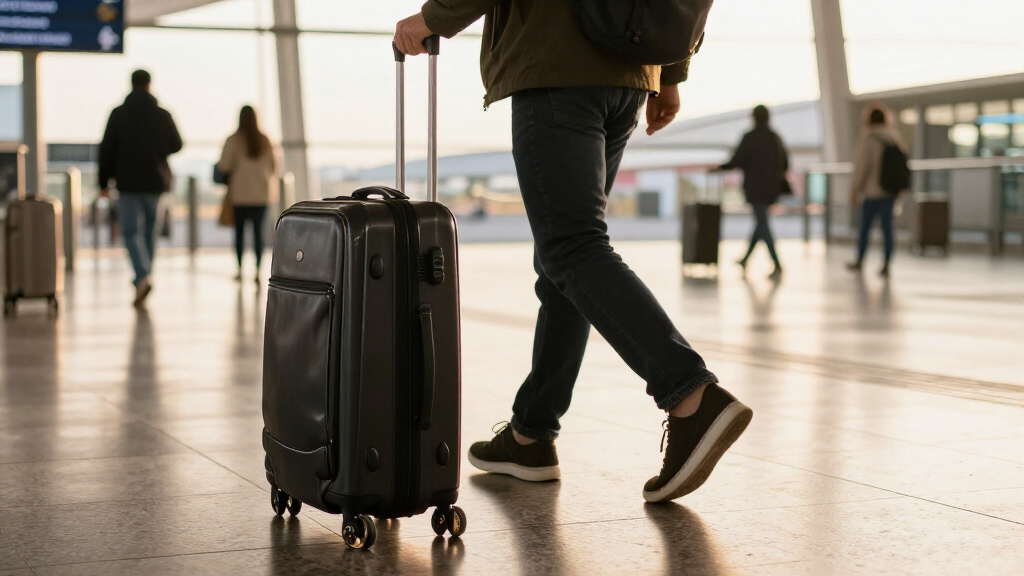
Extend the handle fully and roll the packed bag on a clear, level surface. Guide it upright beside you and turn it in a circle. Check that every spinner wheel rotates, the case tracks without pulling strongly to one side, and the handle does not wobble excessively. Test the top and side grips by lifting the bag a short distance; use your legs and keep the load close to your body.
Try lifting the suitcase over a low step or threshold only if you can do so safely. Spinner wheels roll well on smooth floors but may not handle rough pavement, stairs, or deep gaps. Carry the bag or use two wheels briefly where the surface requires it, and do not drag it by the telescoping handle.
Tip: Stop if a wheel catches, makes an unusual noise, or feels loose. A damaged wheel can worsen during travel; arrange repair or use another bag.
Check: The packed suitcase rolls and turns smoothly on level ground, the handle stays in position, and the grips support a controlled lift.
Step 7: Prepare the suitcase for the airport
Place identification inside and attach an outside tag with contact details, keeping personal information no more visible than needed. Remove old baggage tags. Check that zippers are fully closed and any lock complies with the rules of your route. Keep your boarding pass and identification in your personal item rather than in the overhead carry-on.
Before leaving, recheck your airline’s allowance and the packed bag’s weight if your load changed. At the airport, follow staff instructions and use the airline’s sizer if asked. Be ready to place the suitcase in the overhead bin; a bag that meets the measurement limit may still need to be positioned as directed.
Tip: Do not lock away items that security staff may need to inspect unless your lock is accepted for screening on your route.
Check: The case is labeled, closed, within the applicable limits, and ready to be presented for boarding or screening.
Common Mistakes to Avoid
- Using the suitcase body dimensions instead of measuring its full outside dimensions. — Measure from the outermost points, including wheels, handles, and pockets, with the case packed and closed.
- Assuming every airline accepts the same carry-on size or that the fare includes a full-size bag. — Check the allowance for each airline and fare on the itinerary, including connecting and operating carriers.
- Overpacking until the case bulges or the zipper is under strain. — Pack a trial load, close the bag gently, and remove items until it fits the size limit without pressure.
- Expecting spinner wheels to roll well on every surface. — Test the route over smooth ground, then carry or tilt the case over stairs, rough paving, and uneven thresholds.
Troubleshooting
Problem: The packed suitcase is too deep or wide even though the product listing says it is carry-on size.
Solution: Measure the loaded bag again, including bulging pockets and wheels. Remove bulky items, redistribute contents, or use a smaller case. Follow the airline’s measurement method if it publishes one.
Problem: The bag exceeds an airline’s weight limit.
Solution: Remove nonessential items, wear heavier clothing where practical, or move permitted items to a personal item without exceeding its separate allowance. Reweigh the case before leaving.
Problem: The suitcase pulls to one side, a wheel sticks, or a wheel makes noise.
Solution: Check for hair, thread, or debris caught around the wheel and remove it without damaging the assembly. If the wheel remains loose or uneven, arrange repair or travel with a different bag.
Problem: The airline says the carry-on cannot go in the cabin.
Solution: Follow staff directions and ask whether the bag must be checked or whether a permitted smaller item can go with you. Remove medication, documents, valuables, and other items you must keep with you before handing over the suitcase, subject to security and airline rules.
What Success Looks Like
You are ready to travel when the packed, closed suitcase meets the size and weight limits for every relevant airline and fare, the wheels and handle work smoothly, and the case stays balanced without putting pressure on its zippers. Required documents, medication, and valuables are accessible in your personal item. You can identify the bag, close it securely, and lift or maneuver it safely.
Next Steps
Before departure, check your airline’s baggage page again in case your itinerary or allowance changed. At check-in or boarding, follow staff directions if they ask you to measure or gate-check the bag. After the trip, empty the case, clean the wheels and shell according to the manufacturer’s care instructions, and check for loose screws, damage, or trapped debris. Repair a faulty wheel or handle before using the suitcase again.
Frequently Asked Questions
Are spinner wheels allowed on carry-on luggage?
Airlines generally set rules for the bag’s dimensions and weight rather than banning spinner wheels. The wheels count toward the outside measurements, so check the limits for your airline and fare.
Do spinner wheels count toward carry-on size?
Measure the whole suitcase, including wheels and handles. If an airline gives a specific measuring method, use that method; otherwise compare the bag’s widest outside dimensions with the published limit.
Is a four-wheel spinner better than a two-wheel carry-on?
A four-wheel spinner can roll upright and turn easily on smooth floors. Two-wheel bags may be more stable on rougher ground and often have recessed wheels. Choose based on your route and test the packed bag before travel.
Can I roll a spinner suitcase on stairs or uneven pavement?
Spinner wheels work best on smooth, level surfaces and may catch or take damage on stairs, cracks, or rough paving. Carry the suitcase by a proper grip when safe, or tilt it and use two wheels briefly on uneven ground.
What should I do if my carry-on spinner is gate-checked?
Ask staff what must be removed before handing over the suitcase. Keep medication, travel documents, valuables, and items you need during the flight with you, and follow screening and airline rules for those items.