TL;DR

Get travel and outdoor gear delivered free — and shop member deals
- Fast, free delivery on millions of items
- Access to Prime Big Deal Days deals on October 6–7
- Prime Video, Amazon Music and more included
Carry-on travel backpacks typically hold about 30–45 liters, but capacity does not determine whether a bag meets an airline’s carry-on or personal-item limit. Check the current rules for every flight, then measure and weigh the fully packed bag, including bulging pockets and straps; choose comfort, access, and durable construction to match how you travel.
A backpack can fit in the overhead bin at the start of your trip and still earn a gate-check tag on the return if you stuff its front pocket with souvenirs. That is the catch with carry-on travel backpacks: the number of liters tells you how much they can hold, not whether your particular airline will accept them.
This guide shows you how to compare packed dimensions, capacity, weight, and comfort, and how to choose features that earn their space. You’ll also get a practical way to check the bag against every flight on your itinerary, including a budget-airline connection where the rules may be tighter.
The aim is simple: choose a pack that works on your back and fits your trip without relying on the vague promise that it is “airline approved.”
Check the current cabin-bag and personal-item rules for every flight and fare on your itinerary.
Measure and weigh the backpack fully packed, including bulging pockets, handles, and attached straps.
Treat 30–45 liters as a common capacity range, not a guarantee of carry-on compliance.
Test the loaded bag for comfort; fit and weight distribution matter more than a soft feel when empty.
Choose between a backpack and a rolling suitcase based on your route, load, and comfort carrying weight.
What makes a travel backpack work as a carry-on?
A carry-on travel backpack is a soft-sided bag designed to replace or complement a small suitcase while remaining practical to carry through an airport and a city. Many use a suitcase-style main opening, with separate pockets for a laptop, documents, and toiletries. Unlike a hiking pack, an on travel backpack is usually built around organized packing and quick access, not a frame for carrying loads over trails.
That difference shows up when you arrive at a hotel late. A clamshell bag opens flat on the bed, so you can find a clean shirt without digging down through a top-loading tunnel. A hiking pack may carry comfortably on a trail, but loose straps or external gear can snag in an overhead bin and take longer to stow.
Carry-on is an airline category, not a universal backpack size. Airlines set their own limits for cabin bags and personal items, and the two allowances are not interchangeable. A pack that fits overhead may be too large to count as an under-seat personal item, while a ticket on a particular fare may include only that smaller item.
Think of the “airline approved” label as a starting point, not a promise. Aircraft, seat layouts, fare rules, and packed shape all matter. If you are flying from a large airport on a major carrier, your bag may face different constraints on a short regional connection or a low-cost ticket.
A useful way to judge the design is to ask whether each feature makes your trip easier. A laptop sleeve helps if you work in airports; it is dead weight and lost packing space if you never bring a computer. What the bag is designed to do should match what you actually carry.
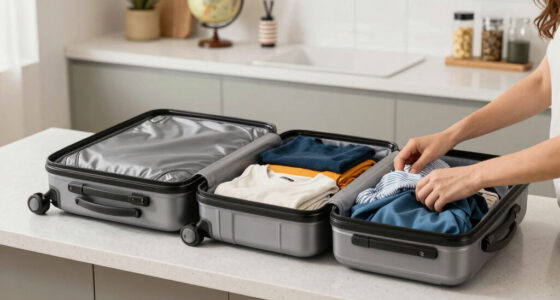
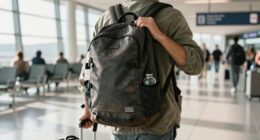
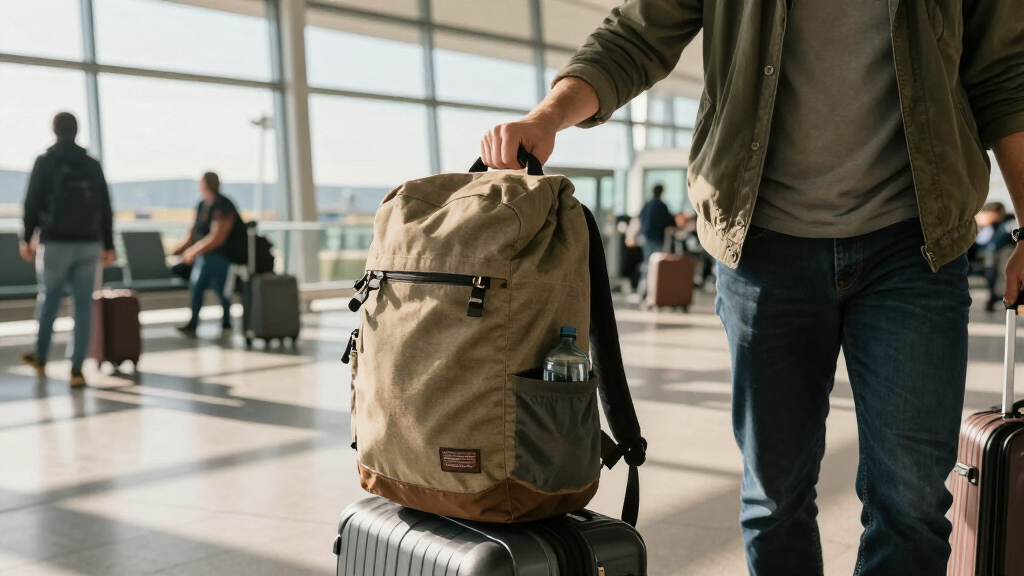
carry-on travel backpack with dimensions
As an affiliate, we earn on qualifying purchases.
As an affiliate, we earn on qualifying purchases.
How can you check whether your backpack fits the airline?
To check carry-on fit, compare the backpack’s fully packed outside dimensions with the current cabin-bag allowance for every airline on your itinerary. Measure the bag with its pockets filled, include handles and anything that sticks out, and check the personal-item limit separately if you plan to put it under the seat.
- Look up each flight’s rule. Check the airline’s own baggage page and your fare details, not just a bag listing. On a multi-airline trip, the tightest allowance may decide what you can carry.
- Pack it as you will travel. Fill the laptop sleeve, front pocket, and side pockets. A flat, empty bag gives you an unrealistically generous measurement.
- Measure the outside. Measure height, width, and depth at the bag’s widest points, including handles and packed pockets. Compare each figure with the airline’s stated limit.
- Weigh the loaded pack. An airline may have a cabin-bag weight limit, and the backpack itself contributes to your total. A heavier empty bag leaves less room for your belongings.
- Recheck before departure. Rules and fare conditions can change. Verify the current requirements before booking and again before travel.
For example, a 40-liter pack may look compact in a product photo but become several centimeters deeper when you squeeze in a bulky hoodie and fill its front organizer. A soft bag can compress, but its packed contents still need to fit; don’t count on being able to squash it after you reach the gate.
Personal-item limits are a separate test. If your plan is to slide the bag beneath the seat, check that airline’s specific under-seat dimensions and leave room for the seat structure. A bag that fits overhead may block your feet or fail to fit beneath a smaller regional aircraft seat.
Before you book, verify current baggage, entry, visa, and health rules with the airline and official government sources. Policies change, and a search result or product claim cannot settle your specific flight’s requirements.
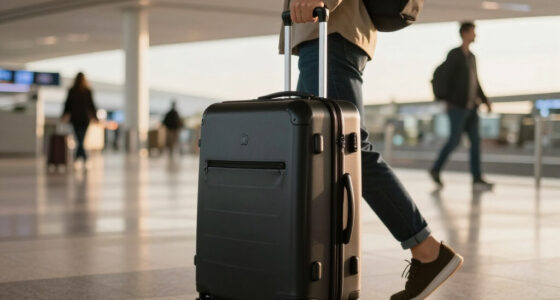
airline approved carry-on backpack
As an affiliate, we earn on qualifying purchases.
As an affiliate, we earn on qualifying purchases.
How many liters should you choose for your trip?
Choose backpack capacity by balancing your packing habits with the bag’s outside dimensions: many travel packs hold roughly 30–45 liters, but a bigger volume does not guarantee carry-on fit. Airlines judge external size, while liters describe internal capacity; a boxy 35-liter bag can exceed a slim 40-liter bag in one dimension.
A 30-liter pack can suit a weekend city break if you pack one spare pair of shoes and wear your bulkiest jacket. It also tends to discourage “just in case” items. The tradeoff is tight space for a laptop, toiletries, and an extra layer, particularly if your trip includes cold evenings or formal clothes.
Around 40 liters offers more breathing room for a week away, especially if you rewear clothes or do laundry. But the extra room can tempt you to pack heavier, and a full bag may press outward at its seams. Before choosing a 45-liter pack, try packing the same list in a smaller bag; you may find that the larger bag merely carries three extra shirts you never wear.
Capacity is a packing tool, not a compliance shortcut. Imagine two travelers heading out for four nights: one packs a 30-liter bag with a laptop and spare shoes, while another uses a 40-liter pack with light clothes and no computer. The smaller bag is not automatically lighter or easier to stow; the contents and shape settle that question.
Leave a little space for the return journey. A tightly stuffed pack may be hard to close, uncomfortable to wear, and more likely to bulge beyond its listed measurements when you buy a book or bring home a jar of local honey. Pack for the airline first, then choose the capacity that fits your real list.
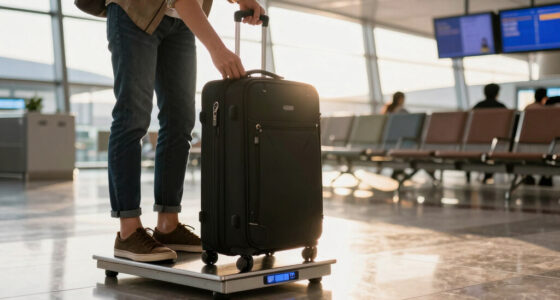
lightweight travel backpack for airplane
As an affiliate, we earn on qualifying purchases.
As an affiliate, we earn on qualifying purchases.
Which features make a backpack comfortable and practical?
The most useful travel-backpack features are the ones you notice after an hour on your shoulders: well-padded straps, a supportive back panel, adjustable fit, and a sternum strap that helps stabilize the load. A hip belt can shift some weight from your shoulders, especially when the pack is heavy, though stowable belts are easier to manage around airports and under seats.
Try the backpack with weight inside if you can. A bag that feels soft and easy to lift when empty can pull backward once you add a laptop, water bottle, and two pairs of shoes. Walk a few minutes, adjust the straps, and see whether the load sits close to your back rather than swinging like a grocery bag.
Clamshell openings make packing easier because the bag opens like a suitcase, while compression straps hold clothes in place and can reduce shifting. A separate laptop compartment is handy when you need to remove a computer at security, but it can add weight and take space away from the main compartment. More pockets are not automatically better: each zipper can add bulk and another place to search.
Water-resistant fabric and covered zippers can handle light rain, but they do not make a backpack waterproof. If you walk through a wet Edinburgh afternoon with electronics inside, a rain cover or waterproof sleeve offers more protection than a label alone. Check stitching and reinforced stress points, too; a sturdy zipper is only as reliable as the fabric sewn around it.
Lockable zipper pulls, discreet pockets, and a luggage pass-through sleeve can be useful, but none replaces good judgment in a crowded station. A pass-through sleeve may also add bulk. The practical test is whether a feature saves time or improves comfort on a real trip, not whether it looks clever on a product page.
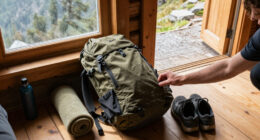
organized carry-on backpack with laptop compartment
As an affiliate, we earn on qualifying purchases.
As an affiliate, we earn on qualifying purchases.
Backpack or rolling suitcase: which is better for your route?
A travel backpack is usually easier to carry over stairs, cobblestones, and crowded platforms; a rolling suitcase is often easier on your shoulders across a long, smooth airport terminal. Your route matters more than a general claim that one is better. If your hotel sits up a narrow staircase, wheels can become a nuisance; if you walk several miles with a heavy load, a backpack can become one.
| Trip situation | Backpack advantage | Suitcase advantage | What to check |
|---|---|---|---|
| Old-town streets and stairs | Hands-free carrying; no wheels to drag | Easy to open in a room | Pack fit and loaded comfort |
| Large airport, mostly smooth floors | Compact shape and easy overhead handling | Less weight on your shoulders | Whether the case fits cabin rules |
| Several flights with strict cabin rules | Soft sides may compress slightly | Rigid edges protect contents | Actual packed dimensions and fare allowance |
| Long walk between stations and lodging | Good suspension spreads the load | Wheels can rattle or catch | Fit the loaded bag before departure |
Consider a traveler changing trains in Lisbon: a backpack keeps both hands free for a ticket and a handrail, but a poorly fitted 12-kilogram load can make the climb miserable. Across a flat airport, a wheeled case may feel effortless by comparison, though you must lift it into the overhead bin.
Comfort depends on the person, load, and route. If you have shoulder or back concerns, a rolling bag may be the kinder option. If you prefer a backpack, keep the load modest and test the fit before committing to a full travel day.
There is no reason to force one bag to do every job. A streamlined pack may suit a two-night work trip, while a larger, supportive design may make sense for a walking-heavy holiday. A suitcase can remain the better choice if you rarely carry your luggage far.
How should you pack to avoid a gate-check surprise?
Pack to the airline’s size limit rather than the backpack’s maximum capacity, and keep the items you need in flight within easy reach. Measure and weigh the bag after packing, leave some room for the return trip, and avoid stuffing external pockets until they bulge. That final check catches the common problem: a bag that fits empty but grows beyond its allowed depth once full.
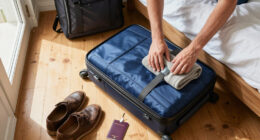
Put a passport, headphones, medication, and a light snack in an accessible pocket, then place clothes in the main compartment. Keep liquids compliant with the airport security rules that apply to your departure, and use a clear toiletry pouch if your airport requires one. You do not want to unpack half your bag in a security line because a small bottle rolled to the bottom.
Try this short check at home: close every zipper, stand the pack upright, and measure its fullest points. Then wear it and walk around the block. If it leans away from your back, shifts from side to side, or feels uncomfortable after ten minutes, rearrange heavy items closer to your back and remove anything you packed “just in case.”
- Use packing cubes to separate clean clothes, laundry, and small accessories without filling every spare pocket.
- Wear bulky layers on travel day when practical, rather than using precious bag space for a coat.
- Keep straps tidy and secure loose attachment points that could snag in a sizer or overhead bin.
- Pack a foldable tote only if you have a plan for carrying it within your baggage allowance.
Even a bag that meets the published dimensions may be gate-checked if overhead space runs out. Avoiding an oversize pack lowers the risk, but it cannot guarantee a particular storage spot on a full flight. Keep medication and other essentials where you can retrieve them if the backpack must travel in the hold.
Who should buy a carry-on backpack—and who should skip it?
A carry-on backpack makes sense if you want hands-free movement, expect stairs or uneven streets, and can carry your packed load comfortably. It is less appealing if you plan to haul heavy gear over long distances, have difficulty carrying weight on your back, or spend most of your travel day rolling through smooth terminals. The right choice is the one your body and itinerary can live with.
For a three-night city trip with one laptop, a 30- to 40-liter pack may leave enough space for clothes, toiletries, and a spare pair of shoes. For a longer trip with camera equipment or cold-weather layers, a larger pack can become heavy and may exceed a cabin limit when fully loaded. In that case, a rolling suitcase or a checked bag may be the more comfortable and practical choice.
Look for a bag with a repair policy or warranty if you expect to travel often, but read the terms rather than relying on “lifetime” language. Coverage can differ for zippers, fabric, normal wear, and accidental damage. A two-year warranty that clearly covers a failed seam may offer more useful protection than a vague promise with many exclusions.
Two realistic alternatives are a small rolling carry-on and a hiking pack. A rolling case makes sense when you want to avoid carrying weight, while a hiking pack may suit a trip with long walks if its straps fit and its external shape stays within the airline’s rules. Hiking packs can have dangling straps or frames that are awkward to stow, so check the packed dimensions and secure loose parts.
A backpack is not a purchase you need to make on capacity alone. Compare exact dimensions, empty weight, strap adjustment, zipper construction, and warranty details for the specific model and current price before you buy. If a brand does not publish those details clearly, treat that as a reason to ask questions—not as proof of quality.
Frequently Asked Questions
What size backpack counts as a carry-on?
There is no single universal size: each airline sets its own cabin-bag limits, and fare rules can differ. Compare your backpack’s fully packed outside measurements with the current rules for every flight, including regional connections.
Can a travel backpack count as a personal item?
Sometimes, if its packed dimensions meet the airline’s personal-item limit and it fits beneath the seat. Check the specific flight’s rule; a bag that works overhead may be too large for under-seat storage.
How many liters should a carry-on backpack hold?
Many travel backpacks hold roughly 30–45 liters, but the best capacity depends on what you pack and how you travel. Liters describe internal volume, not airline compliance, so check the bag’s outside dimensions when packed.
Are carry-on backpacks better than suitcases?
Backpacks are easier to carry up stairs and across uneven streets, while rolling suitcases can be more comfortable on long, smooth airport walks. Choose based on your route and whether you are comfortable carrying the loaded weight.
Are carry-on travel backpacks waterproof?
Most are water-resistant rather than waterproof. Water-resistant fabric can handle light rain, but prolonged wet weather may soak through seams or zippers; use a rain cover or waterproof sleeve when protecting electronics matters.
Conclusion
Choose the bag by its packed dimensions and how it feels on your back—not by its liter count or an “airline approved” label. Check your exact flights, load the pack as you plan to travel, then measure and weigh it before you leave.
A well-chosen backpack should make the walk from platform to hotel feel simpler, not turn every stair into a negotiation with your shoulders.
Halloween Picks
halloween
As an affiliate, we earn on qualifying purchases.