
TL;DR

Get travel and outdoor gear delivered free with Prime
- Fast, free delivery on millions of items
- Prime Video, Amazon Music and more included
- Member-only deals all year
Packing cubes help compress and organize clothing, boosting space in your carry-on by up to 50%. They keep your bag tidy, prevent wrinkles, and make unpacking quicker. A simple, cost-effective upgrade for smarter travel.
Ever wrestle with a jam-packed carry-on that feels like it might burst? Packing cubes turn that chaos into order. They’re small, lightweight pouches that neatly contain your clothes, accessories, and more, squeezing every inch of space out of your bag.
In this guide, you’ll learn how packing cubes can transform your packing routine, helping you pack smarter, stay organized, and avoid those dreaded overstuffed bags. Plus, we’ll cover recent innovations and practical tips to get the most from your cubes.
Packing cubes can boost your packing efficiency by up to 50%, freeing up space in your carry-on.
Choosing the right sizes and features—like compression zippers—maximizes space savings and durability.
Rolling clothes and filling every cube prevents wasted gaps and keeps your bag organized.
Matching cube sizes to your clothing type helps optimize space and ease unpacking.
Eco-friendly options are available that combine sustainability with high performance.
How Packing Cubes Can Maximize Space in Your Carry-On
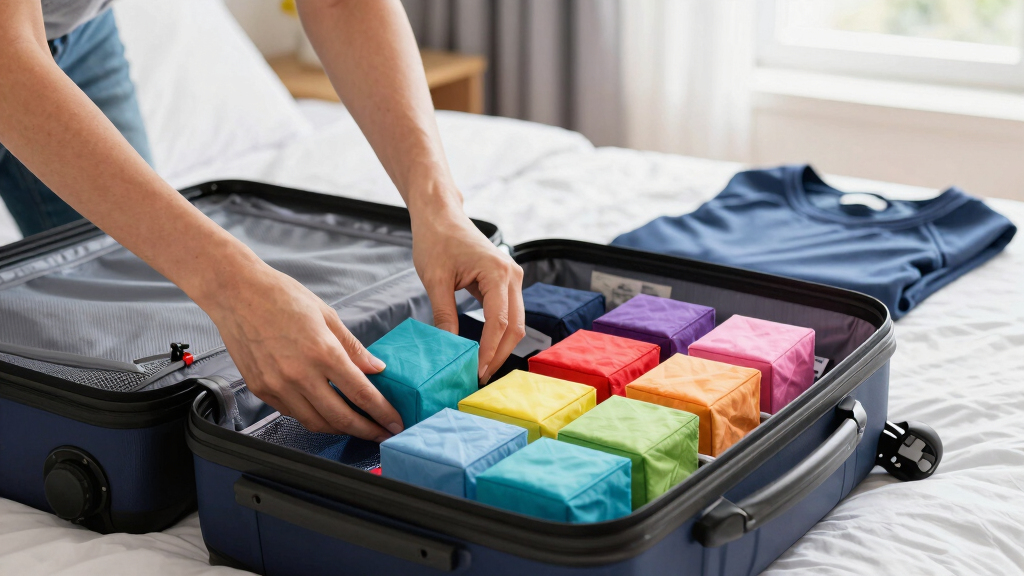
Packing cubes turn a jammed suitcase into a compact, portable closet. By compressing soft items, eliminating awkward gaps and separating categories, they can improve packing efficiency by 30–50% while making every item easier to reach.
From loose clothing to a space-saving system
Compression works best when it follows organization. Sort first, pack tightly, remove air, then build a stable grid inside the case.
Choose
Match small, medium and large cubes to the items you actually carry.
Right-size the loadRoll
Lay garments flat, then roll or fold them tightly to reduce empty pockets.
Shape soft itemsFill
Tuck socks and underwear into remaining spaces so every cube stays dense.
Remove the gapsCompress
Use the second zipper or internal straps to squeeze out excess air.
Reduce the volumeStack
Place cubes edge-to-edge, with heavier pieces low and essentials accessible.
Build the suitcaseGive every garment the right container
A mixed set is more efficient than identical cubes. The goal is to create modules that fill the carry-on without leaving unusable channels between them.
| Cube size | Best for | Practical load | Volume |
|---|---|---|---|
| Small | Socks, underwear, cables, accessories | Several compact essentials | 2–3 liters |
| Medium | Shirts, tops, shorts, casual wear | About 3–4 T-shirts | 4–6 liters |
| Large | Jeans, sweaters, jackets, pajamas | One bulky outfit group | 8–10 liters |
Buy less bulk—and more utility
The best cube is light, durable and shaped for your bag. Extra features are valuable only when they improve compression, protection or access.
Lightweight fabric
Ripstop nylon or silnylon provides strength without consuming the airline weight allowance you are trying to protect.
Dual zippers
A second zipper contracts the cube after loading, pushing out air and reducing the profile of shirts and other soft layers.
Water resistance
Coated surfaces help shield clothing from toiletry leaks, damp footwear and brief exposure to rain during transit.
Reinforced seams
Quality stitching and smooth zippers withstand repeated compression, making a well-built set useful trip after trip.
Multi-use design
Separate compartments can become laundry bags, shoe storage or organizers for electronics and travel accessories.
Recycled materials
Recycled PET and other lower-impact fabrics can provide comparable strength and water resistance with less virgin material.
The gain depends on technique
Correct sizing, tight rolling and compression features determine where a traveler lands within the reported 30–50% efficiency range.
Five moves that unlock the extra room
Think of each cube as a drawer in a mini closet. A repeatable system saves more time—and often more space—than forcefully squeezing the suitcase shut.
Roll strategically
Roll casual clothing tightly; fold structured garments along natural seams to control wrinkles.
Fill every gap
Use socks, underwear and small accessories to fill corners before compressing the cube.
Layer by weight
Put dense cubes near the wheels and lighter, frequently used items toward the opening.
Color-code
Assign colors or labels by person, outfit or clothing type for faster hotel unpacking.
Compress last
Close the main zipper first, press the cube evenly, then engage the compression zipper.
Watch the weight
More available space does not increase the airline weight limit—check the packed bag before leaving.
Before you zip the bag
The short version: choose a mixed set, use it for soft goods, compress evenly and remember that saved volume is not saved weight.
Do packing cubes really save space?
Yes. They reduce gaps and can compress clothing, producing reported packing-efficiency gains of roughly 30–50% depending on technique.
Which sizes should I use?
A mixed set works best: small for socks and accessories, medium for shirts, and large for jeans, sweaters or jackets.
Will they prevent wrinkles?
They help limit shifting and bunching. Roll casual pieces, but fold structured or delicate garments carefully rather than over-compressing them.
Can cubes do more than hold clothes?
Yes. Use them for shoes, laundry, toiletries, cables and electronics—or as lightweight storage drawers at your destination.
Are sustainable options available?
Yes. Look for recycled fabrics, repairable construction and transparent manufacturing claims without sacrificing zipper or seam quality.
What is the biggest mistake?
Using cubes as permission to overpack. Extra room is useful only if the final bag still meets airline dimensions and weight restrictions.
Why Packing Cubes Are the Secret to Smarter Packing
Packing cubes are a simple trick to turn a cluttered, bulky bag into a well-organized space. They compress clothes, reduce wasted gaps, and keep everything in its place. Imagine pulling out a cube filled with clean socks—quickly accessible and wrinkle-free, instead of digging through a mountain of clothing.
For example, a traveler packing for a week might use three cubes: one for shirts, one for underwear and socks, and one for pajamas and accessories. This setup makes unpacking at your hotel a breeze and prevents overpacking by encouraging mindful choices.
According to BagsOK, packing cubes can boost your space efficiency by 30-50%, depending on how you pack and the cube sizes you choose.
packing cubes for carry-on luggage
As an affiliate, we earn on qualifying purchases.
As an affiliate, we earn on qualifying purchases.
How Packing Cubes Maximize Space (Step-by-Step Breakdown)
- Choose the right sizes: small for socks, medium for shirts, large for bulkier items like jeans or jackets.
- Lay your clothing flat, roll or fold tightly, then slide into the cube.
- Use compression zippers or straps if available to squeeze out extra air and reduce volume.
- Stack cubes neatly in your carry-on, filling every corner and gap.
- Unpack with ease—simply grab the cube you need, no rummaging required.
This method ensures every inch is utilized. For instance, a 40-liter carry-on can hold a week’s worth of clothes, toiletries, and electronics when packed with cubes, without exceeding airline limits.
As an affiliate, we earn on qualifying purchases.
Packing Cube Sizes and How to Pick the Best Ones
Not all packing cubes are created equal. Sizes typically range from small (about 2 liters) to large (up to 10 liters). Your choice depends on what you pack and how much space you want to save.
Here’s a quick guide:
| Size | Best For | Approximate Volume |
|---|---|---|
| Small | Socks, underwear, accessories | 2-3 liters |
| Medium | Shirts, tops, casual wear | 4-6 liters |
| Large | Jeans, jackets, bulkier items | 8-10 liters |
Matching your packing style to the right sizes prevents waste and maximizes space. For example, a medium cube can hold 3-4 T-shirts comfortably, while a large cube can contain a pair of jeans or a bulky sweater.
As an affiliate, we earn on qualifying purchases.
What to Look for in a Packing Cube (Features That Save Space and Last)
- Lightweight fabrics: materials like ripstop nylon or silnylon reduce weight without compromising durability.
- Compression zippers: squeeze out excess air, shrinking your packing volume further.
- Multiple compartments: organize electronics, toiletries, and clothing separately.
- Water-resistant surfaces: protect your clothes from leaks or rain during transit.
- Durability: reinforced stitching and quality zippers extend lifespan, making them a good investment.
For example, a traveler using a cube with compression zippers saved space equivalent to an extra shirt or pair of shoes in her carry-on, which was crucial for a tight connection.
lightweight packing cubes for backpack
As an affiliate, we earn on qualifying purchases.
As an affiliate, we earn on qualifying purchases.
Real-World Packing Tips for Using Cubes Effectively
Think of your packing cubes as a mini closet. Here are practical tips:
- Roll instead of fold: rolling clothes reduces wrinkles and saves space.
- Fill every cube: cram socks, underwear, and small items to avoid wasted gaps.
- Layer your cubes: pack heavier items at the bottom, lighter ones on top for easy access.
- Label or color-code: differentiate cubes at a glance, speeding up unpacking.
- Use compression if available: squeeze out air for extra room, especially on longer trips.
For example, a traveler found that rolling her shirts and packing them into medium cubes allowed her to fit an extra pair of shoes in her carry-on without exceeding weight limits.
Are Packing Cubes Worth It? The Pros and Cons
Yes, packing cubes are worth the investment—if you value organization and space efficiency. They help you pack faster, keep clothes wrinkle-free, and make unpacking a breeze.
However, they add a small layer of complexity and cost. Some travelers prefer minimalist packing with less gear, so cubes might feel like overkill for short trips or minimalist travelers.
Overall, the benefits outweigh the drawbacks for most frequent travelers or those wanting to maximize every inch of their carry-on.
Eco-Friendly Packing Cubes: Do They Exist?
Absolutely. Many brands now offer cubes made from recycled fabrics or biodegradable materials. These options help reduce your carbon footprint without sacrificing durability.
For instance, a set made from recycled PET bottles weighs the same as traditional nylon but offers the same water resistance and strength. Plus, they often look stylish and modern.
If sustainability is a priority, look for certifications or brands that specify eco-conscious manufacturing practices.
Frequently Asked Questions
Do packing cubes really save space?
Yes, packing cubes help compress clothing and fill gaps, often increasing space efficiency by up to 50%. They make your bag more organized and prevent overpacking.What size packing cubes should I use?
A mix of small, medium, and large cubes works best. Small for socks and underwear, medium for shirts, and large for bulkier items like jeans or sweaters.Are packing cubes worth the investment?
Most travelers find them worthwhile for organization and space-saving, especially on longer trips or when trying to stick within carry-on limits.Can packing cubes be used for other purposes?
Yes, they work well as laundry bags, shoe organizers, or storage for electronics and accessories during travel.Are eco-friendly packing cubes available?
Yes, many brands now offer cubes made from recycled or biodegradable materials, helping you pack sustainably without sacrificing quality.Conclusion
Using packing cubes turns a chaotic suitcase into a well-organized closet on the go. They’re a small tweak that unlocks big space savings and makes travel smoother. Before your next trip, pack a set and watch your carry-on transform.
Think of your bag as a puzzle—packing cubes are the perfect pieces to fit everything neatly inside. Ready to pack smarter? Your future self will thank you for it.
Halloween Picks
halloween
As an affiliate, we earn on qualifying purchases.