TL;DR
Effective compression techniques like rolling, packing cubes, and vacuum bags dramatically reduce luggage volume—by up to 50%. Combining these methods helps travelers pack more efficiently and avoid overweight fees. Proper balance prevents wrinkles and fabric damage.
Ever wrestled with a seemingly overflowing suitcase that refuses to close? You’re not alone. Travel packing is a constant battle between maximizing space and keeping your clothes wrinkle-free. The secret? Effective compression techniques that turn bulky piles into neat, manageable bundles.
In this guide, you’ll learn exactly how to squeeze every inch out of your luggage—whether you’re traveling for a weekend or a month. We’ll explore proven methods, the latest gear innovations, and how to strike the right balance between tight packing and fabric care. Ready to pack smarter and travel lighter? Let’s dive in.
Use vacuum bags for bulky items like sweaters and jackets to cut their volume in half.
Combine rolling, folding, and bundle packing to optimize space based on clothing type and fragility.
Avoid over-compression to prevent fabric damage and wrinkles, especially with delicate fabrics.
Invest in multi-functional, eco-friendly compression gear to make packing easier and greener.
Organize with labeled packing cubes and designated compartments for quick access and smooth unpacking.
Effective Compression Techniques for Travel Packing
Turn overflowing piles into a compact, organized suitcase without sacrificing fabric care. The winning approach is not one method—it is a deliberate mix of rolling, folding, bundling, cubes, and controlled vacuum compression.
Possible with properly matched compression techniques.
More space than conventional folding for suitable garments.
Extra pressure can trade space savings for wrinkles and fiber damage.
Ideal for sweaters and jackets.
Fast, flexible, corner-friendly.
Neat and suitable for formal wear.
Match the method to each fabric.
Choose by fabric, not habit
Compression works best when the garment determines the technique. Sturdy, bulky items tolerate more pressure; delicate or structured clothing needs gentler handling and careful placement.
Roll
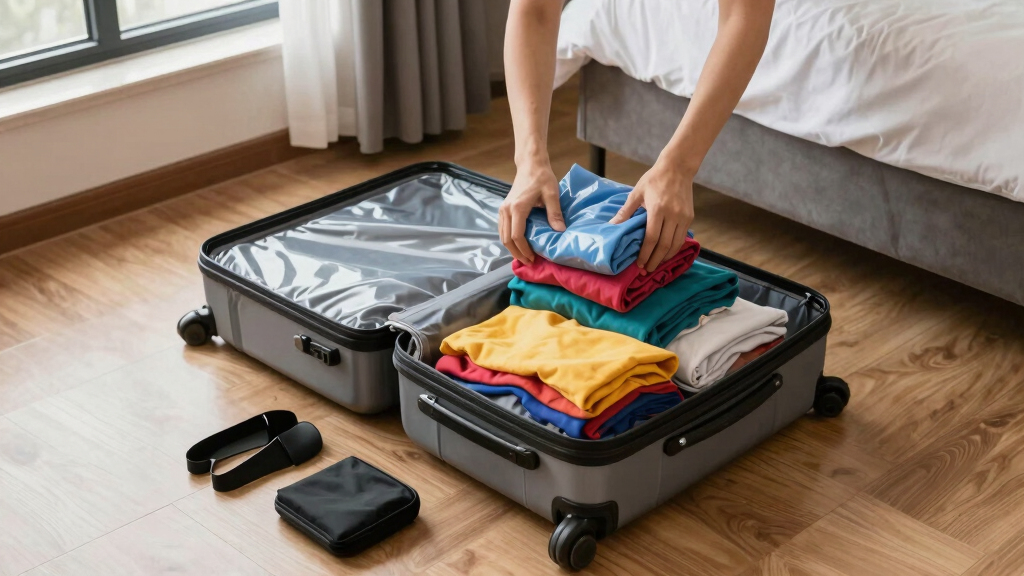
Form compact cylinders and place them in gaps. Smooth the garment first, roll evenly, and avoid creating a tight knot.
Vacuum compress
Remove air gradually from sturdy garments. Leave room near the seal and stop before fibers become sharply distorted.
Fold or bundle
Use clean folds for structure or wrap garments around a soft core to reduce hard crease lines during longer trips.
Three core techniques compared
Space saving is only one variable. Access speed, wrinkle control, garment type, and packing time should shape the final decision.
| Method | Space saving | Wrinkle control | Ease | Best for |
|---|---|---|---|---|
| Rolling | ✓ High · ~30% | ✓ Good with smooth, even technique | Quick and flexible | Casual wear and frequent access |
| Folding | ~ Moderate · ~20% | ~ Variable by fabric and fold | Familiar and neat | Business clothing and structured pieces |
| Bundle packing | ✓ Very high · ~50% | ✓ Excellent when assembled correctly | Slower and more involved | Long trips, fragile garments, maximum efficiency |
Figures are practical estimates. Actual results vary with garment thickness, suitcase shape, packing pressure, and technique.
Compress air—not garment integrity
A controlled sequence protects seals, limits fabric stress, and prevents a compressed bag from re-inflating halfway through the journey.
Choose quality
Use travel bags with double-zip seals and reliable valves.
Load loosely
Leave clear space at the top and avoid overfilling corners.
Seal fully
Run the closure twice and check the entire zipper edge.
Remove air slowly
Use a hand pump or vacuum hose with gradual pressure.
Inspect and pack
Check for leaks, then place the flat bag against the case wall.
Silk, lace, embellished pieces, and structured garments should not be aggressively vacuum-packed. Roll gently, cushion with soft clothing or tissue, and keep pressure moderate.
More pressure is not always better
The goal is useful space—not the smallest possible package. Stop compressing when the item is stable, compact, and free from sharp folds or stressed seams.
Typical space-saving potential
Relative volume reduction under appropriate packing conditions.
Garment pressure guide
Use the lowest compression level that achieves a practical fit.
The next generation of compression
New products combine space reduction with tracking, sustainability, and multi-use organization—useful improvements for frequent travelers.
Built-in valves
Faster air removal with less effort and fewer accessories.
RFID tracking
Helps identify packed items and reduce misplaced essentials.
Eco materials
Reusable fabrics and biodegradable bag options reduce waste.
Cube to laundry bag
One organizer shifts roles as clean clothing becomes laundry.
The efficient packing chain
Each decision supports the next—from garment assessment to a balanced, accessible suitcase.
What are the best compression techniques for different clothing types?
Not all clothes compress equally. The trick is matching the right technique to each fabric and item. For sturdy jeans or thick sweaters, vacuum bags are your best bet. They remove air and shrink bulky items down by up to 50%, which can significantly free up space, especially in tight luggage compartments. However, overusing vacuum bags on delicate fabrics can lead to stretching or damage, so understanding the tradeoffs is essential.
For delicate shirts or blouses, rolling minimizes wrinkles and helps the fabric retain its shape, which is crucial for maintaining a professional appearance upon arrival. Lightweight items like underwear and socks are ideal for compression cubes—they organize small items efficiently while also reducing their volume. Choosing the right method based on fabric type and item fragility ensures your packing remains both compact and gentle on your clothes, preventing unnecessary wear.
For example, a wool sweater weighing around 600 grams can be compressed into a smaller ball using a vacuum bag, freeing up space for other essentials. Meanwhile, a cotton T-shirt can be rolled to reduce creases and fit snugly into corners, making the most of limited space. Balancing these techniques according to clothing type maximizes efficiency without risking damage or excessive wrinkling.
As an affiliate, we earn on qualifying purchases.
How to use vacuum storage bags without damaging your clothes
- Choose high-quality vacuum bags designed for travel; look for double-zip seals and easy valves to ensure airtight closure and ease of use. This reduces the risk of leaks that can compromise your packed items.
- Fill the bag with your clothing, leaving some space at the top so the bag can fully collapse without putting stress on the fabric. Overfilling can cause the bag to rupture or stretch the material, leading to potential damage.
- Seal the zipper tightly, then use a hand pump or a vacuum cleaner with a hose to remove excess air. Doing so gradually helps prevent sudden pressure that might distort or damage delicate fabrics.
- Check for leaks and ensure the bag is fully sealed before packing it into your luggage. Small leaks can cause the bag to re-inflate or lose compression, negating space-saving benefits.
- Be cautious with delicate fabrics like silk or lace—over-compression can cause wrinkles, tears, or permanent creases. Always test a small section first, and avoid squeezing too tightly to preserve the integrity and appearance of your clothes.
For example, a bulky winter jacket can be vacuum-packed to half its original volume, which is ideal for saving space. Conversely, delicate silk blouses should be gently rolled and packed in smaller, less aggressive compression bags to prevent damage. Understanding the proper handling and limitations of vacuum bags ensures your clothes stay in good condition while maximizing packing efficiency.
As an affiliate, we earn on qualifying purchases.
Comparison table: Rolling vs. Folding vs. Bundle Packing
| Method | Space Saving | Wrinkle Control | Ease of Packing | Best For |
|---|---|---|---|---|
| Rolling | High (~30%) | Good with practice; requires technique to minimize wrinkles | Quick, flexible | Casual, everyday wear, travel days with frequent access |
| Folding | Moderate (~20%) | Variable; careful folding reduces creases, but some fabrics are prone to wrinkles | Traditional, neat packs | Business trips, formal wear, where appearance matters |
| Bundle Packing | Very high (~50%) | Excellent; minimizes wrinkles when done correctly, but requires more time and effort | Labor-intensive | Long trips, fragile or bulky fabrics, where maximum compression is needed |
For example, rolling a pair of jeans can free up space and reduce creases, but if not done properly, it may still leave some wrinkles. Bundle packing, while more time-consuming, offers the highest compression and wrinkle minimization—ideal for delicate or bulky items that need extra protection and careful handling.
compression packing bags for travel
As an affiliate, we earn on qualifying purchases.
As an affiliate, we earn on qualifying purchases.
Practical tips for combining compression methods effectively
- Start by rolling smaller, soft items like underwear and T-shirts to maximize space while minimizing wrinkles. This approach ensures quick access and efficient use of space.
- Use vacuum bags for bulky sweaters and jackets that take up a lot of room, but be mindful of the fabric’s sensitivity. Over-compression can damage delicate fibers or cause excessive wrinkling, so adjust pressure accordingly.
- Place heavier items at the bottom of your suitcase for better weight distribution and easier access to lighter items on top.
- Wrap fragile or delicate items with soft clothing or tissue paper before compression to cushion against pressure and prevent tears or creases.
- Leave some space for souvenirs or items you may acquire along the way, preventing your luggage from becoming overly tight and risking damage during handling.
Imagine packing a week-long trip—roll your T-shirts and underwear for quick, space-efficient packing; vacuum pack your bulky sweaters to save room; and fold or bundle formal wear carefully to prevent wrinkles. Combining these techniques allows you to optimize space while protecting your clothes, leading to a more organized and stress-free travel experience.
multi-functional travel compression gear
As an affiliate, we earn on qualifying purchases.
As an affiliate, we earn on qualifying purchases.
Latest trends in compression gear you should know
New compression gear is smarter and eco-friendlier, reflecting the growing demand for sustainable travel solutions. Many brands now feature bags with built-in valves that make air removal effortless, reducing the physical effort and time required for packing. Some incorporate RFID tags to track your packed items, helping prevent lost luggage or misplaced clothes—particularly useful for frequent travelers or those with tight connections.
Eco-conscious travelers can opt for biodegradable vacuum bags made from sustainable fabrics, which decompose after disposal, reducing environmental impact. Multi-functional gear, like compression cubes that double as laundry pouches or garment organizers, are gaining popularity because they streamline packing and improve organization. These innovations not only make packing more convenient but also align with environmentally friendly values, encouraging responsible travel habits.
For example, a lightweight, reusable compression cube made from recycled materials can be used multiple times and even serve as a laundry bag during your trip, reducing waste and clutter while supporting sustainability efforts.
How much space can you realistically save with compression?
According to research, proper compression can shrink your packing volume by up to 50%. This means that a suitcase filled with a week’s wardrobe—say, 80 liters—can be reduced to roughly 40 liters when combining techniques like rolling, vacuum bags, and packing cubes. Such savings not only make packing more manageable but also open up possibilities for additional items or lighter luggage options.
However, it’s important to recognize the limits of compression. Over-compressing fragile fabrics or overly tight packing can cause damage, wrinkles, or make unpacking difficult. The key lies in striking a balance: compress tightly enough to save space but gently enough to preserve fabric integrity and appearance.
Imagine fitting three sweaters, five T-shirts, and a pair of jeans into a carry-on that normally would require an extra bag. This level of efficiency can significantly lighten your load and simplify travel logistics, especially when navigating crowded airports or navigating tight storage compartments.
What are the risks or downsides of compression techniques?
While compression saves space, overdoing it can cause fabric damage or increase wrinkles, especially in delicate fabrics like silk or lace. Excessive pressure can stretch fibers, cause tears, or create permanent creases that are difficult to remove. Additionally, vacuum bags may trap excess moisture if not dried properly after use, which can lead to mold, mildew, or unpleasant odors—especially if clothes are packed damp or in humid environments.
Over-compression can also make unpacking more difficult, as clothes may become tightly bound or misshapen, and repeated use of zipper seals can weaken the material, increasing the risk of leaks or tears. Wool sweaters compressed too tightly might stretch or warp, reducing their lifespan and appearance.
To mitigate these risks, always test a small section first, avoid excessive pressure, and give fabrics time to relax after unpacking. Using appropriate techniques and equipment ensures your clothes remain in good condition while you enjoy the benefits of space-saving packing.
Organizing your packed items for quick access
Use clear, labeled packing cubes and compression bags to keep everything visible and accessible. Group items by category—clothes, toiletries, accessories—so you find what you need without rummaging. Proper organization not only saves time during packing but also helps prevent overstuffing, which can compromise the integrity of your bags or cause unnecessary wrinkles.
Designate specific cubes or pouches for essentials like chargers, medications, or a change of clothes. Keeping a small, easy-to-access bag for on-the-go needs can save stress during airport waits or hotel check-ins. This systematic approach makes unpacking straightforward and ensures your essentials are always at hand.
Imagine reaching into your suitcase to grab a clean T-shirt from a labeled cube—no digging, no mess. Organized packing makes your trip smoother and less stressful, allowing you to focus on enjoying your travels rather than searching for items.
Frequently Asked Questions
Is it safe to use vacuum bags on all types of clothing?
Vacuum bags work well for thick, bulky items like sweaters and jackets. However, avoid over-compressing delicate fabrics like silk or lace, as it can cause wrinkles or tears. Always test first and don’t squeeze too tightly.How do I prevent wrinkles when using compression techniques?
Rolling clothes tightly and using packing cubes helps minimize wrinkles. For formal or delicate items, fold carefully or bundle them to reduce creases. Unpack promptly to let fabrics relax if you notice any minor wrinkling.Can compression bags be reused multiple times?
Yes, high-quality vacuum and compression bags are designed for repeated use. Just rinse and dry them thoroughly after each trip to prevent mold or odors. Reusable bags are eco-friendly and save money over time.What are the best products for packing cubes and vacuum bags?
Look for durable, lightweight fabrics with double zippers and reliable valves. Brands like BagsOK offer high-quality options, with capacities around 10-15 liters for cubes and larger sizes for vacuum bags—perfect for travel needs.How much space can I realistically save, and is it worth the effort?
You can expect to reduce your packing volume by up to 50%. For example, a 60-liter suitcase can be shrunk to around 30 liters using a mix of techniques. The effort pays off in lighter, more manageable luggage.Conclusion
Mastering effective compression transforms how you pack—more space, less hassle, lighter luggage. The next time you zip your suitcase, remember: it’s not just about squeezing everything in, but doing it smartly. Your future self will thank you for the extra room—and a wrinkle-free wardrobe.
So, go ahead—try a mix of rolling, vacuum packing, and organized cubes. Travel lighter, travel smarter. And ask yourself: what’s the one bulky item you’ll compress first on your next trip?