
TL;DR

Get travel and outdoor gear delivered free with Prime
- Fast, free delivery on millions of items
- Prime Video, Amazon Music and more included
- Member-only deals all year
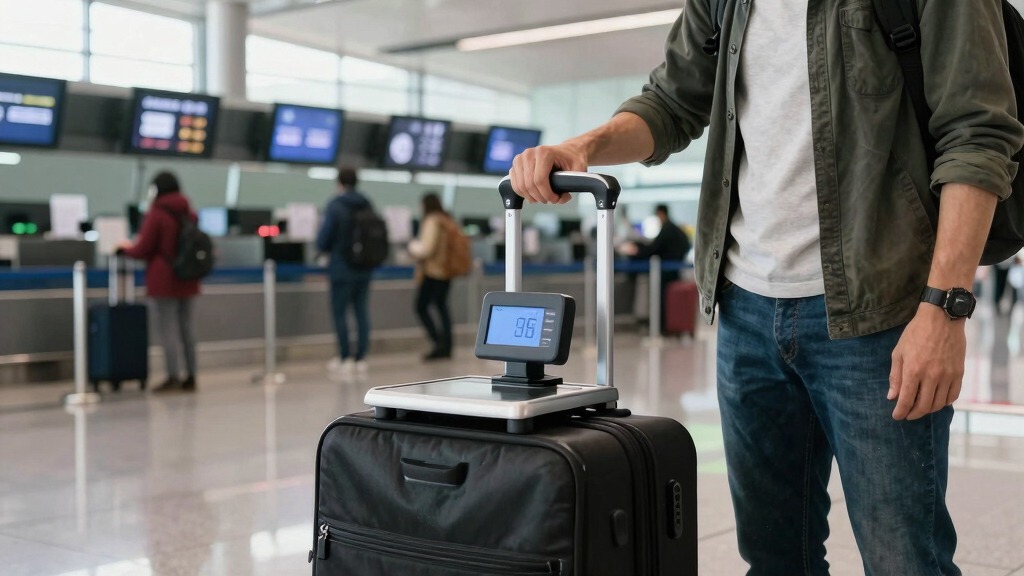
A quality luggage scale ensures accurate weight readings, helping you stay within airline limits. With features like calibration and portability, it’s a smart travel investment that saves money and stress.
Imagine arriving at the airport, only to find your bag is overweight — again. The extra fees can sizzle your travel budget and turn a smooth trip into a stress-fest. But there’s a simple fix: a reliable luggage scale. It’s a small gadget that can save you hundreds of dollars and hours of hassle.
In this guide, you’ll learn what to look for in a luggage scale — accuracy, durability, features — and how recent tech innovations make weighing easier than ever. Whether you’re a frequent flyer or an occasional traveler, mastering your luggage weight with the right scale keeps your trip stress-free and budget-friendly.
Choose a digital luggage scale with at least 0.1-pound accuracy for reliable measurements.
Calibrate your scale regularly, especially if it’s used frequently or after dropping it.
Use scales with Bluetooth or app connectivity if managing multiple bags or tracking weight trends.
Weigh your luggage during packing to avoid last-minute surprises and fees.
Always weigh on a flat, stable surface and avoid overloading to maintain accuracy.
Luggage Scales for Avoiding Overweight Fees
A reliable scale turns airport uncertainty into a packing decision you can make at home. Prioritize precision, capacity and portability—and leave enough margin for differences between your scale and the airline’s.
“A pocket-size check at home can prevent a three-figure surprise at the counter.”
Key travel insightSix features that earn space in your bag
A good scale is not simply “digital.” It must stay accurate under load, survive repeated travel and remain simple enough to use while packing in a dim hotel room.
Fine resolution
Small measurement increments help you make useful adjustments when packing close to an airline limit.
TARGET · 0.1 LB / 50 GRoom to spare
A higher maximum reduces the risk of overloading the sensor and provides a buffer for heavy bags.
RANGE · 50–110 LBPackable design
A slim body, comfortable strap and low weight make the scale easy to carry throughout the trip.
IDEAL · UNDER 5 OZClear display
Backlighting, large digits and a hold function make readings easier to capture after the bag is lowered.
LOOK FOR · BACKLIGHT + HOLDUseful functions
Tare, kg/lb conversion and automatic shutoff improve convenience without complicating operation.
CORE · TARE + UNIT SWITCHTravel-ready build
Strong straps, robust housing and protected controls help preserve accuracy through bumps and drops.
CHECK · STRAP + SENSOR BODYOne pound can become an expensive problem
Airlines commonly enforce checked-bag limits near 50 pounds. Crossing the threshold may mean paying a fee, redistributing items at the counter or leaving belongings behind.
Digital or mechanical?
Digital models generally win on precision and readability. Mechanical scales remain appealing when battery independence and simple construction matter most.
| Decision factor | Digital scale | Mechanical scale | Best choice for |
|---|---|---|---|
| Fine measurement | ✓ Strong · commonly 0.1–0.2 lb | ~ Moderate · dial interpretation varies | Close-to-limit packing |
| Display clarity | ✓ Strong · numeric, often backlit | ~ Moderate · small printed markings | Fast hotel-room checks |
| Battery required | ✗ Yes · replace or recharge | ✓ No · always ready | Long trips off-grid |
| Extra functions | ✓ Many · tare, memory, app sync | ✗ Few · basic weight only | Multi-bag management |
| Simple durability | ~ Varies · electronics need care | ✓ Strong · simple construction | Occasional rugged use |
VERDICT · For most travelers, a compact digital model offers the best balance of precision, speed and usability.
Weigh your bag like a pro
Consistent technique matters. Sudden movement, an overloaded sensor or a scale that was not zeroed can undermine an otherwise precise device.
Turn it on with no load attached. Confirm the display reads zero and select the correct unit.
Loop the strap through a strong luggage handle and lock the fastening completely.
Use both hands if needed. Keep the bag clear of the floor without swinging or jerking.
Wait for the reading to stabilize or for the scale’s hold indicator to appear.
Take a second reading, then remove or redistribute items until you have a safe margin.
Home and airport scales can differ slightly. A small buffer protects against calibration differences, shifting contents and last-minute additions.
Smarter weighing, less guesswork
Recent improvements focus on easier tracking, stronger sensors, better visibility and more useful combinations of travel tools.
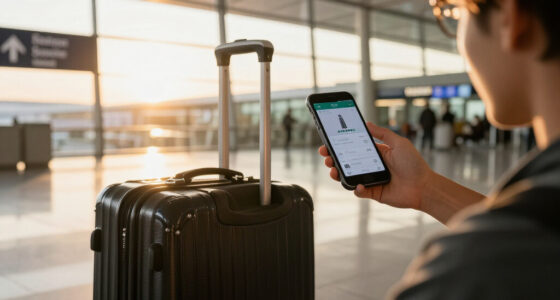
Bluetooth tracking
Connected scales can log several bags, retain trip history and trigger weight alerts on a smartphone.
Better sensors
Improved load cells and calibration tools support more stable readings across repeated use.
Multi-function kits
Some models combine a scale with a tape measure, luggage tag, memory or compact power bank.
Refined design
Ergonomic handles, slimmer bodies, rechargeable power and backlit displays improve everyday use.
The confident-buy checklist
Match the scale to how you travel. A frequent flyer managing several bags may value app tracking; an occasional traveler may only need a dependable display and accurate sensor.
Before you buy
- 01Choose resolution of 0.1 lb or about 50 g.
- 02Select at least 50 lb capacity; 110 lb adds useful headroom.
- 03Look for a secure strap, clear display and comfortable grip.
- 04Confirm kg/lb conversion, tare and battery availability.
- 05Recalibrate after a drop or when readings appear inconsistent.
Value in perspective
Typical luggage scales cost $10–$50, while a single overweight charge may reach $50–$200 or more. The financial case is strongest when the scale is accurate, used during packing and carried for the return journey.
Why Precise Measurement Matters More Than You Think
Accurate luggage weighing isn’t just about avoiding fees — it’s about ensuring your travel plans go smoothly. Airlines enforce strict weight limits, often around 50 pounds (23 kg) for checked bags. Going even a pound over can trigger hefty fees or require repacking at the airport, which wastes time and increases stress. Overweight luggage can also lead to safety concerns, as overloaded bags strain aircraft cargo systems and can cause handling issues.
For travelers, the implications are clear: misjudging your luggage weight can mean unexpected expenses and delays. Using a digital scale allows you to weigh your bags at home, giving you the opportunity to make adjustments—like removing unnecessary items or redistributing weight—before you face the check-in counter. This proactive approach not only saves money but also keeps your travel experience smooth, avoiding last-minute surprises that could disrupt your plans.
Furthermore, understanding the importance of precision helps you evaluate scales more critically. For instance, a scale that measures within 0.1 pounds provides the granularity needed to stay safely within limits, especially when packing close to the maximum weight. Small discrepancies can cause significant issues; a tiny underestimation might lead to overweight baggage, incurring fees, while overestimating could cause you to remove items unnecessarily, wasting time and effort. Choosing a reliable, high-precision scale is a key part of smart travel planning, allowing you to pack confidently and avoid the tradeoffs of over or underestimating your luggage weight.
digital luggage scale with Bluetooth
As an affiliate, we earn on qualifying purchases.
As an affiliate, we earn on qualifying purchases.
How to Pick a Luggage Scale That Won’t Let You Down
- Check the capacity: Select a scale that supports at least 50 pounds (23 kg), but consider models with higher capacity if you tend to pack heavy. This ensures your scale can handle your typical luggage weight without overloading, which can damage sensors or impair accuracy. Overloading a scale not only risks damaging the device but also results in inaccurate readings, defeating its purpose. Choosing a scale with a higher capacity provides a buffer, so you can weigh heavier bags confidently without concern for damage or errors.
- Look for precision: Aim for scales that measure within 0.1 pounds (50 grams). This level of accuracy matters because airline weight limits are often strict, and even a small misreading can lead to unexpected fees. When you’re close to the limit, minor discrepancies can be the difference between a fee-free check-in and costly surcharges. Higher precision allows you to make fine adjustments, like removing a few ounces of clothing or shifting items, reducing the risk of overweight baggage without overpacking or underpacking unnecessarily.
- Consider size and weight: Compact scales under 5 ounces (140 grams) are easy to carry and won’t add significant weight to your luggage. Their portability encourages frequent use during packing, helping you weigh multiple times and avoid surprises at the airport. A lightweight scale is less likely to be left behind or become a burden, making it more likely you’ll use it consistently and prevent overweight issues before they happen.
- Evaluate display and controls: Bright, backlit screens improve readability in dim environments like hotel rooms or airports. Simple, intuitive controls minimize user error, ensuring accurate readings every time. Clear displays and straightforward operation mean you can quickly weigh your bags without confusion or frustration, which is especially important when packing quickly or in unfamiliar settings. Good controls reduce the chance of misreading or mishandling, ensuring your measurements are reliable.
- Review extra features: Features like tare functions, unit conversions, and Bluetooth connectivity can streamline weighing and data management. Tare functions let you subtract the weight of empty bags or straps, giving you precise measurements of your packed items. Bluetooth syncs enable you to track multiple bags or keep records for future trips, making it easier to manage your luggage over time. These added features enhance accuracy, convenience, and organization, helping you stay within limits and avoid surprises.
- Assess durability: Look for scales with sturdy build quality, water resistance, and quality materials. A durable scale withstands travel conditions and frequent use, maintaining accuracy over time. Investing in a robust device prevents inaccuracies caused by environmental damage or wear, ensuring consistent performance. A reliable, long-lasting scale saves you money in the long run, as you won’t need to replace it frequently or worry about it failing when you need it most.
For example, a popular model like the BAGSMART Digital Luggage Scale supports up to 110 pounds, measures to 0.1 pounds, and costs around $15. It’s lightweight, sturdy, and easy to use, making it a reliable choice for most travelers.
Matching your scale’s capabilities to your packing habits is crucial. If you usually pack around 40 pounds, a scale that measures up to 50 pounds with high accuracy ensures you can detect even small weight excesses early. This proactive approach prevents last-minute surprises, reduces stress, and saves money on overweight fees, allowing you to travel with confidence and peace of mind.
As an affiliate, we earn on qualifying purchases.
Recent Tech Advances Making Weighing Smarter and Easier
Modern luggage scales incorporate innovative features that significantly improve user experience and measurement reliability. Bluetooth and app connectivity allow you to transfer weight data directly to your smartphone, enabling you to track multiple bags and monitor weight trends over time. This capability is especially beneficial for frequent travelers managing several pieces of luggage, as it simplifies tracking and helps prevent accidental overpacking or exceeding weight limits.
Sensor technology has advanced considerably, leading to digital scales that are more precise and easier to calibrate. Enhanced sensors reduce errors caused by environmental factors or wear, maintaining accuracy over repeated use. Some models now include automatic calibration, which means you can keep your scale accurate without manual adjustments, saving time and ensuring consistent reliability across trips.
Eco-friendly designs, such as recyclable materials and energy-efficient batteries, are becoming standard, aligning with sustainable travel practices. Sleek, modern designs with backlit displays, rubberized grips, and compact form factors make weighing quick and comfortable, even in dimly lit hotel rooms or busy airports. These technological improvements turn weighing from a tedious task into a seamless, routine part of packing, giving travelers confidence that their measurements are precise and effortless, ultimately helping to avoid costly overweight fees.
As an affiliate, we earn on qualifying purchases.
Compare Top Features in Popular Luggage Scales
| Feature | Digital Scale A | Digital Scale B | Mechanical Scale C |
|---|---|---|---|
| Max capacity | 110 lbs (50 kg) | 50 lbs (23 kg) | 200 lbs (91 kg) |
| Accuracy | ±0.1 lbs (50 grams) | ±0.2 lbs (100 grams) | ±1 lb (500 grams) |
| Weight | 4 oz (113 g) | 3.5 oz (100 g) | 8 oz (225 g) |
| Display | Backlit LCD | LED screen | Analog dial |
| Extras | Bluetooth, tare, auto shutoff | Unit switch, strap | Spring-loaded |
For frequent travelers, a digital scale with Bluetooth and high capacity like Scale A offers the convenience of quick, precise measurements and easy data management, reducing the risk of overweight baggage at check-in. Mechanical scales, while durable and free of batteries, often lack the fine accuracy needed for strict airline limits and may require more careful handling to ensure correct readings. The choice depends on your travel style and priorities—whether you value high-tech features or rugged simplicity.
calibratable digital luggage scale
As an affiliate, we earn on qualifying purchases.
As an affiliate, we earn on qualifying purchases.
Simple Steps to Weigh Your Bag Like a Pro
Weighing your luggage accurately is straightforward if you follow these steps:
- Zero the scale: Turn it on and make sure it reads zero if it has a tare function. Proper zeroing ensures your measurement isn’t skewed by residual weight.
- Attach your luggage: Use the strap or hook to secure your bag on the scale, making sure it’s balanced and stable.
- Lift steadily: Keep the bag off the ground and hold it steadily for a few seconds, avoiding tilting or jerking, which can cause inaccurate readings.
- Read the measurement: Check the display for the weight. Repeat the process if you suspect an error or inconsistent reading.
- Adjust packing: Remove or redistribute items if the weight exceeds your airline’s limit. Weighing during packing helps you make informed decisions and prevents last-minute reorganization.
For example, during a packing session, weigh your suitcase after adding every few items. When the scale shows 48 pounds, you know it’s time to leave behind that extra pair of shoes or heavy toiletry kit, ensuring you stay within limits without stress or surprise fees.
Avoid Common Pitfalls That Skew Your Weights
Even the most accurate scales can give false readings if misused. Understanding common mistakes helps you maintain measurement integrity. Overloading the scale beyond its maximum capacity can damage sensors and lead to unreliable results, so always use a scale within its supported range. Weighing on uneven or soft surfaces—like beds or plush carpets—can cause the scale to register incorrect weights, sometimes by several pounds. Always place your scale on a flat, stable surface such as a hard floor or table.
Regular calibration is essential; neglecting it can cause gradual drift in accuracy, especially if the scale is dropped or used frequently. Follow your device’s instructions for calibration, typically involving placing it on a flat surface and using a known weight or calibration mode. Environmental factors like extreme temperatures or direct sunlight can interfere with sensor performance, so weigh in moderate conditions to ensure precision.
Using the wrong units (pounds vs. kilograms or ounces) is a common mistake that leads to misinterpretation. Double-check your unit settings before weighing, especially if you switch between different measurement systems. For example, weighing on a bed or uneven tile floor can lead to a 2-3 pound discrepancy, which might push your luggage into overweight territory unexpectedly. Taking care to weigh on a proper surface and handle your scale correctly ensures accurate, reliable measurements every time.
Frequently Asked Questions
How accurate are portable luggage scales?
Most digital luggage scales measure within 0.1 pounds (50 grams). Proper calibration and steady handling help maintain this precision, making them reliable tools for avoiding overweight fees.
What’s better — digital or mechanical scales?
Digital scales usually offer higher accuracy, easy-to-read displays, and extra features like unit switching. Mechanical scales are more durable and battery-free but often lack the fine precision needed for strict airline limits.
How do I calibrate my luggage scale?
Follow your scale’s instructions: typically, turn it on, place it on a flat surface, and use a known weight or calibration mode. Regular calibration ensures ongoing accuracy, especially if you travel often.
Can I use a luggage scale to weigh multiple bags?
Yes, especially Bluetooth-enabled models can sync with your phone and store weights for multiple bags. This helps manage your total luggage weight across trips.
How often should I weigh my luggage during packing?
It’s best to weigh your bag after adding every few items. This prevents overpacking and last-minute re-packing, saving time and money at the airport.
Conclusion
Knowing your luggage’s weight before check-in isn’t just convenient — it’s a money saver. A quality digital scale, especially one with smart features, turns guesswork into certainty. Keep one in your bag, weigh periodically, and pack with confidence.
Next time you pack, picture that scale in your hand. Small, simple, precise. It’s the secret weapon to flying smart and avoiding those hidden fees that can turn your trip into a budget blowout.
Halloween Picks
halloween
As an affiliate, we earn on qualifying purchases.