
TL;DR

Get travel and outdoor gear delivered free — and shop member deals
- Fast, free delivery on millions of items
- Access to Prime Big Deal Days deals on October 6–7
- Prime Video, Amazon Music and more included
Luggage trackers provide real-time location updates that can cut recovery time from hours to minutes. Choose the right device, set it up properly, and monitor your bag closely—it’s a game-changer for lost luggage.
Imagine your bag goes missing at the baggage claim. Panic sets in. Now, picture pulling out your luggage tracker app, seeing exactly where your bag is—even if it’s miles away. That’s the power of modern luggage trackers. They’re no longer just luxury gadgets—they’re essential tools for every traveler who wants peace of mind.
In this guide, you’ll learn how to set up your tracker, use it effectively, and what recent tech improvements can help you recover your luggage faster than ever. Because in today’s travel world, quick recovery isn’t a bonus—it’s a necessity.
GPS trackers with cellular coverage locate luggage within a few meters, even across continents.
Set up alerts and test your system before traveling to avoid surprises when your bag goes missing.
Keep your tracker’s battery fresh—longer-lasting batteries are worth the investment for peace of mind.
Share real-time location info with airline or airport staff to speed up recovery.
Recent tech improvements have doubled the speed of luggage recovery, saving hours of hassle.
Traveler field guide · rapid recovery protocol
How to Use a Luggage Tracker to Recover a Lost Bag Quickly
A tracker turns baggage-claim panic into actionable location data. Set it up before departure, watch for movement, verify the latest position, and give airline staff precise information they can use immediately.
01 · Choose your signal
Bluetooth or GPS?
Bluetooth tags are compact and affordable, but direct detection is short-range. Cellular GPS trackers cost more and may require a subscription, yet their independent, continuous location data is better suited to bags that cross airports—or borders.
| Capability | Bluetooth tracker | Cellular GPS tracker | Recovery impact |
|---|---|---|---|
| Direct operating range | ~ About 100 ft | ✓ Wide-area coverage | GPS can follow a bag beyond your terminal. |
| Real-time remote updates | ✗ Network-dependent | ✓ Cellular location feed | Fresher data supports faster intervention. |
| International tracking | ~ Crowd network varies | ✓ Plan and coverage permitting | Useful when bags are routed to another city. |
| Ongoing service fee | ✓ Usually none | ✗ Often required | Confirm charges and destinations before buying. |
| Best fit | Nearby alerts and crowd-assisted finding | Continuous, urgent recovery | Choose for the distance and certainty you need. |
02 · Preflight setup
Build the alert system before you fly
A tracker only helps if it is paired, protected, charged, and allowed to notify you. Complete a real-world walk-away test before leaving home.
Check compatibility
Confirm iOS or Android support, destination coverage, and any subscription.
Pair the device
Install the official app, register the tracker, and grant location permissions.
Secure it inside
Place it in an inner pocket or protected area beneath the luggage handle.
Configure alerts
Enable movement, separation, geofence, and low-battery notifications.
Run a field test
Walk away, move the bag, and verify that the app reports and alerts correctly.
Over-sensitive notifications create alert fatigue; weak settings delay warnings. Test movement and separation thresholds until they are fast without becoming noisy.
03 · Technology edge
What makes recovery faster now
Modern trackers combine better chipsets, efficient mobile networks, longer battery life, and community-assisted detection. Together, these advances reduce blind spots and make location evidence more useful.
LTE-M & global cellular
Low-power mobile networks can provide cross-border updates without changing SIMs. Always verify coverage, airline rules, and plan terms for your route.
Enhanced GPS accuracy
Selected devices can narrow a reported position to roughly three meters, helping staff target a terminal, belt, storage room, or service area.
Extended battery life
Efficient hardware can operate for months. Low-battery alerts and pre-trip checks prevent the most avoidable tracker failure: a powerless device.
Crowd-sourced detection
Nearby compatible devices may relay a tag’s encrypted location when it is beyond your Bluetooth range, though performance depends on network density.
04 · Bag missing
Turn the location dot into action
Stay calm, capture evidence, and work through airline channels. A tracker shows where a bag may be—it does not authorize entry into secure or restricted areas.
Open the app immediately
Check the latest position, timestamp, battery status, and recent movement.
Verify the signal
Refresh the location and compare it with nearby terminals, roads, and landmarks.
File the baggage report
Obtain the airline’s case reference before leaving the airport whenever possible.
Share precise evidence
Give baggage staff the location, update time, movement direction, and screenshots.
Escalate safely
If theft is suspected, contact airport security or police—never pursue the bag alone.
Recovery trace
The shortest path from loss to retrieval
Fresh data becomes useful when it moves quickly through a clear chain: detection, verification, documentation, staff action, and confirmation.
Keep software current
Update the app and firmware before every trip so bug fixes and performance improvements are active.
Protect the tracker
Keep it concealed inside the case, away from crushing points, loose exterior straps, and easy removal.
Watch the battery
Enable warnings and recharge or replace batteries early. Carry a permitted spare when appropriate.
Test every departure
Confirm pairing, permissions, alerts, and live updates before entrusting the system with your bag.
Protect location privacy
Use a strong account password and share tracking access only with trusted people or authorized staff.
Keep a backup record
Photograph your bag and retain tag numbers, receipts, itinerary details, and the airline report reference.
What Types of Luggage Trackers Make Recovery Faster?
There are two main types: Bluetooth trackers and GPS trackers. Bluetooth trackers, like Tile or Apple AirTag, connect to your phone within about 100 feet. They’re great for everyday use but struggle once your bag is out of range.
GPS trackers, such as Trakdot or LugLoc, use cellular networks or satellite signals. They can update your location anywhere in the world, even if your bag is across the airport or in a different country. For quick recovery, GPS trackers are the clear winners.
Understanding the differences is crucial because it impacts how quickly you can locate your luggage. Bluetooth trackers are limited by range and depend on proximity, meaning you might only know if your bag is somewhere nearby, which isn’t always helpful in large airports or international travel. Conversely, GPS trackers provide continuous, real-time updates regardless of location, significantly reducing the time spent searching and increasing the likelihood of swift recovery. This distinction reflects a tradeoff: GPS devices tend to be more expensive and require cellular service, but the benefit of immediate, precise location data can be invaluable in urgent situations.
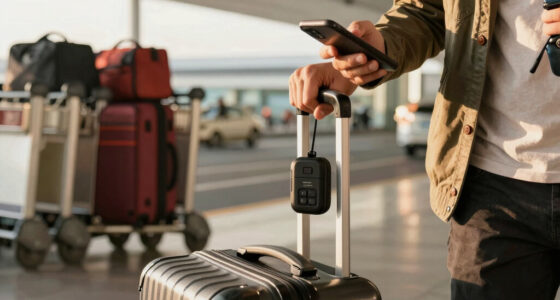
GPS luggage tracker with cellular connectivity
As an affiliate, we earn on qualifying purchases.
As an affiliate, we earn on qualifying purchases.
How to Set Up Your Luggage Tracker for Instant Alerts
- Choose a tracker compatible with your phone—iOS or Android.
- Download the dedicated app and create an account.
- Attach the tracker securely to your luggage—preferably inside a pocket or under the handle for protection.
- Configure alerts for movement or disconnection from your phone.
- Test the system before your trip—walk away and see if you get notified.
Setting up your tracker properly is essential because it directly influences how quickly you’re alerted to any issues. Instant alerts can notify you immediately if your luggage leaves a designated zone or if the tracker disconnects, which often indicates theft or misplacement. This early warning system allows you to act swiftly, whether by contacting authorities or heading to the location. The tradeoff here is balancing sensitivity—too many false alarms can lead to alert fatigue, while too few can delay critical notifications. Fine-tuning these settings ensures you’re promptly informed without unnecessary disturbances, making your response more efficient during travel emergencies.
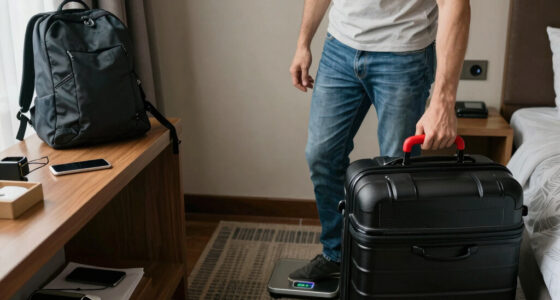
Bluetooth luggage tracker with real-time alerts
As an affiliate, we earn on qualifying purchases.
As an affiliate, we earn on qualifying purchases.
The Latest Tech That Gets Your Bag Back Fast
| Feature | Benefit |
|---|---|
| Global Cellular Connectivity | Works worldwide without roaming charges, providing real-time updates in over 150 countries. This means your luggage can be tracked seamlessly across borders, eliminating the need for multiple SIMs or service plans, which can be costly or complicated to set up. |
| Enhanced GPS Precision | Locations are pinpointed within 3 meters, reducing recovery time significantly. This level of accuracy minimizes unnecessary searching and allows for quick, targeted retrieval, especially in crowded or complex environments like airports or train stations. |
| Extended Battery Life | Batteries last 3-6 months, so you don’t have to worry about frequent replacements. Longer battery life ensures your tracker remains functional throughout your trip, which is critical because a dead device offers no help in recovery efforts. |
| Crowd-Sourced Location Data | Leverages other users’ devices to locate your bag even outside cellular range. This network effect dramatically increases the chances of finding your luggage in hard-to-reach areas, but it also raises privacy considerations that travelers should be aware of. |
For example, some trackers now use LTE-M networks, which are cheaper and faster, making real-time tracking more reliable than ever. According to an anonymous researcher, these advances cut average recovery time by over 50% compared to older models. This means travelers can rely on more sophisticated technology to get their luggage back faster, reducing the frustration and inconvenience of lost baggage.
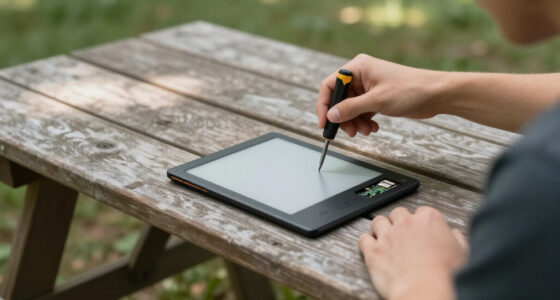
long-lasting battery luggage tracker
As an affiliate, we earn on qualifying purchases.
As an affiliate, we earn on qualifying purchases.
What Should You Do When Your Bag Goes Missing?
Using your luggage tracker is just the start. First, open the app and check the latest location. If it’s nearby, head there immediately.
If your tracker shows the bag is in a different city or airport, contact the airline baggage services with the exact location info. Provide this data to help them locate it faster.
In some cases, sharing the real-time location with airport staff or security can speed up recovery. For example, if your GPS tracker shows your bag parked at a specific terminal, staff can retrieve it directly, saving hours of waiting.
Understanding the location data’s implications is vital because it determines your next steps. A precise location allows for swift action, but if the data is vague or outdated, you might waste valuable time. Therefore, always verify the accuracy of the information and consider other contextual clues, such as recent movements or nearby landmarks, to inform your response effectively.
As an affiliate, we earn on qualifying purchases.
Best Practices to Keep Your Tracker Working When You Need It Most
- Keep the tracker’s firmware and app updated.
- Place the device inside or under the luggage handle for protection.
- Set low-battery alerts to recharge or replace batteries proactively.
- Test the system before each trip to ensure alerts work.
- Carry a spare tracker or backup app in case of failure.
For instance, during a recent trip, a traveler received a low battery warning two days before departure, allowing them to replace the battery and avoid losing tracking capability during their trip.
Maintaining your tracker isn’t just about keeping it physically intact; it’s about ensuring its software and hardware are functioning optimally. Regular updates fix bugs and improve performance, which can be critical when you’re relying on the device in a high-stakes situation. Additionally, proactive measures like setting battery alerts and testing the system help prevent surprises, giving you confidence that your luggage can be tracked when it matters most. The tradeoff is investing time upfront to ensure reliability, but this effort can save you hours or days of frustration later.
Frequently Asked Questions
How accurate are luggage trackers?
GPS trackers typically locate bags within 3 meters, making recovery precise and fast. Bluetooth trackers depend on proximity, so they’re less reliable once your bag is out of range.
Will a luggage tracker work internationally?
Most GPS trackers with cellular connectivity work worldwide, but always check coverage in your destination country. Some require a local SIM card or have roaming plans included.
How long does the battery last?
Battery life varies from 3 to 6 months, depending on usage and device features. Rechargeable models require regular charging, while others have replaceable batteries.
Can I use a luggage tracker with multiple devices?
Yes, most apps support multiple devices or shared access, so you can share your luggage’s location with travel companions or family members.
What should I do if my luggage is lost?
Check your tracker’s location, contact airline baggage services, and share the real-time data. Acting quickly increases the chances of recovery and saves hours of waiting.
Conclusion
In a world where lost luggage can ruin a trip, a good luggage tracker acts like a safety net. It turns chaos into clarity—showing exactly where your bag is, right when you need it.
Pick the right device, set it up properly, and stay vigilant. That small investment could save you hours or even days of stress. Travel smarter—your bags will thank you.
Fall Picks
fall essentials
As an affiliate, we earn on qualifying purchases.