
TL;DR

Get travel and outdoor gear delivered free with Prime
- Fast, free delivery on millions of items
- Prime Video, Amazon Music and more included
- Member-only deals all year
A 22-inch wheel carry-on can boost maneuverability and capacity, but it’s crucial to verify airline size limits and understand how wheel size affects packing and durability. Measurement accuracy and quality matter more than brand names.
When you hear “22-inch wheels,” your mind might picture massive, rugged tires rolling effortlessly across airport terminals. But in reality, most carry-on luggage with 22-inch wheels refers to bags with 22-inch-tall exteriors—wheels included. These bags are popular because they strike a balance between size and capacity, fitting many airline rules and providing easy maneuverability.
Yet, that number can be deceiving. Airlines measure the entire bag’s external dimensions, not just the main shell. So, a bag advertised as 22 inches might be a little over the limit when wheels, handles, and pockets are factored in. Understanding how wheel size and overall dimensions interact can save you headaches at the gate—and help you pick a bag that truly fits your travel needs.
Always measure your packed bag at home, including wheels and handles, to confirm compliance with airline size rules.
Larger wheels improve maneuverability but can slightly reduce internal packing space and increase overall height.
Choose between spinner and two-wheel designs based on your travel terrain and handling preference.
Durability depends more on wheel quality and construction than on wheel size alone—look for replaceable, reinforced wheels.
Weight matters as much as size; lighter bags allow more room for essentials and reduce strain during travel.
Why a 22-inch wheel carry-on can be a game-changer
A carry-on with 22-inch wheels often means a bag that’s easy to roll through crowded airports and tight aisles. These wheels typically measure around 2-3 inches in diameter, but when attached, they add to the bag’s overall height. The real benefit? Greater stability and smoother movement.
Imagine navigating a busy terminal: a bag with larger wheels glides over uneven surfaces and small obstacles like curbs or cracks in the pavement. Compared to traditional 4-inch wheels, 22-inch wheels can make rolling feel more like a gentle glide across a polished floor than a stiff push.
For example, a traveler with a 22-inch spinner bag reported that it felt significantly easier to maneuver through a congested airport, reducing wrist strain and speeding up the process. The tradeoff? Slightly more bulk and potential packing constraints. But if your priority is seamless movement, larger wheels are worth considering.
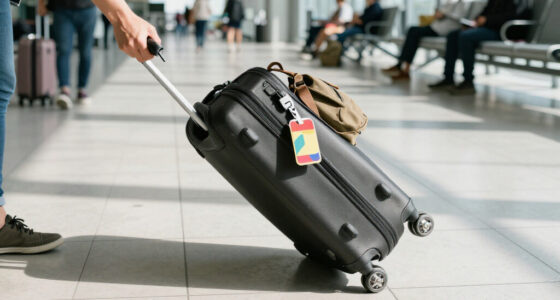
carry-on luggage with 22 inch spinner wheels
As an affiliate, we earn on qualifying purchases.
As an affiliate, we earn on qualifying purchases.
How airline size limits really work for 22-inch bags
Many travelers assume a 22-inch bag will always meet airline size restrictions. Not quite. Airlines measure the **total external dimensions**, including wheels, handles, and pockets. A bag labeled 22 inches might measure 23 or even 24 inches with wheels attached.
For example, a popular hard-shell suitcase with a 22-inch shell actually measures 22.5 inches tall once wheels and handles are added. If your airline’s limit is 22 inches, that extra half-inch could mean a gate-check fee or a forced check-in.
To avoid surprises, always measure your packed bag at home. Use a tape measure to include wheels and handles, and check your airline’s specific rules—especially if you’re flying internationally or on budget carriers known for stricter enforcement.
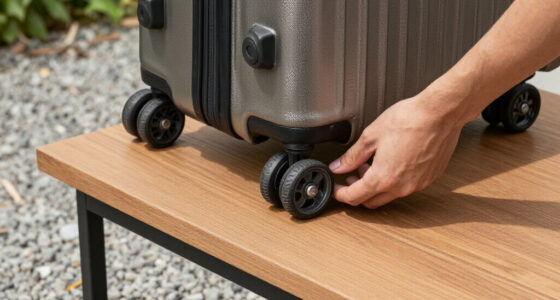
hard shell carry-on with large wheels
As an affiliate, we earn on qualifying purchases.
As an affiliate, we earn on qualifying purchases.
Compare: 22-inch spinner vs. two-wheel bags — which suits you?
| Feature | Spinner (4 wheels) | Two-wheel |
|---|---|---|
| Ease of maneuvering | Glides smoothly in all directions, ideal for crowded airports | Requires pulling, better on rough surfaces like cobblestones |
| Interior space | Often slightly less due to wheel housings | Usually offers more packing room |
| Protection | Wheels more exposed, can be damaged | Wheels more protected, longer lifespan |
| Weight | Generally a bit heavier | May be lighter, but depends on design |
| Handling | Less effort on smooth floors, more versatile | Better on uneven terrain, but requires pulling |
Choosing depends on your travel style. If you mostly navigate airports, spinners excel. For city strolls on uneven streets, two-wheel bags might be smarter.
lightweight carry-on suitcase with durable wheels
As an affiliate, we earn on qualifying purchases.
As an affiliate, we earn on qualifying purchases.
Hard-shell vs. soft-sided: which lasts longer and protects your stuff?
Hard-shell luggage with 22-inch wheels offers a sturdy shield against impacts and weather. Think of it as a protective cocoon—impact-resistant polycarbonate or polypropylene shells shrug off knocks and keep your belongings safe.
Soft-sided bags, on the other hand, are more flexible. They can squeeze into tight spaces, and exterior pockets make quick access a breeze. But, fabric and zippers are more vulnerable to tearing or moisture.
For example, a frequent traveler prefers a hard-shell for international trips—fear of rough handling and rain. Meanwhile, a weekend traveler opts for soft-sided because it fits into tight overhead compartments and offers easier packing.
Quality matters more than material. A well-made soft-sided bag with reinforced seams can last years, just as a lightweight hard-shell can crack if poorly constructed.
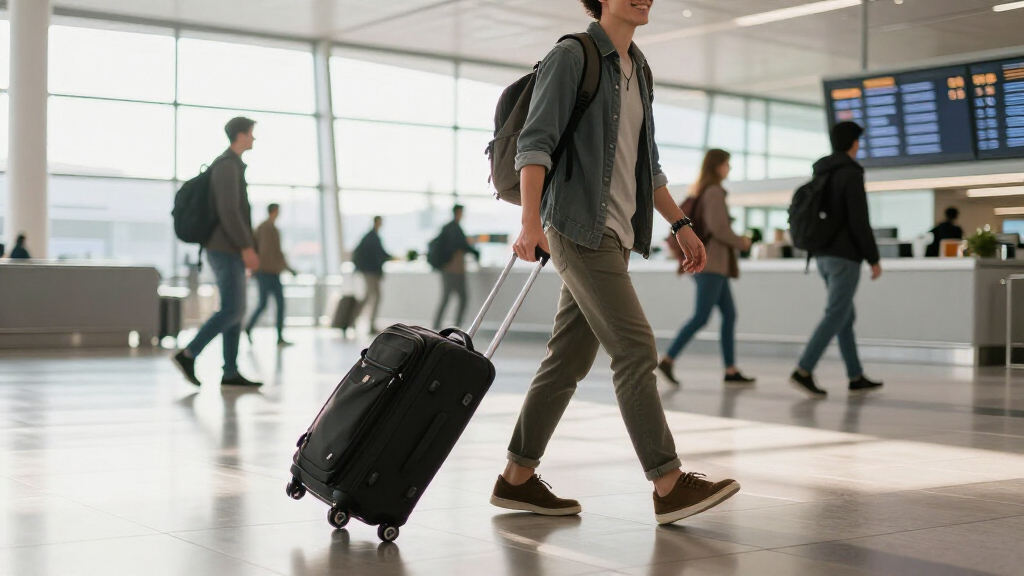
spinner luggage that fits airline size limits
As an affiliate, we earn on qualifying purchases.
As an affiliate, we earn on qualifying purchases.
Why weight really matters when choosing a 22-inch carry-on
Even with the perfect size, a heavy bag can limit what you pack and cause headaches at check-in. A typical sturdy 22-inch spinner weighs 8–10 pounds empty. If you pack a lot, you might hit airline weight limits—especially on international flights.
For example, a traveler with a 7-pound bag packed for a week found that they only had 10 pounds left for clothes and essentials. Choosing lightweight materials and minimal hardware can help maximize packing capacity without exceeding weight limits.
Look for features like simple internal dividers, fewer metal hardware pieces, and lightweight shells. Remember: every ounce saved is extra space for your favorite shoes or a souvenir.
Wheels, handles, and durability — what to look for
Wheels take a beating during travel. Larger, reinforced, and replaceable wheels are a wise choice. Polyurethane wheels tend to roll more smoothly and resist cracking than brittle plastic ones.
If a wheel isn’t sturdy, it can wobble or break after a few trips. For example, a traveler’s hard-shell bag with replaceable wheels saved them from replacing the entire case after a rough trip.
Similarly, a telescoping handle should lock firmly, resist twisting, and feel comfortable at your height. A flimsy handle can make packing and pulling a chore.
Check for warranty coverage on wheels and handles. These components endure most of the stress during travel and are worth investing in for long-term durability.
What to do if your bag exceeds airline limits
If your carefully measured 22-inch bag turns out to be slightly over the limit, don’t panic. Airlines may gate-check it without fuss, but some will charge a fee or require it to be checked at the counter.
For example, a bag measuring 23 inches caught a gate-check fee on a budget airline that enforces strict size rules. To avoid surprises, measure your bag fully packed, including handles and wheels, and check the airline’s specific rules before arriving at the airport.
Using a flexible, soft-sided bag can help you squeeze within the limits, but expansion zippers should be used cautiously. Overstuffed bags risk bulging beyond permitted dimensions, inviting last-minute hassles.
Frequently Asked Questions
Can I use a 22-inch carry-on on all airlines?
Not necessarily. While many airlines accept 22-inch bags, rules vary. Always check the specific airline’s maximum dimensions and weight limits before packing.Do larger wheels mean a bigger, heavier bag?
Larger wheels can add to the overall height and weight of the bag, but quality lightweight wheels help balance maneuverability and portability. Measure your packed bag to be sure.Are soft-sided bags with 22-inch wheels more durable than hard-shell?
Durability depends on construction quality. Soft-sided bags are flexible and easier to squeeze into tight spaces, while hard-shell cases resist impacts better. Choose based on your travel environment.Should I avoid expandable bags if I want to stay within size limits?
Yes. Expansion zippers can make a bag bulge beyond the permitted dimensions if overpacked. Use expansion only when needed, and measure after packing.How do I know if my bag’s wheels are good enough?
Look for reinforced, replaceable polyurethane wheels that spin smoothly and are mounted securely. A warranty covering wheels is also a good sign of quality.Conclusion
Picking the right carry-on with 22-inch wheels isn’t just about the number. It’s about understanding how size, weight, and build quality come together to create a bag that travels smoothly and lasts long.
Measure carefully, prioritize durability, and consider your typical routes. The perfect bag isn’t just a size—it’s the one that fits your travel style and keeps you moving effortlessly.
Halloween Picks
halloween
As an affiliate, we earn on qualifying purchases.