
TL;DR

Get travel and outdoor gear delivered free — and shop member deals
- Fast, free delivery on millions of items
- Access to Prime Big Deal Days deals on October 6–7
- Prime Video, Amazon Music and more included
TSA-approved locks can be opened by security without damage, making them ideal for checked luggage. Ensure the lock is explicitly marked as TSA-approved, fits your luggage, and offers reliable security features. Recent innovations include smart locks and enhanced tamper resistance.
Imagine arriving at your destination, only to find your lock broken or cut during security checks. That frustrating moment can be avoided with the right luggage lock. But with so many options, how do you pick one that meets TSA rules and actually keeps your stuff safe?
This guide cuts through the jargon and shows you exactly what to look for—size, security features, recent tech. Whether you’re a frequent flyer or planning a one-off trip, knowing how to select the best TSA-approved lock saves you time, money, and stress.
Always look for explicit TSA approval markings to prevent lock damage during security checks.
Match your lock’s size and type to your luggage’s design for a smooth security process.
Consider advanced features like tamper alarms or Bluetooth for added security and convenience.
Avoid very cheap locks without TSA markings—they’re often easy to pry or cut.
Keep your combination or keys secure, and record your lock details in case you need to reset or replace.
How to Select a Luggage Lock That Meets TSA Requirements
Choose a lock security officers can open without cutting, then match its type, fit, materials, and features to the way you travel. The right decision protects your luggage while making inspections smoother.
Start with what matters most
A clever feature cannot compensate for missing TSA compatibility or a poor fit. Work through these checks in order before comparing price, color, or connected extras.
Explicit approval mark
Look on the lock body and packaging for the recognized TSA-compatible marking or key symbol. If the status is vague, choose another product.
Zipper and loop fit
Confirm that the shackle or cable passes freely through every locking point without bending zipper pulls or obstructing closure.
Material quality
Favor hardened steel or zinc-alloy construction, a reinforced body, clean dial movement, and weather resistance for demanding trips.
Bypass resistance
Anti-shim engineering and a shrouded shackle make common prying, slipping, and cutting attacks more difficult.
Brand and support
Check owner reviews, reset instructions, warranty terms, and replacement support—not just the star rating or headline price.
Access details
Store the combination securely or keep spare keys separate from the bag. Retain the model details in case a reset is needed.
OK
Is it truly TSA-compatible?
A recognized mark signals that authorized security personnel can use an inspection key instead of forcing the lock. Non-approved locks may need to be cut when a checked bag requires inspection.
Match the lock to your travel style
Convenience, key management, and zipper geometry determine which format works best. Measure the actual luggage hardware rather than assuming every compact lock will fit.
Combination lock
Fast, keyless access for frequent travelers. Choose clear dials and a straightforward reset process.
Keyed lock
Simple operation with no code to remember, but keys must be carried securely and separately.
Cable lock
Flexible reach for multiple zipper pulls, awkward attachment points, or securing more than one item.
Build resistance in layers
Start with physical durability, then add bypass protection and alerts where the trip justifies them. Smart features improve access and awareness, but they do not replace a strong lock body.
Hardened materials
Steel shackles and reinforced zinc-alloy bodies better withstand rough baggage handling and casual prying.
Anti-shim design
Reduces the chance of a thin tool slipping into the mechanism to release the lock without a code or key.
Shrouded shackle
Exposes less metal to cutters and gives leverage tools less room to work around the locking point.
Tamper alert
Selected smart models can signal interference, log access, or warn the owner through an app or alarm.
Which lock format fits best?
Standard combination locks deliver the strongest convenience-to-cost balance. Keyed models favor simplicity, while smart locks add biometric, app, tracking, or tamper functions at a premium.
| Feature | Combination lock | Keyed lock | Smart lock |
|---|---|---|---|
| Typical weight | 100–150g | 110–200g | 150–250g |
| Typical price | $10–$30 | $15–$40 | $50–$150 |
| Access method | ✓ Resettable code | ~ Physical key | ✓ App, fingerprint, or code |
| Key management | ✓ No key needed | ✗ Loss risk | ✓ Usually keyless |
| Advanced security | ~ Anti-shim varies | ~ Construction varies | ✓ Alerts and access logs |
| Best for | Frequent, practical travel | Travelers who prefer simplicity | High convenience and visibility |
Price and weight are indicative ranges supplied for comparison. Verify the exact model’s approval mark, dimensions, battery requirements, and airline suitability before purchase.
From luggage loop to boarding queue
A five-step selection chain keeps the decision grounded in compatibility and fit before optional technology enters the picture.
Find the mark
Verify explicit TSA compatibility on the product.
Measure the fit
Check zipper holes, loops, and required reach.
Choose the type
Combination, keyed, or flexible cable format.
Test the build
Review material, shackle, dials, and resistance.
Secure access
Record the code or store keys before departure.
Buying on price alone
Ultra-cheap locks may sacrifice material strength, reliable mechanisms, and basic bypass resistance.
Assuming approval
A travel-themed package is not evidence. Confirm the recognized marking on the actual lock.
Ignoring zipper geometry
An oversized shackle can obstruct movement; an undersized one may never close around the locking points.
Treating it like a safe
Luggage locks deter casual access and support inspection. Keep valuables and essential documents with you.
Compliant, compact, credible.
Select the approval mark first. Then choose a format that matches your habits, verify an unobstructed fit, and pay for meaningful durability before optional Bluetooth, biometric, tracking, or tamper-alert features.
The #1 thing to check: Is it truly TSA-approved?
TSA-approved locks are clearly marked with a small TSA logo or a key symbol. This marking isn’t just a formality; it signifies that security personnel are authorized to open your lock using master keys, which minimizes the risk of damage during inspections. Choosing locks without this mark can lead to costly damage if security needs to force entry, and it also raises questions about whether your lock is compatible with TSA procedures. The presence of the TSA logo indicates that the lock has undergone testing and certification, ensuring it meets the standards for security and accessibility. Therefore, prioritizing this mark ensures your luggage can be inspected efficiently without unnecessary damage, giving you peace of mind that your belongings are protected yet accessible for security checks.
As an affiliate, we earn on qualifying purchases.
Pick the right lock type for your travel style
Choosing between combination, keyed, or cable locks depends on your travel habits and security preferences. Combination locks offer the advantage of not needing to carry keys, reducing the risk of losing them, and allowing quick access—ideal for frequent travelers who want speed and convenience. Keyed locks, while simple, introduce the risk of losing keys, which can be inconvenient especially when you’re in a hurry or in unfamiliar environments. Cable locks provide flexibility—they can secure multiple zippers or be looped through various points on your luggage, making them versatile for different luggage styles and security needs. Understanding these nuances helps you match the lock type to your specific travel scenario, balancing ease of use with security. For example, if you tend to travel frequently and value speed, a combination lock might be preferable; if you prioritize simplicity and don’t mind managing keys, a keyed lock could suffice. The right choice reduces frustration and enhances your overall travel security.
smart TSA lock for checked luggage
As an affiliate, we earn on qualifying purchases.
As an affiliate, we earn on qualifying purchases.
How to choose security features that really matter
Security features in TSA locks aren’t just bells and whistles—they directly impact how resistant your luggage is to tampering and theft. Locks made of hardened steel or zinc alloy provide durability, making it harder for thieves to break or pry them open. Anti-shim technology, which prevents thin tools from slipping between the shackle and body, is essential because it thwarts a common method thieves use to bypass locks. Shrouded shackles add another layer of security by hiding the shackle, preventing prying or cutting attacks. Advanced features like tamper alerts or alarms can notify you if someone tries to interfere with your luggage, acting as a deterrent and providing peace of mind. For instance, a lock with a shrouded shackle not only resists prying but also discourages theft by increasing the effort required to breach it—this tradeoff of slightly higher cost for enhanced security can be worthwhile for high-value items or in high-risk areas. Prioritizing these features ensures your luggage is not just compliant but also robust against common theft tactics.
As an affiliate, we earn on qualifying purchases.
Matching size and fit: Your luggage’s secret weapon
Measuring your luggage’s zipper or locking points before purchasing is crucial because an ill-fitting lock can cause more harm than good. A lock that is too large may hinder zipper movement or cause damage, while a lock that’s too small might not secure your luggage effectively. Compact locks, around 2-3 inches in length, are generally ideal as they fit most standard luggage loops without adding bulk or risking damage. Larger locks can be cumbersome, especially on carry-on luggage, and may interfere with zippers closing properly. Proper sizing ensures the lock functions smoothly during security checks and reduces the risk of damage or inconvenience. For example, a 2.5-inch lock fits comfortably on a carry-on with 1-inch wide zippers, providing security without obstructing the closure. This careful matching minimizes stress during inspections and maintains the integrity of your luggage’s closure system, making your security process seamless and damage-free.
As an affiliate, we earn on qualifying purchases.
The latest in TSA lock tech: Smart and innovative features
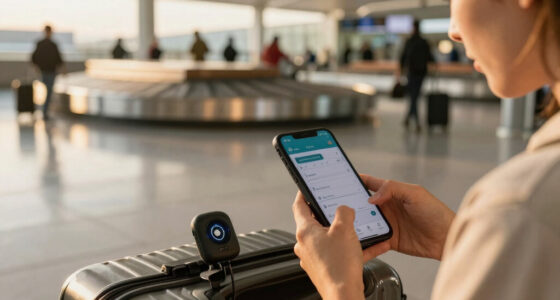
Recent technological advancements in TSA locks are transforming the way travelers secure their luggage. Features like Bluetooth connectivity enable you to unlock or lock your luggage via smartphone, offering unprecedented convenience—especially if you forget your combination or keys. Biometric options, such as fingerprint controls, provide quick, secure access without the need to remember codes or carry keys. GPS tracking integrated into some smart locks allows you to locate your luggage if it gets misplaced, adding an extra layer of security. Tamper alerts notify you immediately if someone tries to interfere with your luggage, deterring theft and providing peace of mind. For example, a smart lock with Bluetooth can be reset remotely or give you access via an app, reducing the risk of being locked out or losing your keys. These innovations are particularly valuable for frequent travelers or those concerned about high-value items, as they combine security with convenience. Embracing these features means your luggage security can now be tailored to your lifestyle, making travel safer and more efficient.
Comparison table: Features that matter in TSA-approved locks
| Feature | Combination Lock | Keyed Lock | Smart Lock |
|---|---|---|---|
| Weight | 100-150g | 110-200g | 150-250g |
| Price Range | $10-$30 | $15-$40 | $50-$150 |
| Security Features | Anti-shim, durable materials | Solid construction, keyed access | Bluetooth, biometric, tamper alerts |
| Ease of Use | Quick, no keys needed | Simple but requires key management | High; app and fingerprint control |
What to avoid: Common mistakes when choosing TSA locks
Don’t buy a lock solely based on price. Cheap locks often lack security features and might be easy to pry open. Avoid locks without TSA approval markings—they might be cut during inspections. Selecting a lock based only on cost can be a false economy; cheaper locks often compromise on security features, making them vulnerable to theft or damage. Moreover, neglecting the TSA approval mark risks having your lock forcibly cut or broken by security, which can damage your luggage and incur replacement costs. Investing a little more in a reputable, marked TSA lock ensures your luggage remains intact during inspections and provides peace of mind that your security measures are effective. Remember, a higher-quality lock with proper certification is a better safeguard than the cheapest option that might fail when you need it most.
Quick checklist before you buy your TSA lock
- Check for TSA approval mark to ensure compatibility and safety
- Measure your luggage’s locking points accurately to pick the right size
- Select a lock type that aligns with your travel habits—combination, keyed, or cable
- Read reviews focusing on durability, security features, and user experience
- Verify if additional features like alarms, Bluetooth, or GPS are important for your needs
Frequently Asked Questions
Do I need a TSA-approved lock for all my luggage?
While not mandatory, TSA-approved locks are highly recommended for checked luggage. They allow security to inspect your bag without breaking the lock, saving money and hassle.
Can TSA agents open non-TSA locks?
No, they cannot open non-approved locks without cutting or damaging them. Using a TSA lock helps protect your lock and luggage during inspections.
How do I reset or change the combination on a TSA lock?
Most TSA combination locks have a small reset button or require a specific sequence. Refer to the manufacturer’s instructions—many models allow you to set your own code after initial setup.
Are TSA locks secure enough to prevent theft?
They deter casual theft and facilitate inspections but aren’t foolproof. For high-value items, consider additional security measures like cable locks or tracking devices.
Can I use a TSA lock on carry-on luggage?
Absolutely. TSA locks are suitable for both checked and carry-on bags, helping you keep your belongings secure at all times.
Conclusion
The key to hassle-free travel is choosing a TSA-approved lock that’s the right size, secure, and easy to use. Remember, a good lock isn’t just about keeping thieves out—it’s about making security checks smoother and avoiding damage.
Next time you pack, double-check your lock’s markings and features. A simple, well-chosen lock can turn a stressful security checkpoint into a quick, painless step—saving you time and headaches.
Fall Picks
fall essentials
As an affiliate, we earn on qualifying purchases.