
TL;DR

Get travel and outdoor gear delivered free with Prime
- Fast, free delivery on millions of items
- Prime Video, Amazon Music and more included
- Member-only deals all year
Most airlines allow carry-ons around 22 x 14 x 9 inches, but rules vary. Always check your airline’s specific size and weight limits to avoid extra fees or delays. Proper measurement and packing can save you time and trouble at the gate.
Ever tried squeezing your bag into an overhead bin, only to get stopped by a gate agent? It’s frustrating—and avoidable. Knowing the exact size and weight limits for carry-on luggage can save you from last-minute check-ins or fees.
In this guide, you’ll learn the typical size standards, recent trends, and how to measure your bag accurately. Get ready to pack smarter and fly smoother.
Most airlines allow carry-ons around 22 x 14 x 9 inches, but always check your airline’s specific rules before packing.
Weight limits for carry-ons vary from 15 to 22 pounds; a scale at home helps prevent surprises at the gate.
Personal items must usually be smaller, fitting under the seat—measure and pack accordingly.
Different airlines enforce size rules differently; what fits on one flight might be too big for another.
Measure your luggage carefully, including wheels and handles, to avoid check-in delays and fees.
What Size Is Allowed for a Carry-On?
Most airlines allow a bag around 22 × 14 × 9 inches—but a familiar suitcase can pass on one carrier and fail on another. Measure every wheel, handle and protrusion, check the operating airline, and weigh before leaving home.
Two bags, two different spaces
The main carry-on belongs in the overhead bin. A personal item belongs entirely beneath the seat. Neither allowance should be assumed across carriers or fare types.
Main carry-on
A compact roller, travel backpack or large tote sized for the overhead compartment. A 20-inch roller often fits; a 24-inch case is commonly too large.
Personal item
A purse, laptop bag or small backpack that fits under the seat without blocking legroom. Overstuffing can turn it into a second carry-on.
Weight limit
Published cabin limits frequently sit between 15 and 22 pounds. A light suitcase leaves more capacity for what you actually need.
Regional jets may have smaller overhead bins. Even a policy-compliant bag can be tagged at the gate when cabin space is limited, so keep medication, documents and valuables easy to remove.
Similar outlines, meaningful differences
These commonly cited limits illustrate the range. Treat them as a planning snapshot—not a substitute for the operating airline’s current policy.
| Airline | Maximum dimensions | Weight reference | Planning signal |
|---|---|---|---|
| American Airlines | 22 × 14 × 9 in | Verify current policy | ✓Common US footprint |
| Delta | 22 × 14 × 9 in | Route-specific checks may apply | ✓Common US footprint |
| Southwest | 24 × 16 × 10 in | Verify current policy | ~Larger dimensions |
| Ryanair | 20 × 15 × 8 in | Up to 22 lb reference | ~Fare rules matter |
| Lufthansa | 21.7 × 15.7 × 9.8 in | Up to 17.6 lb reference | ~Different proportions |
Policies can change and may differ by cabin, fare, route, partner airline or aircraft. Confirm dimensions, weight and whether a full-size cabin bag is included before travel.
Longest-side comparison
Typical weight spectrum
Aim below the published ceiling. A small buffer protects against scale differences, souvenirs and last-minute additions.
Measure once. Board with confidence.
A manufacturer’s model size may describe only the shell. Airlines usually judge the bag’s complete external dimensions.
Set it flat
Place the packed bag upright on a hard, level surface.
Measure height
Start at the floor and include wheels and fixed handles.
Measure width
Check the widest side-to-side points and exterior pockets.
Measure depth
Include bulges caused by expansion zips or overpacking.
Weigh and verify
Use a luggage scale, then compare with the airline website.
The complete measurement
Record the three outermost dimensions. The order used by an airline may differ, but all three numbers must remain within its limits.
Push in retractable handles, but count fixed handles, wheels, feet, straps and protruding pockets.
The possible cost of one extra inch
An oversized or overweight bag may be checked at the gate, creating an added fee, a delay and a baggage-claim stop. Enforcement varies, so “it passed last time” is not a reliable packing strategy.
Create margin before the gate
A compliant bag is easier to lift, quicker to stow and less likely to trigger last-minute repacking.
Priority packing ladder
Pack in priority order. If the scale crosses the limit, remove items from the bottom of the ladder first.
Before you close the zip
The safest answer is always the current rule published for your airline, ticket and route.
Can I pay to bring a slightly larger carry-on?
Some fares or priority products include a full-size cabin bag, but paying extra does not automatically permit an oversized bag. The stated dimensional limit still applies.
Are international airlines stricter?
Not universally, but weight checks are common on many international carriers. Dimensions and enforcement can differ, so verify both measurements and weight.
What if my bag is only a little over?
It may pass—or it may be placed in a sizer and checked. Repacking at home is cheaper and calmer than relying on discretion at the gate.
Can my personal item replace my carry-on?
Yes, you may travel with only a smaller under-seat bag if your fare permits it. But a personal-item allowance does not let an oversized bag bypass carry-on rules.
Think 22 × 14 × 9 inches as a useful benchmark—not a universal promise. Measure the packed bag, weigh it, confirm the operating carrier’s latest policy and leave a little margin.
What’s the Typical Size Limit for Carry-On Luggage?
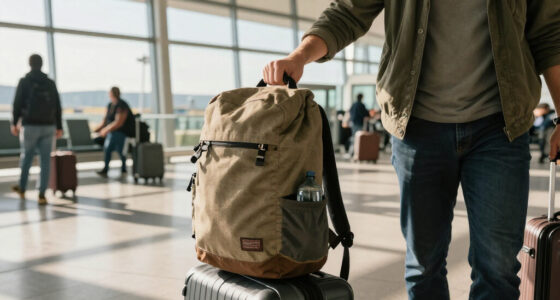
Most airlines stick to roughly 22 x 14 x 9 inches (56 x 36 x 23 cm), including wheels and handles. Think of it as a standard-sized backpack or a large tote that fits comfortably in overhead bins.
For example, a 20-inch rolling suitcase often slides right in, while a 24-inch bag might be pushing the limit. But remember—these are general rules. Always check your airline’s website.
As an affiliate, we earn on qualifying purchases.
How Much Do Airlines Weigh Your Carry-On? Exact Limits to Know
Weight limits usually range between 15 to 22 pounds (7 to 10 kg). Airlines want lightweight, manageable bags that won’t cause delays or damage overhead bins.
For instance, Delta’s typical limit is 15 pounds, while Southwest allows up to 50 pounds for checked luggage but 25 pounds for carry-ons. Weigh your bag at home to avoid surprises.
Understanding these weight limits is crucial because exceeding them can lead to additional fees, delays, or even the need to check your bag unexpectedly. It’s a tradeoff between packing efficiently and avoiding extra costs. The lighter your carry-on, the easier it is to handle, especially during busy boarding times or tight overhead compartments.
lightweight carry-on suitcase 22 inch
As an affiliate, we earn on qualifying purchases.
As an affiliate, we earn on qualifying purchases.
What About Personal Items? How Big Can They Be?
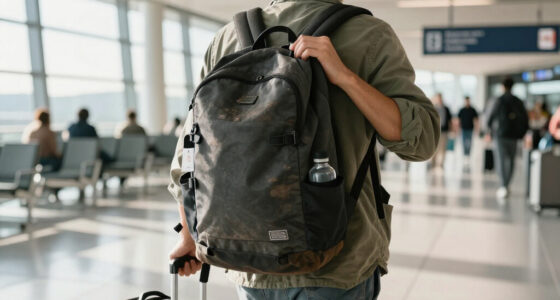
Personal items like a purse, laptop bag, or small backpack must fit under the seat. Most airlines set size limits around 18 x 14 x 8 inches (45 x 35 x 20 cm).
Imagine fitting a small backpack, an oversized purse, or a laptop case under your seat—if it’s too big, you might have to check it or find a smaller bag.
Choosing the right personal item size is important because it impacts your comfort and convenience during the flight. If the item is too large, it could block your legroom or cause delays at boarding, as airline staff may insist on checking it or re-stowing it. So, measure carefully and select a bag that maximizes space efficiency under your seat.
As an affiliate, we earn on qualifying purchases.
Can Your Bag Size Vary by Airline? Here’s What You Need to Know
Yes. While the typical standard is about 22 x 14 x 9 inches, some airlines tighten or loosen rules. For example, low-cost carriers like Spirit or Ryanair often enforce their limits strictly, sometimes as small as 20 x 15 x 8 inches.
These variations matter because they can influence your packing choices. If you’re flying with an airline that has stricter size limits, your usual suitcase might not fit, leading to last-minute repacking or checked baggage fees. Conversely, airlines with more lenient policies provide a bit more flexibility, but assumptions can be risky—always double-check before you pack. Recognizing these differences helps you avoid surprises and plan accordingly, especially if you’re switching between carriers or taking multiple flights.
As an affiliate, we earn on qualifying purchases.
Comparison Table: Common Airline Carry-On Size Limits
| Airline | Max Dimensions (inches) | Max Weight (lbs) |
|---|---|---|
| American Airlines | 22 x 14 x 9 | 50 |
| Delta | 22 x 14 x 9 | 15 |
| Southwest | 24 x 16 x 10 | 50 |
| Ryanair | 20 x 15 x 8 | 22 |
| Lufthansa | 21.7 x 15.7 x 9.8 | 17.6 |
How to Measure Your Bag and Avoid Surprises
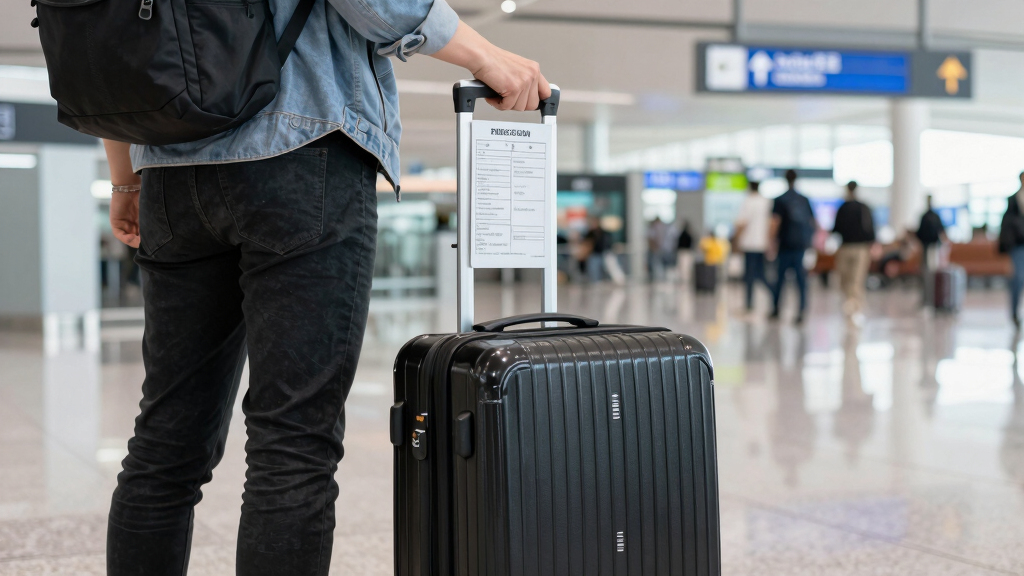
- Use a tape measure. Include wheels, handles, and any protrusions.
- Place the bag on a flat surface. Measure length, width, and height.
- Compare measurements to airline rules. If you’re close, consider repacking or switching bags.
- Check weight at home with a luggage scale. Keep it under the limit.
Imagine your carry-on as a puzzle—every inch matters. Accurate measurement at home keeps your trip smooth.
What Happens if Your Bag Is Too Big or Heavy?
If your bag exceeds airline limits, you’ll likely face extra fees or be asked to check it. At the gate, some airlines are strict—others might give a warning.
For example, a bag just 1 inch over the limit may be checked at the gate, costing $50 or more. Packing smart helps you avoid these costs and delays. Recognizing the implications of size and weight violations helps you make informed decisions—sometimes, a small adjustment can save you significant money or hassle.
Tips to Pack Light and Stay Within Limits
- Choose a lightweight suitcase with a durable shell.
- Pack versatile clothing—think layers and neutral tones.
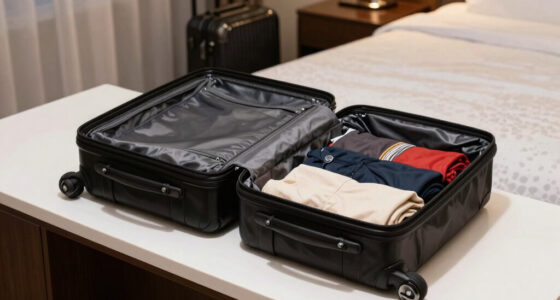
- Use packing cubes for organization and maximum space.
- Weigh your bag daily. Remove unnecessary items.
- Stick to essentials—less is more.
Imagine fitting everything you need into a compact, well-organized bag—less stress, more freedom.
Frequently Asked Questions
Can I bring a slightly larger carry-on if I pay extra?
Some airlines offer options for larger carry-ons with priority boarding or premium tickets. Always verify the specific size and weight limits, as overstuffed bags may still be flagged at the gate.
Are international airlines more strict about carry-on size?
Not necessarily. Many international airlines have similar limits, but some enforce rules more rigorously. Always check the airline’s website before packing for international flights.
What if my bag is just a little over the limit?
If it’s a small excess, you might be allowed to bring it without issue. However, if you’re significantly over, expect to check it or pay extra fees. Better to measure carefully beforehand.
Can I use a personal item as my main carry-on?
No. Personal items are meant to fit under the seat and are smaller than your main carry-on. Using a personal item as your main bag risks being flagged or checked.
Conclusion
Knowing your airline’s carry-on size limits isn’t just about rules—it’s about flying smarter. A well-measured bag that fits comfortably in the overhead bin keeps your journey smooth and stress-free. So measure, pack light, and enjoy your trip without surprises.
Next time you pack, imagine that bag slipping neatly into the overhead. That’s the kind of travel efficiency you want.
Halloween Picks
halloween
As an affiliate, we earn on qualifying purchases.