
TL;DR

Get travel and outdoor gear delivered free with Prime
- Fast, free delivery on millions of items
- Prime Video, Amazon Music and more included
- Member-only deals all year
Most airlines allow a backpack as a personal item if it fits within specific size limits, typically around 18 x 14 x 8 inches. Always check your airline’s policy beforehand to avoid surprises at the gate.
Imagine this: you’re rushing through the airport, backpack slung over your shoulder, ready to board. Suddenly, a flight attendant asks to check your bag. Turns out, your trusty backpack might not qualify as a personal item after all. Knowing whether your backpack counts as a personal item can save you from unexpected fees or the hassle of gate-checking.
This guide breaks down exactly what airline policies say, how to measure your bag, and practical tips to keep your travel smooth. No jargon, just straightforward advice based on real-world travel experiences.
Most airlines allow a backpack as a personal item if it fits within about 18 x 14 x 8 inches, but always verify specific policies.
Use a slim, lightweight backpack designed for travel to maximize your chances of qualifying as a personal item.
Measure your backpack before packing and check airline rules online to avoid last-minute surprises.
Larger or rigid backpacks are often considered carry-on, which may incur extra fees or delays.
Policies vary by airline—what’s acceptable on one carrier might not be on another. Always double-check before you fly.
What Exactly Is a Personal Item? How Your Backpack Fits In
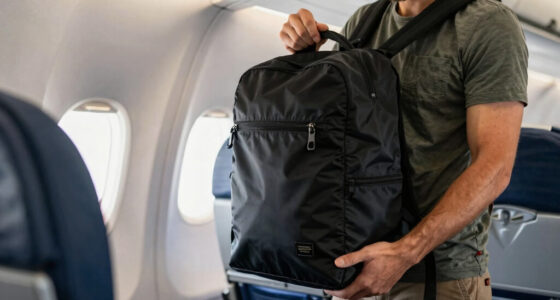
A personal item is a smaller bag that can sit comfortably under the seat in front of you. It’s your go-to for essentials like a laptop, wallet, and a book. Think of it as your travel sidekick—compact, accessible, and within airline size limits.
For example, a slim backpack like the Osprey Arcane Everyday (roughly 17 x 12 x 6 inches) often qualifies as a personal item. It’s small enough to slide under the seat and sturdy enough to carry electronics, documents, and a change of clothes.
But if your backpack is bulky or rigid—say, a large hiking pack—it might be considered a carry-on instead. The key is whether it can fit under the seat without forcing it or causing delays at boarding.
Understanding what qualifies as a personal item matters because it directly impacts your travel experience. If your bag exceeds size limits or is too rigid, you risk being forced to gate-check it, which could mean extra fees, potential delays, and less immediate access to your essentials. Choosing the right backpack ensures a smoother boarding process and keeps your belongings accessible during the flight, saving time and stress.
compact travel backpack for airline personal item
As an affiliate, we earn on qualifying purchases.
As an affiliate, we earn on qualifying purchases.
Size Matters: How to Measure Your Backpack for Airline Rules
Measuring your backpack accurately is crucial because airline policies often enforce strict size limits. If you don’t measure properly, you risk having your bag rejected at the gate, leading to unexpected fees or delays. The size limits are set to ensure that bags can fit under the seat without obstructing aisles or other passengers’ space, which is essential for safety and comfort. If your bag exceeds these limits, it might be considered a carry-on, which could incur additional fees or require gate-checking, delaying your travel.
Here’s how to measure your bag:
- Lay your backpack flat on a measuring tape or ruler, ensuring it’s fully expanded.
- Measure the height from the bottom to the top, including any protruding parts like straps or handles—these can often be tucked in or folded to get an accurate measurement.
- Measure the width at the widest point, typically the front or side of the bag.
- Measure the depth from front to back, considering any expansion zippers or compartments.
- Compare the total dimensions to your airline’s specified size limits. Remember, some airlines measure the bag with the zippers closed, so measure accordingly.
For instance, a Nomatic Backpack measuring exactly 17 x 12 x 6 inches comfortably fits within most airline limits, reducing the risk of last-minute surprises. Proper measurement not only helps you comply with airline policies but also encourages smarter packing, as you’ll be more aware of what fits and what doesn’t. This proactive step can prevent the inconvenience of gate-checking or extra fees, making your travel experience more seamless.
Amazonlightweight carry-on backpack for flying
As an affiliate, we earn on qualifying purchases.
As an affiliate, we earn on qualifying purchases.
Backpack Styles That Usually Count as Personal Items
Not all backpacks are created equal when it comes to airline policies. Here’s a quick comparison:
Type of Backpack Size & Shape Likely to Qualify as Personal Item Best For Slim Daypack Compact, lightweight, flat profile Yes Business trips, city travel, minimal gear Tech Backpack Structured, padded for electronics Yes, if within size limits Remote work, digital nomads Hiking or Large Capacity Backpack Bulky, rigid, often over 20 inches tall Usually no, considered carry-on Outdoor adventures, long trips Choosing a backpack that fits the airline’s definition of a personal item isn’t just about size—it’s about practicality and convenience. Slim daypacks and tech backpacks often have a flexible, soft structure that allows them to mold under the seat, making them more adaptable to different aircraft layouts. Conversely, large hiking or rigid backpacks tend to be bulky and less flexible, often exceeding size limits or being deemed as carry-on luggage, which can lead to extra fees and handling delays. Selecting the right style ensures you can carry your essentials without hassle, and it influences how smoothly your boarding process will go. It’s a tradeoff between capacity and compliance—aim for a bag that balances both to optimize your travel experience.
Amazonsize compliant travel backpack for airlines
As an affiliate, we earn on qualifying purchases.
As an affiliate, we earn on qualifying purchases.
Travel Tips: How to Make Your Backpack Fit Airline Rules
Want to avoid surprises? Follow these simple tips:
- Choose a backpack that’s designed to be slim and lightweight.
- Pack efficiently—use packing cubes to compress your clothes.
- Always measure your bag before heading to the airport to ensure it stays within the size limits, which can vary between airlines and aircraft types.
- Be ready to transfer essentials to a smaller bag if needed, especially if your current pack exceeds the allowed dimensions.
- Check your airline’s personal item size policy online—don’t rely solely on verbal information or past experiences, as policies can change or differ by route.
For example, if your backpack edges close to 18 inches, pack smart by removing unnecessary items or compressing clothing. If it’s still too large, consider switching to a smaller bag or preparing for gate-checking. Being proactive with measurements and packing strategies can save you time, money, and frustration at the airport, ensuring a smoother journey from start to finish.
AmazonAs an affiliate, we earn on qualifying purchases.
What Happens If Your Backpack Is Too Big? The Risks and How to Handle Them
If your backpack exceeds the airline’s size limits, it might be considered a carry-on instead of a personal item. This can mean extra fees, or worse—having to check it at the gate, which might delay your boarding and disrupt your travel plans. When your bag is too large, airlines often require you to gate-check it, sometimes for free but often for a fee. This process means you lose immediate access to your belongings during the flight and could face delays if the gate staff requests you to check the bag unexpectedly. Moreover, gate-checking a bag last minute can be stressful, especially if you’re in a hurry or have connecting flights. To mitigate these risks, always measure your backpack beforehand, stay aware of airline size restrictions, and consider packing lighter or choosing a smaller bag if you’re close to the limit. Being prepared helps ensure your travel remains stress-free and efficient, avoiding last-minute surprises that can throw off your schedule.
Do All Airlines See Backpacks the Same Way? The Variations You Must Know
Not all airlines enforce personal-item rules equally. While most follow similar size limits, some are stricter or more flexible, and understanding these differences can prevent hassle during your trip. Budget carriers like Spirit or Ryanair often have tighter restrictions, with strict measurements and less flexibility. They may also have stricter policies regarding rigid or bulky bags, making it essential to measure carefully and adhere strictly to their guidelines. Major airlines like Delta or American tend to be more accommodating, as long as your bag fits under the seat and within their size limits. However, even these airlines can vary based on aircraft type or route, with some smaller regional jets having tighter space constraints. The key is to always check your airline’s official policy before packing, as rules can change and exceptions may exist. Being familiar with their specific standards helps you avoid last-minute surprises, extra fees, or the inconvenience of gate-checking your backpack unexpectedly. Ultimately, knowing these nuances allows you to plan better, pack smarter, and travel with confidence across different airlines.
Frequently Asked Questions
Can I use my regular backpack as a personal item?
Yes, if it fits within airline size limits—typically around 18 x 14 x 8 inches—and is not too bulky or rigid. Always measure before you go to avoid surprises at the gate.
What size backpack is acceptable as a personal item?
Most airlines accept backpacks up to 18 x 14 x 8 inches. Check your airline’s website beforehand for exact dimensions, as they can vary slightly.
Are rolling backpacks considered personal items?
Usually not, unless they are small enough to fit under the seat. Larger rolling backpacks are often classified as carry-ons.
Can I bring a backpack and a purse as personal items?
Many airlines allow one personal item plus a small bag like a purse. Always confirm the specific policy of your airline to avoid issues at boarding.
What if my backpack is too big?
It may be considered a carry-on and could incur extra fees or be gate-checked. To stay safe, measure your bag before heading to the airport and be ready to transfer essentials into a smaller bag if needed.
Conclusion
Your backpack can often be your best travel buddy—if it’s the right size. Knowing the exact limits and rules helps keep your journey smooth and stress-free. Next time you pack, measure twice, pack smart, and travel confidently.
After all, a well-chosen backpack isn’t just a bag; it’s your ticket to hassle-free adventures. Ready to travel light and smart? Your perfect personal item awaits—just measure, pack, and go.
FALL Fall Picks
fall essentialsfall essentials
As an affiliate, we earn on qualifying purchases.