
TL;DR

Get travel and outdoor gear delivered free — and shop member deals
- Fast, free delivery on millions of items
- Access to Prime Big Deal Days deals on October 6–7
- Prime Video, Amazon Music and more included
A reliable travel lock should resist tampering, fit your luggage, and be easy to operate. Four-digit TSA-recognized combination locks from reputable brands offer the best balance of security and convenience for most travelers.
Ever had your luggage tampered with at the baggage carousel? Or worried about opportunistic theft in crowded hostels? While no lock can stop a determined thief with tools, choosing a reliable travel lock can significantly deter casual interference and give you peace of mind.
This guide cuts through the hype, focusing on what really matters: durability, compatibility, ease of use, and how well a lock resists common attacks. Whether you’re packing for a weekend or a long trip, understanding these key points helps you pick the right lock for your journey.
Choose a four-digit TSA-recognized combination lock with solid construction for the best everyday security.
Test your lock multiple times after setting your code to ensure smooth operation and avoid surprises.
Cable locks are versatile but offer less resistance; reserve them for light-duty use and zipper pulls.
Smart locks add convenience but bring reliability and weather issues; always carry a backup key or code.
Layer your security: combine locks with tamper-evident seals, packing strategies, and smart packing habits.
A Review of the Most Reliable Travel Locks for Peace of Mind
A good travel lock is a visible deterrent—not an impenetrable vault. The strongest everyday choice balances solid construction, smooth operation, luggage compatibility and enough convenience that you will actually use it.
What makes a lock worth trusting?
Branding and a TSA logo are not substitutes for build quality. A reliable mechanism should survive baggage handling, resist corrosion and open consistently without sticking, drifting or changing its code accidentally.
Solid materials
Favor zinc alloy, brass and hardened-steel components. A firm body and corrosion resistance improve longevity across repeated trips.
Smooth operation
Dials should align clearly and turn without looseness. Test for jamming, dial drift and opening under tension.
The right fit
Confirm the shackle diameter passes comfortably through your zipper pulls, locker hardware or equipment case.
Readable controls
Large, high-contrast numbers and clear alignment marks matter when you are rushed or working in poor light.
Appropriate strength
Rigid metal shackles generally resist cutting better; flexible cables trade strength for attachment versatility.
Reputable backing
Clear instructions, replacement policies and warranty support are safer signals than an anonymous bargain multipack.
Which travel lock fits your journey?
Scores are relative to typical travel use. The best choice depends on the bag, attachment point and environment.
| Lock type | Best use | Cut resistance | Convenience | Primary advantage | Main limitation |
|---|---|---|---|---|---|
| TSA-recognized combo | Checked luggage | ~Moderate | ✓High | No key; widely available | Small shackles; quality varies |
| Flexible cable | Zipper pulls and awkward points | ✗Low | ✓High | Flexible and versatile | Can be snipped with basic tools |
| Keyed luggage lock | Travelers who dislike dials | ~Moderate | ~Medium | Fast, familiar operation | Lost-key and lockout risk |
| Locker padlock | Hostel and gym lockers | ✓Higher | ~Medium | Better physical resistance | Bulkier and may not fit |
| Smart or biometric | Keyless tech convenience | ~Variable | ~Variable | Access logs and keyless entry | Battery, app and weather dependence |
| Locking luggage strap | A second closure layer | ✗Low | ✓High | Visible and easy to identify | Does not secure soft sides |
Pick, set and test before departure.
A lock that looks sturdy on a product page can still disappoint in use. Check physical fit first, then repeatedly test the mechanism before placing it on a checked bag.
The five-point test
Measure the attachment point
Verify shackle thickness, internal clearance and room around the zipper pulls.
Inspect the construction
Look for a solid body, sturdy metal parts and corrosion-resistant finishes.
Read the dials in poor light
Choose high-contrast numbers with clear alignment marks and positive clicks.
Reset and open repeatedly
Cycle the lock multiple times and apply gentle tension to reveal sticking or drift.
Store your recovery details
Record the combination securely and separately; carry a spare key away from the bag.
Peace of mind comes from layered security.
Choose quality
Solid materials and a dependable mechanism.
Confirm fit
Correct clearance for every attachment point.
Test operation
Repeated opening, closing and resetting.
Add evidence
Tamper seals, straps and deliberate packing.
Carry valuables
Critical belongings remain in your carry-on.
Locked does not mean invulnerable.
TSA recognition supports inspection convenience; it does not certify strength. Security officers may still cut a lock when necessary, and attackers can bypass weak luggage construction without touching the lock.
Before you lock the bag
Do I really need a luggage lock?
It is not mandatory, but it helps deter casual tampering, prevent accidental opening and provide visible evidence of interference.
Are TSA-recognized locks necessary outside the US?
Recognition varies by location. They can be convenient where compatible inspection systems are used, but travelers should check local rules.
Can any luggage lock prevent theft entirely?
No. A compact lock deters opportunists; it will not stop a determined thief equipped with tools or overcome weak bag construction.
What if I forget the combination?
Quality locks usually require the current code to reset. Store the combination securely and separately from the luggage.
Are smart and biometric locks reliable?
They are convenient but introduce batteries, sensors, electronics and weather sensitivity. Always keep a backup code or key.
Is “TSA approved” the correct term?
“TSA-recognized” is more accurate. The feature allows compatible inspection access; it does not mean the lock is officially certified as secure.
Buy dependable, then pack intelligently.
The best travel lock is not necessarily the flashiest or most expensive. Choose solid materials, a smooth four-digit mechanism and a size that fits your gear. Then layer it with tamper evidence, thoughtful packing and sensible valuables management.
What Makes a Travel Lock Truly Reliable?
A reliable travel lock combines sturdy materials, smooth operation, and resistance to tampering. Think of it as a sturdy fence that keeps casual intruders out, not an impenetrable vault. Materials like hardened steel or zinc alloy resist cutting and corrosion. The lock should open easily when needed but resist forced entry.
Understanding why these features matter is crucial. For example, a lock with a sturdy, corrosion-resistant body ensures longevity and consistent performance over many trips, reducing the risk of failure when you need it most. Resistance to tampering isn’t just about preventing theft; it also minimizes false alarms or accidental lockouts. A lock that feels loose or sticky may indicate poor manufacturing quality, which can compromise security in critical moments. When selecting a lock, consider how the materials and build quality influence its ability to withstand rough handling, weather conditions, and attempted forced entry. These factors directly impact your peace of mind, especially when traveling through regions with varying security standards or harsh environments.
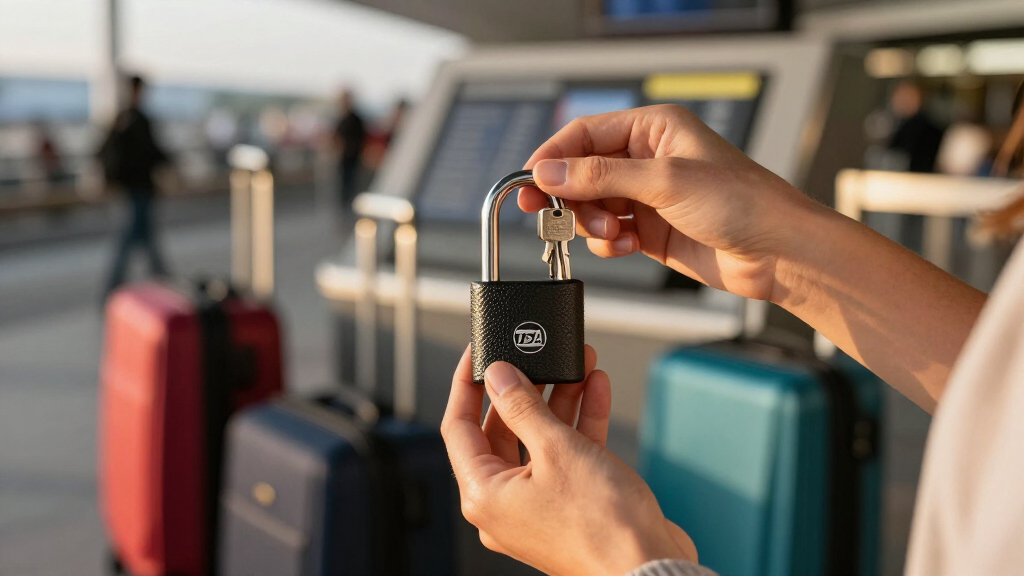
TSA approved combination luggage lock
As an affiliate, we earn on qualifying purchases.
As an affiliate, we earn on qualifying purchases.
How to Pick the Best TSA-Recognized Combination Lock
- Check dimensions: It should fit your luggage’s zipper pulls comfortably. Typical sizes are around 2.5 inches high by 1.2 inches wide.
- Assess construction: Look for hardened zinc alloy body, sturdy metal shackle, and corrosion resistance.
- Test the dial: Ensure the four-digit lock has clear, high-contrast numbers and a simple reset process.
- Try it out: Open and close multiple times, check the ease of setting and resetting, and ensure it doesn’t jam.
- Verify compatibility: Make sure the shackle diameter fits your luggage’s hardware, especially if you use it on lockers or zippers with thick pulls.
Choosing the right TSA-recognized lock involves more than just picking a model at random. It’s about understanding how each feature impacts your security and convenience. For example, a lock with a smooth dial that resets easily reduces the chance of accidental lockouts, which can be frustrating in the middle of travel. Proper testing, such as repeatedly setting and opening your lock, ensures it operates reliably over time. Additionally, selecting a size that fits your luggage’s hardware prevents damage or difficulty in securing your bags. Remember, a lock that feels solid during testing will give you greater confidence during your trip, especially when quick access or security checks are involved. The goal is to balance ease of use with resistance to tampering, ensuring your luggage stays secure without becoming a hassle.
As an affiliate, we earn on qualifying purchases.
Comparison Table: Lock Types and When to Use Them
| Lock Type | Best For | Pros | Cons |
|---|---|---|---|
| TSA-recognized combo | Checked luggage | Easy to reset, no keys, widely available | Small shackles, less resistant to cutting |
| Flexible cable | Zipper pulls, light-duty lockers | Versatile, flexible for awkward attachment points | Lower resistance to cutting; easily snipped with scissors or pliers |
| Keyed locks | Travelers who dislike combo dials | Quick access, familiar operation | Risk of losing keys, slower access, potential for lockouts |
| Locker padlocks | Hostel lockers, gym lockers | Heavy-duty, physical resistance | Bulkier, less portable, often heavier |
| Smart/biometric | Tech-savvy travelers | Keyless, logs access, often app-controlled | Battery dependence, electronic failure risk, potentially less durable in harsh conditions |
Choosing the right lock depends on understanding these tradeoffs. For instance, while TSA-recognized combo locks are convenient for security checks, they often feature smaller shackles that can be vulnerable to cutting if not reinforced. Cable locks offer flexibility but compromise on resistance, making them suitable for light-duty use rather than securing high-value items. Keyed locks are straightforward but carry the risk of losing keys, which can be problematic if you’re far from spare keys or in a hurry. Smart locks provide advanced features but may falter in bad weather or if batteries die. Weigh these factors based on your travel environment and security needs to make an informed choice that balances convenience with protection.
As an affiliate, we earn on qualifying purchases.
Frequently Asked Questions
Do I really need a luggage lock?
While not mandatory, a lock helps prevent casual tampering, accidental opening, and adds a visible deterrent. It’s especially useful in crowded places like airports, hostels, or buses.
Are TSA-recognized locks necessary outside the US?
They work well internationally, especially in countries with TSA-style inspections. Recognition varies, but a TSA lock generally offers convenience for security checks without damage.
Can a lock prevent theft entirely?
No. Locks detour opportunists and protect against accidental openings, but they won’t stop a determined thief with tools. Always layer security with smart packing and valuables management.
What if I forget my combination?
Most quality locks require you to remember your code or follow a reset procedure. Keep your combination written securely, separate from your luggage, to avoid lockouts.
Are biometric or smart locks reliable for travel?
They’re convenient but depend on batteries and sensors, which can fail or be affected by weather. Always carry a backup key or code, especially for longer trips or unpredictable conditions.
As an affiliate, we earn on qualifying purchases.
Conclusion
The best travel lock isn’t the flashiest or most expensive — it’s the one that combines durability, ease of use, and a bit of common sense. Remember, no lock is invincible, but a well-chosen one can turn away most opportunists and give you peace of mind.
Next time you pack, focus on quality materials, reliable operation, and fitting your travel style. Your gear deserves a barrier that’s tough enough to challenge casual interference, not a fortress that invites a determined attacker.
Fall Picks
fall essentials
As an affiliate, we earn on qualifying purchases.