TL;DR
Open a free Amazon Business account
Business pricing, bulk buying and tax-exempt orders.
Create a free accountAs an affiliate, we earn on qualifying purchases.
The best luggage locks prevent theft without damaging your bag by combining strong materials, TSA approval, and smart features. They reduce risks but can’t guarantee complete security. Choose based on your travel style and needs.
Imagine arriving at your destination, only to find your bag slightly battered or opened. It’s a travel nightmare that’s easily preventable. The right luggage lock doesn’t just keep thieves out—it also protects your investment from damage during security checks and rough handling.
In this guide, you’ll learn how to pick locks that boost security without risking harm to your bag. We’ll explore the latest trends, materials, and features, giving you practical insights to travel smarter and safer.
Always opt for TSA-approved locks if you travel by air—this prevents damage during security inspections.
Match your lock size to your luggage’s zippers and handles—overly tight locks risk tearing bags, too loose offers less security.
Invest in durable materials like aluminum alloys with anti-shim and anti-pick features to withstand tampering and impact.
Smart locks add convenience and tracking, but weigh the cost and battery life against your travel frequency.
Remember: a lock deters theft but doesn’t guarantee it—use it as part of a broader security strategy.
The Best Luggage Locks for Preventing Theft Without Damaging Your Bag
The right lock raises the effort required for opportunistic theft while protecting zippers, fabric and hardware during inspections. The winning formula is simple: TSA access, a comfortable fit and durable construction matched to how you travel.
Keyless convenience, inspection-friendly access and broad compatibility for frequent air travel.
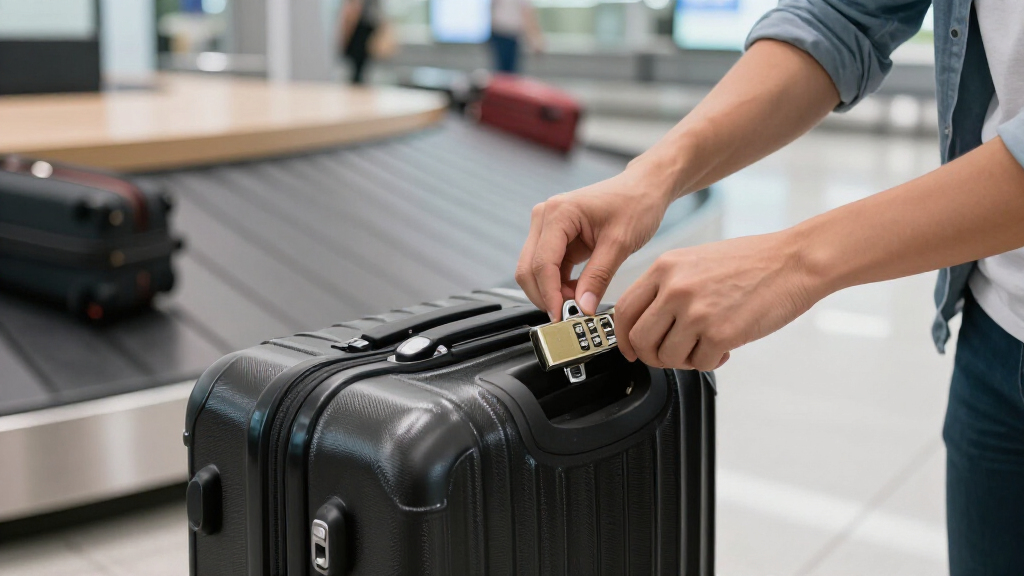
A lock should sit comfortably through the zipper pulls without tension, distortion or excess movement.
Use a quality lock as one layer in a broader travel-security strategy.
What makes a lock bag-safe?
Security is only half the brief. A good travel lock resists tampering without pulling, scraping or adding damaging leverage to delicate luggage components.
Strength without bulk
Zinc alloy, aluminum alloy and hardened steel resist impact and forced entry. Favor reinforced, compact construction over unnecessary weight.
A comfortable fit
Too tight can strain zipper pulls and fabric; too loose reduces control and may knock against the bag. Check shackle or cable clearance before buying.
TSA access matters
TSA-approved mechanisms allow authorized inspection and relocking without cutting the lock—a practical safeguard against avoidable bag damage.
Pick a damage-safe lock in three steps
Measure the contact points
Check zipper-pull holes, handle clearance and fabric proximity. Leave enough room for movement without slack.
Match the journey
Choose TSA approval for flights, flexible cable designs for awkward pulls and weather resistance for exposed travel.
Inspect the build
Prioritize reinforced construction, smooth edges, manageable weight and anti-shim or anti-pick protection.
TSA-approved vs. standard
For air travelers, the real distinction is not merely convenience—it is whether an inspection can happen without the lock or luggage being forcibly opened.
| Feature | TSA-approved lock | Standard lock |
|---|---|---|
| Air inspection | ✓ Yes Authorized agents can open and relock it without cutting. | ✗ No May require forced opening when inspection is necessary. |
| Damage risk | ✓ Lower Reduces the chance of broken hardware during routine checks. | ✗ Higher Forced access can damage the lock, zipper pulls or bag. |
| Ease of use | ✓ Strong Combination and keyed options are widely available. | ~ Variable Depends on key storage or combination design. |
| Durability | ✓ High Often designed for repeated handling and travel conditions. | ~ Mixed Performance depends heavily on material and construction. |
| Best use | ✓ Flights The practical default for domestic and international air travel. | ~ Ground Suitable where security inspections are not expected. |
According to BagsOK, TSA-approved locks are essential for air travelers because they let security personnel inspect luggage without breaking the lock and risking damage to the bag.
Choose features that earn their weight
New technology adds convenience, tracking and faster access—but every extra feature introduces a tradeoff in price, battery dependence or complexity.
Combination
No key to lose; practical for most travelers. A four-digit design offers more possible codes than a three-digit model.
Flexible cable
Useful for unusual zipper geometry and multiple pulls, provided the cable does not rub against soft material.
Bluetooth smart
Phone-based control and activity logs improve convenience. Check battery life, app reliability and airline requirements.
Biometric
Fingerprint access reduces mechanical wear and removes the need to remember a code, but electronics add cost and upkeep.
Illustrative decision score balancing compatibility, simplicity, portability and maintenance—not a laboratory security test. Smart models may cost around $70 and can add waterproofing, access logs and phone control.
They add friction—not invincibility.
A visible, sturdy lock makes casual theft less attractive by demanding more time and effort. Anti-shim, anti-pick and reinforced components raise that barrier further, but determined thieves with tools may still bypass the lock or attack the bag itself.
The practical protection spectrum
A quality lock shifts luggage toward the harder-target end of the spectrum. Keep valuables with you, conceal high-value contents and stay attentive during transfers to complete the strategy.
Your complete protection chain
Quick answers before you buy
Are TSA-approved locks necessary for international travel?
They are strongly recommended when flying. They allow compatible security authorities to inspect luggage without cutting the lock, reducing the risk of avoidable damage and replacement costs.
Can any luggage lock prevent all theft?
No. Locks deter opportunistic access and increase the effort needed, but they cannot make soft-sided luggage or zippers completely invulnerable.
Are electronic locks worth the price?
They can be valuable for frequent travelers who want remote access, logs or fingerprint unlocking. Occasional travelers may get better value from a durable TSA-approved combination lock.
What should I inspect first?
Start with the fit. Confirm that the shackle or cable passes through the pulls comfortably, has smooth contact surfaces and does not place tension on zippers or fabric.
What makes a luggage lock both secure and gentle on your bag?
Strong materials like zinc alloy or hardened steel are critical because they resist tampering and forced entry, making theft attempts less successful. However, the choice of material also influences weight and flexibility; heavier metals might offer more security but can add bulk to your luggage. Look for locks with a snug fit—if too tight, they can strain zippers or damage fabric; if too loose, they’re ineffective against theft. TSA-approved locks are a significant advantage because they allow security personnel to open and relock luggage without breaking the lock, reducing the risk of damage and the inconvenience of replacing locks.
For example, a TSA lock with dimensions of 2.5 inches in height, 1.2 inches wide, and weighing just 3 ounces can fit most carry-on zippers comfortably. Its anti-shim and anti-pick features make it resistant to common tampering techniques, reducing your worry during security lines. The tradeoff here involves balancing security features with ease of use—locks that are too complex might be difficult to operate quickly, but overly simple locks might lack sufficient resistance to determined thieves.
As an affiliate, we earn on qualifying purchases.
How to pick a lock that won’t damage your luggage in 3 simple steps
- Measure your luggage’s zipper pulls and handles carefully—your lock needs to fit comfortably to avoid putting undue pressure on zippers or fabric, which could cause tearing or jamming. Using a lock that’s too tight might damage delicate fabrics or distort zipper pulls over time, especially with frequent use.
- Choose a TSA-approved lock if you travel by air—this avoids forced breakage during security checks, which can damage both the lock and your luggage. While TSA locks are designed for easy access, they also require proper handling to prevent accidental damage during opening or closing.
- Check the lock’s material and weight—aim for lightweight, durable metals like aluminum alloys, which resist impact without adding unnecessary bulk. Heavier locks may offer more security but could cause strain on zippers or fabric, especially if the lock is not designed for frequent handling. Conversely, lightweight materials might be less resistant to impacts if not properly engineered, so look for those with reinforced construction.
As an affiliate, we earn on qualifying purchases.
TSA-approved vs. standard locks: Which really protects your bag?
| Feature | TSA-Approved Locks | Standard Locks |
|---|---|---|
| Security for air travel | Yes, can be opened by TSA agents without damage, reducing the risk of broken locks and damaged luggage during inspections. This feature minimizes the inconvenience and costs associated with forced entry. | No, risk of damage if forced open, which can lead to additional repairs or replacement costs. Non-TSA locks might be more vulnerable if security personnel need to force entry, especially if the lock isn’t robust enough. |
| Ease of use | Quick reset with a master key, allowing TSA agents to access luggage without hassle. This reduces delays and potential damage caused by forced entry. | Requires manual key or combination recall, which can be inconvenient if lost or forgotten, and may lead to forced opening, risking damage. |
| Durability | High—designed for frequent handling, with materials that withstand rough treatment and environmental factors. This durability helps ensure the lock maintains its integrity over time, providing consistent security and reducing the likelihood of damage during normal use. | Depends on material, but generally good. However, standard locks may not be built for repeated handling or environmental stress, increasing the risk of failure or damage. |
As an affiliate, we earn on qualifying purchases.
The latest tech trends: Smarter locks that won’t damage your luggage
Smart locks with Bluetooth or Wi-Fi connect to your phone, letting you lock or unlock remotely. These features offer convenience by eliminating the need for physical keys or combinations, which can be lost or forgotten. Additionally, many smart locks record access logs, providing a detailed history of who handled your luggage—valuable for travelers concerned about security breaches or theft. Biometric options like fingerprint recognition are emerging, offering quick, contactless access that reduces wear and tear on traditional lock mechanisms. Such features can prevent damage caused by forced opening or mishandling, as unlocking becomes more precise and gentle.
For example, a $70 smart lock boasts a waterproof design, 10-meter Bluetooth range, and a sleek matte finish. Its durable construction minimizes the risk of damage during security checks or rough handling, and the remote access capabilities mean you don’t need to physically manipulate the lock, further reducing potential damage.
As an affiliate, we earn on qualifying purchases.
What’s the real deal? Do these locks actually prevent theft?
Locks act as a deterrent, not a foolproof barrier. Their primary role is to make casual or opportunistic theft less appealing, as a sturdy lock signals that extra effort is needed to access your belongings. However, determined thieves with tools and time may still bypass locks through forced entry or tampering. The key is understanding that locks increase the effort needed, which often discourages thefts that rely on quick, low-effort grabs. According to BagsOK, a high-quality lock with anti-shim and anti-pick features adds layers of difficulty, effectively raising the barrier for casual thieves and reducing the likelihood of theft.
For instance, a 4-digit combination lock with reinforced shackle and weather resistance can withstand harsh conditions and rough handling, but it’s not invulnerable. The implication is that while a good lock greatly reduces the risk of theft, it shouldn’t be your only security measure. Combining locks with vigilant packing practices, strategic placement, and keeping valuables close enhances overall security, acknowledging that no single device is completely foolproof.
Frequently Asked Questions
Are TSA-approved locks really necessary for international travel?
Yes, especially if flying. TSA-approved locks can be opened by security without damage, saving you from costly repairs or replacing locks after inspections. They’re a smart choice for hassle-free security checks worldwide.
Can a lock completely stop thefts?
No lock can guarantee total security, but a sturdy lock discourages opportunists. Adding other measures like keeping valuables close and choosing visible, secure luggage enhances your protection.
Are smart locks worth the extra cost?
If you travel often, smart locks offer convenience, activity logs, and remote control. But they need batteries and can be pricier. Evaluate your travel habits before investing in this tech upgrade.
What’s the easiest way to change my lock’s combination?
Most combination locks have a reset button or sequence in the manual. Typically, you set the lock to a default, then follow the steps to create your new code. Keep your new combination in a safe place.
Conclusion
Choose your luggage lock wisely. It should be a seamless part of your travel routine—easy to use, tough enough to deter thieves, and gentle on your bag. Remember, no lock can prevent every theft, but the right one makes a thief think twice.
Next trip, picture your bag with a sleek, sturdy lock, quietly standing guard—ready to protect your belongings without a scratch. That’s real peace of mind on the road.
Fall Picks
fall essentials
As an affiliate, we earn on qualifying purchases.