For most backpackers, I’d start with the Kelty Grand Mesa 2-Person: its aluminum poles and backpacking-focused design make it the strongest all-around balance in this group. The Naturehike Cloud-Up 1-Person is a standout for solo trips where carrying less matters most, while the Clostnature Lightweight 2-Person suits hikers who want a two-person shelter without moving to a bulkier car-camping design. The main tradeoff is between lower carry weight and the room, weather protection, and convenience of heavier tents. Capacity labels can also hide how tight a tent feels once packs and sleeping pads are inside. Read on for the full comparison and guidance on matching a tent to your routes and camping style.

Get travel and outdoor gear delivered free with Prime
- Fast, free delivery on millions of items
- Prime Video, Amazon Music and more included
- Member-only deals all year
Complete the kit

Key Takeaways
- The Kelty Grand Mesa 2-Person leads as the balanced backpacking choice: its aluminum poles and 3-season design better fit regular trail use than the car-camping-first options.
- Solo shelters offer the clearest weight-saving opportunity: the Naturehike Cloud-Up and Night Cat 1-Person avoid carrying a second-person floor plan when you camp alone.
- “Waterproof” and “4-season” labels do not settle the weather question: compare the full shelter design and intended conditions, not just a product name or claim.
- Convenience has a carry-weight cost: the Golabs pop-up and familiar dome-style tents may suit drive-in trips, but their setup ease does not automatically make them good backpacking picks.
- Two-person capacity is a compromise, not a guarantee of comfort: couples sharing gear should check usable floor space, door access, and vestibule storage before choosing a compact model.
| Amazon Basics 2-Person 3-Season Dome Camping Tent with Rainfly |  | Best for Quick, Simple Campsite Setups | Capacity: Listed as 2 persons; product data also gives a conflicting 4-person figure | Season: 3-season | Design: Free-standing dome | VIEW LATEST PRICE | See Our Full Breakdown |
| Clostnature Lightweight 2-Person Backpacking Tent |  | Best for Gear Storage on the Trail | Occupancy: 2 people | Season: 3-season | Item weight: 5.3 pounds | VIEW LATEST PRICE | See Our Full Breakdown |
| Kelty Grand Mesa Backpacking Tent, 2-Person, 3-Season, Aluminum Poles |  | Best for a Lighter Two-Person Backpacking Setup | Occupancy: 2 people | Season: 3-season | Minimum trail weight: 4 pounds | VIEW LATEST PRICE | See Our Full Breakdown |
| Night Cat 1–2 Person Backpacking Tent with Aluminum Poles, Double Layer, Two Doors |  | Best for Solo Hikers Who Want Two-Sided Access | Occupancy: Listed as 1–2 persons; product data also gives conflicting occupancy details | Season: 3-season | Weight: 2.5 kg (5.4 lb) | VIEW LATEST PRICE | See Our Full Breakdown |
| BISINNA 2-Person Lightweight Waterproof Backpacking Tent |  | Best for Roomier Floor Dimensions | Occupancy: 2 people | Weight: 4.7 pounds | Dimensions: 102.2 × 82.7 × 47.2 inches | VIEW LATEST PRICE | See Our Full Breakdown |
| Forceatt 2-Person Waterproof 4-Season Backpacking Tent |  | Best for Wet-Weather Two-Person Trips | Capacity: 2 people | Weight: 5.5 lb (2.5 kg) | Floor dimensions: 88.6 × 53.1 in (225 × 135 cm) | VIEW LATEST PRICE | See Our Full Breakdown |
| ShinHye Backpacking Tent – Ultralight Dome Portable, 2‑4 Person, Easy Setup, Waterproof with Dual Doors and Double Layer |  | Best for Flexible Group Capacity | Capacity: 2–4 persons | Season: 3-season | Waterproof coating: PU 5000 | VIEW LATEST PRICE | See Our Full Breakdown |
| Camppal 1-Person 4-Season Backpacking Tent |  | Best Lightweight Solo Pick | Occupancy: 1 person | Weight: 3.75 lb | Inner dimensions: 8.2 ft L × 2.95 ft W × 2.95 ft H | VIEW LATEST PRICE | See Our Full Breakdown |
| Wakeman Outdoors 2-Person Camping Tent with Rain Fly and Carrying Bag |  | Best for Short, Mild-Weather Trips | Occupancy: 2 people | Weight: 3.3 lb | Dimensions: 77 × 57 × 40 in | VIEW LATEST PRICE | See Our Full Breakdown |
| Clostnature Waterproof Camping Tent for 2 Persons |  | Best for Quick-Pitch Backpacking | Occupancy: 2 people | Weight: 5.29 lb | Dimensions: 7’3″ × 4’11” × 3’10” | VIEW LATEST PRICE | See Our Full Breakdown |
| BISINNA Backpacking Tent 2-Person Lightweight Camping Tent | 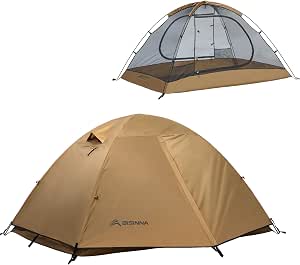 | Best for Two-Person Backpacking | Occupancy: 2 people | Weight: 4.76 lb (2.16 kg) | Floor area: 31.64 sq ft | VIEW LATEST PRICE | See Our Full Breakdown |
| Night Cat Lightweight Waterproof Backpacking Tent, 1 Person, Army Green |  | Best for a Compact Solo Shelter | Occupancy: 1 person | Weight: 4.4 lb (1.97 kg) | Floor dimensions: 2.2 × 1.2 m | VIEW LATEST PRICE | See Our Full Breakdown |
| Golabs 2-Person Pop-Up Camping Tent with Pre-Attached Pole |  | Best for Fast Campsite Setup | Occupancy: 2 people | Weight: 4.3 lb | Interior dimensions: 76.7 × 55.1 × 43.7 in | VIEW LATEST PRICE | See Our Full Breakdown |
| Naturehike Cloud-Up 1-Person Ultralight Backpacking Tent | 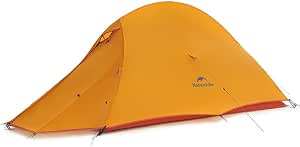 | Best for Ultralight Solo Trips | Capacity: 1 person | Weight: 3.66 lb | Dimensions: 82.7 × 35.4 × 41.3 in | VIEW LATEST PRICE | See Our Full Breakdown |
| Coleman Sundome 2-Person Camping Tent with Rainfly |  | Best for Car Camping with a Short Carry | Occupancy: 2 people | Weight: 7.5 lb | Design: Freestanding dome | VIEW LATEST PRICE | See Our Full Breakdown |
| lightweight camping tent | Weight | Occupancy | Water resistance | Pole material |
|---|---|---|---|---|
| Amazon Basics 2-Person 3-Seaso | 2.77 kg | — | Water-resistant coating and welded seams | — |
| Clostnature Lightweight 2-Pers | — | 2 people | PU 5000 mm | — |
| Kelty Grand Mesa Backpacking T | — | 2 people | 3300HH waterproof-coated rainfly | — |
| Night Cat 1–2 Person Backpacki | 2.5 kg (5.4 lb) | Listed as 1–2 persons; product data also gives conflicting occupancy details | — | — |
| BISINNA 2-Person Lightweight W | 4.7 pounds | 2 people | PU2000mm rainfly | — |
| Forceatt 2-Person Waterproof 4 | 5.5 lb (2.5 kg) | — | — | — |
| ShinHye Backpacking Tent | — | — | — | Aluminum |
| Camppal 1-Person 4-Season Back | 3.75 lb | 1 person | 3500–4000 mm | Aluminum |
| Wakeman Outdoors 2-Person Camp | 3.3 lb | 2 people | Water resistant; no numerical rating specified | Fiberglass |
| Clostnature Waterproof Camping | 5.29 lb | 2 people | PU 2000 mm | — |
| BISINNA Backpacking Tent 2-Per | 4.76 lb (2.16 kg) | 2 people | — | Aluminum |
| Night Cat Lightweight Waterpro | 4.4 lb (1.97 kg) | 1 person | — | Covered fiberglass |
| Golabs 2-Person Pop-Up Camping | 4.3 lb | 2 people | Moisture-resistant; not waterproof | Fiberglass |
| Naturehike Cloud-Up 1-Person U | 3.66 lb | — | — | 7075 aluminum alloy |
| Coleman Sundome 2-Person Campi | 7.5 lb | 2 people | — | Fiberglass |
More Details on Our Top Picks
Amazon Basics 2-Person 3-Season Dome Camping Tent with Rainfly
At 2.77 kg, this is the lightest option in this group by the listed weight, making it a reasonable pick for short walks from the car to camp rather than a long backpacking route. Its under-four-minute setup, free-standing frame, and removable rainfly keep the design straightforward; the Clostnature adds two doors and vestibules for a more trail-oriented layout, but weighs more. A back window and cool-air port give this tent useful ventilation, while welded seams and a water-resistant coating offer basic rain protection. I would treat the capacity information cautiously: the name and floor dimensions suggest a two-person tent, but the product data also lists a conflicting four-person capacity. It also lacks stated UV protection, so it is not my pick for prolonged sun exposure.
Pros:- Lowest listed weight among these five options at 2.77 kg
- Free-standing dome and shock-corded poles support quick setup
- Back window and cool-air port aid ventilation
- Removable rainfly and welded seams add basic weather protection
Cons:- Product data conflicts on capacity, listing a two-person style but also four-person occupancy
- No vestibule is listed for storing packs outside the sleeping area
- UV protection is not specified
Best for: Car campers and short-distance walk-in campers who prioritize a quick setup and low listed weight over backpacking-specific storage.
Not ideal for: Backpackers who need vestibules, shoppers who require verified occupancy figures, or campers seeking stated UV protection.
- Capacity:Listed as 2 persons; product data also gives a conflicting 4-person figure
- Season:3-season
- Design:Free-standing dome
- Dimensions:84 × 60 × 45 inches
- Weight:2.77 kg
- Materials:Polyester fabric, fiberglass poles, polyethylene floor, steel stakes
- Water resistance:Water-resistant coating and welded seams
- Doors and windows:1 door; 1 back window
- Setup time:Under 4 minutes
Our verdict“Choose it for light, quick campsite use if you can confirm the capacity details and do not need vestibule storage.”
Clostnature Lightweight 2-Person Backpacking Tent
The Clostnature makes the strongest case for backpackers who want two doors and two vestibules without moving to a larger tent. Separate entries make it easier for two people to get in and out, while the vestibules keep packs out of the sleeping area—an advantage over the single-door Kelty Grand Mesa. Its 4.5-pound minimum trail weight is manageable for a two-person setup, though the 5.3-pound item weight makes it heavier than the Kelty. PU 5000 mm fabric and factory-sealed seams give it a more clearly specified rain barrier than the BISINNA’s PU2000mm rating. The tradeoff is a two-person-only layout with limited room for bulky gear inside, and its packed length of 16.5 inches is not especially compact for a lightweight shelter.
Pros:- Two doors and two vestibules improve access and keep gear outside the sleeping area
- PU 5000 mm rainfly and groundsheet with factory-sealed seams
- Freestanding design and approximately three-minute setup
- Minimum trail weight is 4.5 pounds
Cons:- Listed item weight is 5.3 pounds, heavier than the Kelty Grand Mesa
- Two-person capacity leaves limited interior room for bulky gear
- Packed length of 16.5 inches may take more pack space than some hikers prefer
Best for: Two-person backpacking partners who want separate entrances and covered pack storage while sharing tent weight.
Not ideal for: Solo hikers seeking the lightest possible load or campers who need generous interior space for bulky equipment.
- Occupancy:2 people
- Season:3-season
- Item weight:5.3 pounds
- Minimum trail weight:4.5 pounds
- Packed size:16.5 × 5.9 × 5.9 inches
- Dimensions:86.6 × 59 × 45.28 inches
- Water resistance:PU 5000 mm
- Doors and vestibules:2 doors; 2 vestibules
- Poles:2 aluminum poles
Our verdict“Pick the Clostnature if shared backpacking trips call for two entrances and usable vestibules more than the lowest possible carry weight.”
Kelty Grand Mesa Backpacking Tent, 2-Person, 3-Season, Aluminum Poles
At a 4-pound minimum trail weight, the Kelty Grand Mesa is the clearest choice here for backpackers trying to keep a shared shelter load down. Its packed weight is 4 pounds 7 ounces, still below the Clostnature’s 5.3-pound item weight, though the Clostnature gives couples a second door and vestibule that the Kelty lacks. The Grand Mesa’s aluminum poles and Quick Corners make setup and campsite placement less fussy, while its coated, seam-taped rainfly adds a defined layer of weather protection. The compromise is a single entrance, just 3 square feet of vestibule area, and a 44-inch peak height. I’d choose it for two people comfortable organizing gear outside; those wanting easier access or more covered storage should favor the Clostnature.
Pros:- 4-pound minimum trail weight suits weight-conscious two-person backpacking
- Aluminum poles and Quick Corners support convenient setup
- Seam-taped, waterproof-coated rainfly
- Freestanding dome design allows flexible campsite placement
Cons:- Single door can make access awkward for two occupants
- One vestibule provides only 3 square feet of gear storage
- 44-inch peak height may feel cramped, especially for taller campers
Best for: Two-person backpacking teams who value a lower trail weight and straightforward pitching over dual access and roomy vestibules.
Not ideal for: Taller campers or couples who want separate tent doors and enough vestibule space for substantial gear.
- Occupancy:2 people
- Season:3-season
- Minimum trail weight:4 pounds
- Packed weight:4 pounds 7 ounces
- Floor dimensions:85 × 57 inches
- Interior and peak height:30 sq. ft. interior; 44-inch peak height
- Materials:68D polyester fabric and rainfly; aluminum poles
- Water resistance:3300HH waterproof-coated rainfly
- Doors and vestibules:1 door; 1 vestibule with 3 sq. ft. of area
Our verdict“Choose the Grand Mesa when a lighter shared carry matters more than dual doors, generous storage, or extra headroom.”
Night Cat 1–2 Person Backpacking Tent with Aluminum Poles, Double Layer, Two Doors
The Night Cat offers two doors and two vestibules in a 5.4-pound package, a useful arrangement for a solo hiker who wants flexible entry and a place to stash gear. That layout is more convenient than the single-door Kelty Grand Mesa, but the Kelty carries less weight at its 4-pound minimum trail figure. A mesh inner tent, ventilation openings, waterproof-coated fabrics, and taped seams give this model a practical mix of airflow and rain coverage for three-season trips. Its 1–2 person capacity is inconsistently described, so I would treat it as a solo shelter unless the seller clarifies the usable space. At 3.6 feet tall, it also offers less headroom than a roomy campsite tent, and its stated specifications do not give a rainfly hydrostatic rating.
Pros:- Two doors and two vestibules provide access from either side and covered gear storage
- Aluminum poles and freestanding dome layout
- Mesh inner tent and ventilation openings promote airflow
- Waterproof-coated fabric and taped seams help guard against rain
Cons:- Listed weight of 5.4 pounds is higher than the Kelty Grand Mesa’s minimum trail weight
- Occupancy information conflicts between one person and one to two people
- No specific rainfly waterproof rating is provided in the listed specs
Best for: Solo backpackers who want dual entrances and vestibules for flexible access and separated gear storage.
Not ideal for: Two adults needing confirmed shared sleeping space, or weight-focused hikers who would rather carry the lighter Kelty Grand Mesa.
- Occupancy:Listed as 1–2 persons; product data also gives conflicting occupancy details
- Season:3-season
- Weight:2.5 kg (5.4 lb)
- Packed size:42 × 15 × 15 cm (16.5 × 4.7 × 4.7 inches)
- Interior dimensions:6.8 × 4.6 ft
- Peak height:3.6 ft
- Doors and vestibules:2 doors; 2 vestibules
- Materials:Mesh inner tent; polyester rainfly; 210D Oxford floor with PU coating
- Structure:Freestanding dome with aluminum poles
Our verdict“This is a sensible solo pick if dual access matters more than a low carry weight and you do not rely on the uncertain two-person capacity.”
BISINNA 2-Person Lightweight Waterproof Backpacking Tent
The BISINNA stands apart with listed dimensions of 102.2 × 82.7 inches, giving it a notably broader footprint on paper than the Clostnature or Kelty. That can suit campers who want more floor area for sleeping and spreading out, though the dimensions alone do not confirm how much usable space the tent offers once pitched. At 4.7 pounds, it is lighter than the Clostnature’s 5.3-pound item weight but heavier than the Kelty’s minimum trail weight. Two doors, mesh panels, and a freestanding frame cover the basics for shared trips. Its PU2000mm rainfly rating is lower than the Clostnature’s PU 5000 mm specification, so I would favor the Clostnature for wet-weather emphasis. Hand-wash care also asks more effort after muddy outings.
Pros:- Listed dimensions offer a broad footprint compared with the Kelty Grand Mesa
- 4.7-pound weight is below the Clostnature’s 5.3-pound item weight
- Two doors and mesh panels support access and airflow
- Freestanding double-layer design with 7001 aluminum poles
Cons:- PU2000mm rating is lower than the Clostnature’s PU 5000 mm specification
- Heavier than the Kelty Grand Mesa’s 4-pound minimum trail weight
- Hand-wash care can take extra work after a trip
Best for: Two-person campers who want a broader listed footprint, dual doors, and a moderate carry weight for backpacking or campsite use.
Not ideal for: Hikers prioritizing the lowest possible shelter weight or buyers who want a higher stated rainfly rating for frequent wet conditions.
- Occupancy:2 people
- Weight:4.7 pounds
- Dimensions:102.2 × 82.7 × 47.2 inches
- Packed size:16.9 × 5.9 × 5.9 inches
- Water resistance:PU2000mm rainfly
- Materials:190T polyester taffeta inner tent and rainfly; B3 no-see-um mesh
- Poles:7001 aluminum
- Doors:2
- Warranty:2 years
Our verdict“Choose the BISINNA for a two-person tent with a broad listed footprint and dual doors, but pick the Kelty for lower trail weight or the Clostnature for a higher stated water-resistance rating.”
Forceatt 2-Person Waterproof 4-Season Backpacking Tent
The Forceatt puts weather protection ahead of minimum pack weight. Its full-coverage rainfly, welded floor, and 3000 mm waterproof coating suit campers expecting wet ground or sustained rain, while two doors and two vestibules give each person a separate entry and a place for muddy gear. Compared with the Clostnature Waterproof Camping Tent for 2 Persons, it weighs slightly more but is described as a four-season option rather than a three-season shelter. That added weather focus comes with a real carrying cost: 5.5 lb is substantial for a two-person backpacking tent. The 43.3-inch interior also limits upright sitting space, so I’d favor it for pairs who value covered storage and rain protection over a roomy interior or a lighter load.
Pros:- Full-coverage rainfly, welded floor, and 3000 mm waterproof coating help protect against rain and wet ground.
- Two doors and two vestibules separate access and provide covered gear storage.
- Aluminum poles and reflective guylines are designed for windy conditions.
- Mesh panels and ceiling vents support airflow.
Cons:- At 5.5 lb, it is heavier than the 3.3 lb Wakeman Outdoors two-person tent.
- The 43.3-inch interior height limits upright sitting space.
- The supplied details do not give a packed size for judging how compact it is in a backpack.
Best for: Two-person backpacking pairs who expect wet, windy conditions and want separate doors and vestibules for gear.
Not ideal for: Weight-conscious hikers on long routes or campers who want enough interior height to sit upright comfortably.
- Capacity:2 people
- Weight:5.5 lb (2.5 kg)
- Floor dimensions:88.6 × 53.1 in (225 × 135 cm)
- Interior height:43.3 in (110 cm)
- Doors and vestibules:2 doors; 2 vestibules
- Poles:7001 series aluminum
- Setup time:About 3 minutes
Our verdict“Choose the Forceatt if rain protection and two-person vestibule access matter more to you than carrying the lightest load.”
ShinHye Backpacking Tent – Ultralight Dome Portable, 2‑4 Person, Easy Setup, Waterproof with Dual Doors and Double Layer
The ShinHye’s standout is its claimed 2-to-4-person capacity, paired with a freestanding frame and two doors. That flexibility can suit trips where the group size changes, but the listing gives no weight or floor dimensions, so I can’t verify how appealing it is for a backpacker counting every pound. Its PU 5000-coated rainfly, sealed seams, and double-layer construction offer a stronger stated waterproof rating than the Forceatt’s 3000 mm, while large mesh windows and doors support ventilation in three-season conditions. Compared with the Camppal 1-Person 4-Season Backpacking Tent, it offers room for a group rather than a solo sleeper, but it is less clearly suited to cold-weather use. Four occupants may also find the interior cramped, and the dry-clean-only care instruction is impractical for muddy camping gear.
Pros:- Freestanding aluminum-pole frame supports pitching without relying on a fixed campsite surface.
- PU 5000 coating and sealed seams provide a high stated waterproof rating.
- Two doors and large mesh openings support access and airflow.
- Double-layer construction suits three-season camping.
Cons:- The listed capacity spans two to four people, but no floor dimensions are supplied to judge fit.
- No product weight is provided, making its ultralight claim difficult to compare.
- Dry-clean-only care instructions are inconvenient for outdoor use.
Best for: Small groups or bikepackers who want a freestanding tent with flexible stated capacity and value ventilation for three-season trips.
Not ideal for: Solo hikers prioritizing verified low carried weight, or groups needing confirmed comfortable sleeping dimensions for four people.
- Capacity:2–4 persons
- Season:3-season
- Waterproof coating:PU 5000
- Fabric:210T polyester fibre, 210D Oxford fabric, B3 No-see-um mesh
- Pole material:Aluminum
- Doors:2 with dual SBS zippers
- Pitch type:Freestanding
- Ventilation:Large mesh windows and doors
Our verdict“Pick the ShinHye for flexible group capacity and a high stated waterproof rating, but not if verified pack weight or roomy four-person dimensions are priorities.”
Camppal 1-Person 4-Season Backpacking Tent
At 3.75 lb, the Camppal is the clearest solo option here for hikers who want a dedicated one-person shelter without moving to a larger two-person tent. Its 8.2-foot length gives taller sleepers more room to stretch out and leaves space for gear, a useful contrast with the more group-oriented Forceatt and ShinHye. The single-pole structure is designed for quick pitching, while taped seams and a stated 3500–4000 mm water-resistance rating offer a measure of protection in poor weather. The tradeoff is a narrow fit: its 2.95-foot width is for one occupant, and there is only one door. Compared with the lighter-listed Wakeman Outdoors tent, the Camppal is heavier, but its solo dimensions and four-season positioning are more aligned with backpacking shelter needs.
Pros:- At 3.75 lb, it is a manageable listed weight for a solo shelter.
- The 8.2-foot interior length accommodates taller sleepers and personal gear.
- Aluminum poles and rip-stop polyester are designed for stability and tear resistance.
- Taped seams and a 3500–4000 mm water-resistance rating support wet-weather use.
Cons:- The 2.95-foot width and one-person occupancy leave no practical room for a second sleeper.
- One door limits access compared with the two-door Forceatt and Clostnature tents.
- Only one guyline is listed, offering less specified tie-out support than some weather-focused designs.
Best for: Solo backpackers, especially taller hikers, who want a dedicated tent with extra sleeping length and stated four-season use.
Not ideal for: Two-person campers, hikers who need separate entry or gear access, or buyers seeking the lowest listed weight.
- Occupancy:1 person
- Weight:3.75 lb
- Inner dimensions:8.2 ft L × 2.95 ft W × 2.95 ft H
- Outer dimensions:8.2 ft L × (2.95 ft + 1.31 ft) W × 3.11 ft H
- Water resistance:3500–4000 mm
- Material:Polyester
- Pole material:Aluminum
- Doors and pockets:1 door; 2 pockets
Our verdict“Choose the Camppal if you backpack solo and need extra sleeping length; skip it if you want shared space or two-door access.”
Wakeman Outdoors 2-Person Camping Tent with Rain Fly and Carrying Bag
The Wakeman’s 3.3 lb listed weight makes it the lightest option in this group with a stated two-person capacity, which may appeal to casual hikers who want a basic shelter without carrying the Forceatt’s 5.5 lb. But low weight is only part of the choice: the product is described as water resistant, with no numerical waterproof rating, so it offers less assurance for sustained rain than the Forceatt or Clostnature. Its 77 × 57 × 40-inch dimensions also point to a compact shelter, while the fiberglass poles differ from the aluminum frames on those alternatives. A ventilation window and included rain fly suit spring and summer outings, but the four-season label in the specs sits uneasily with that limited weather information. I’d treat this as a fair-weather tent, not a dependable storm shelter.
Pros:- At 3.3 lb, it has the lowest listed weight among these five products.
- Includes a rain fly and carrying bag.
- A ventilation window supports airflow in spring and summer.
- Compact dome dimensions suit simple campsite setups.
Cons:- Water resistance is stated without a numerical rating, unlike the Forceatt and Clostnature.
- Fiberglass poles are used instead of the aluminum poles found on several alternatives.
- The 40-inch listed height and compact dimensions may feel restrictive for two occupants.
Best for: Casual campers and short-distance hikers seeking a low-listed-weight two-person tent for mild, mostly dry outings.
Not ideal for: Backpackers expecting prolonged rain, cold-weather campers, or two adults who need a roomy interior and clearly rated waterproof protection.
- Occupancy:2 people
- Weight:3.3 lb
- Dimensions:77 × 57 × 40 in
- Floor dimensions:76 × 60 in
- Floor area:30.08 sq ft
- Water resistance:Water resistant; no numerical rating specified
- Pole material:Fiberglass
- Rain fly material:190T polyester
Our verdict“The Wakeman makes sense for mild-weather trips where a low listed weight matters more than proven rain protection or extra interior room.”
Clostnature Waterproof Camping Tent for 2 Persons
The Clostnature balances a 5.29 lb carry weight with a freestanding X-pole design that pitches in under five minutes, making it a practical choice for two-person trips where straightforward setup matters. Its two doors and vestibules give both campers a way out without climbing over each other and keep some gear outside the sleeping area. The PU 2000 mm coating and factory-sealed seams provide a stated level of rain protection, though the Forceatt lists a higher 3000 mm rating and is positioned for four-season use. Clostnature is explicitly a three-season shelter, so I’d choose it for ordinary backpacking rather than winter conditions. At 7’3″ × 4’11”, space is limited for two adults bringing bulky packs; the four pockets help organize small items but do not solve that fit constraint.
Pros:- Freestanding X-pole design is listed to set up in under five minutes.
- Two doors and two vestibules provide separate access and gear storage.
- PU 2000 mm fabric and factory-sealed seams offer specified rain protection.
- Four interior pockets help keep small items organized.
Cons:- At 5.29 lb, it is heavier than the Wakeman Outdoors tent and the solo Camppal.
- Three-season construction is not suited to extreme winter conditions.
- The stated floor dimensions may feel tight for two adults with bulky gear.
Best for: Two-person backpacking pairs who want a freestanding tent with quick setup, dual access, and vestibules for three-season trips.
Not ideal for: Winter campers, hikers aiming to minimize pack weight, or pairs carrying enough bulky gear to need a spacious interior.
- Occupancy:2 people
- Weight:5.29 lb
- Dimensions:7’3″ × 4’11” × 3’10”
- Packed size:16.5″ × 6″ × 6″
- Water resistance:PU 2000 mm
- Season:3-season
- Doors and vestibules:2 doors; 2 vestibules
- Setup time:Less than 5 minutes
Our verdict“Choose the Clostnature for quick, convenient three-season trips as a pair, but look elsewhere for winter use or a lighter carry.”
BISINNA Backpacking Tent 2-Person Lightweight Camping Tent
At 4.76 pounds, the BISINNA is a practical compromise for two-person trips: it has a two-door layout and a double-layer design without the heavier build of the Coleman Sundome. Its PU3000 rating, taped seams, and aluminum poles make it the stronger pick when rain protection and dependable structure matter on a hiking trip. The full-mesh inner tent also gives warm-weather campers more airflow than a more enclosed shelter.
The tradeoff is usable room: its 31.64-square-foot floor is snug for two adults with packs, so I’d treat it as a close-fit shared shelter or a comfortable solo tent with gear. It is a better match for backpacking than the 7.5-pound Coleman, but it is still heavier than the solo-focused Naturehike Cloud-Up. Its three-season limit rules it out for winter conditions, and care requires hand washing.
Pros:- 4.76-pound weight is manageable for a two-person backpacking shelter.
- Two doors make entry and exit easier for paired campers.
- PU3000 rainfly and taped seams provide meaningful rain protection.
- Aluminum poles and a ventilated mesh inner balance support and airflow.
Cons:- Interior space is tight for two adults with luggage.
- Three-season construction is not intended for winter or extreme conditions.
- Hand washing adds maintenance effort.
Best for: Two backpackers who want two doors, aluminum poles, and rain protection while keeping the shared tent under five pounds.
Not ideal for: Two campers who want room to spread out or keep full-size packs inside, or anyone planning winter trips.
- Occupancy:2 people
- Weight:4.76 lb (2.16 kg)
- Floor area:31.64 sq ft
- Dimensions:82.6 × 55.1 × 43.3 in
- Pole material:Aluminum
- Doors:2
Our verdict“Choose the BISINNA for two-person backpacking when rain protection and two doors matter more than roomy sleeping space.”
Night Cat Lightweight Waterproof Backpacking Tent, 1 Person, Army Green
The Night Cat focuses on solo carrying needs: at 4.4 pounds and 42 × 12 × 12 cm packed, it is a compact option for hikers who want space for one person and a pack. Its free-standing dome design can be pitched without relying on a perfect set of anchor points, and the PU 3000 mm rainfly with sealed seams gives it a useful weather-protection case. Mesh openings add ventilation, while the protective covering over the fiberglass poles helps reduce splinter exposure during setup.
Compared with the Naturehike Cloud-Up, this tent is heavier and uses fiberglass rather than 7075 aluminum poles, but its stated four-season rating may appeal to buyers seeking a broader seasonal range. That rating does not make it a specialist winter shelter. The single door and narrow floor make sharing cramped, and setup still involves manually inserting the poles.
Pros:- Compact packed dimensions suit hikers with limited pack space.
- Free-standing dome design offers flexible campsite placement.
- PU 3000 mm rainfly and taped seams support wet-weather use.
- Protective pole covering helps limit fiberglass splinter exposure.
Cons:- At 4.4 pounds, it is heavier than the 3.66-pound Naturehike Cloud-Up.
- One door and a 1.2 m-wide floor restrict shared use and gear access.
- Pole insertion is manual rather than an instant setup.
Best for: Solo hikers who want a compact, free-standing dome with a waterproof rainfly and room for a backpack.
Not ideal for: Two adults, or winter campers who need a shelter specifically built for severe cold, snow, or exposed conditions.
- Occupancy:1 person
- Weight:4.4 lb (1.97 kg)
- Floor dimensions:2.2 × 1.2 m
- Maximum height:1.2 m
- Packed dimensions:42 × 12 × 12 cm
- Pole material:Covered fiberglass
Our verdict“Pick the Night Cat for solo trips where a compact packed size and a free-standing pitch matter more than minimum carry weight.”
Golabs 2-Person Pop-Up Camping Tent with Pre-Attached Pole
The Golabs is the convenience-led option here: its pre-attached pop-up pole avoids the usual pole-assembly routine, and the 4.3-pound weight is relatively easy to carry for a short walk to camp. Three windows, mesh panels, and a ventilated door support airflow, while an interior pocket and hook keep small items close at hand. Compared with the more weather-ready BISINNA, though, this shelter makes a clear compromise: it is moisture-resistant, not waterproof.
That distinction matters for backpackers who may have to camp through changing weather. I’d choose Golabs for fair-weather outings where quick pitching matters more than storm protection, not as a primary tent for wet routes. Its stated two-person capacity also means a close fit, and fiberglass poles are less compelling for repeated rough-weather use than the aluminum poles on the Naturehike Cloud-Up. Dry-clean-only care may limit easy upkeep.
Pros:- Pre-attached pole design enables fast pop-up setup.
- 4.3-pound weight is manageable for short-distance carrying.
- Three windows and mesh panels encourage airflow.
- Interior pocket, hook, carry bag, ropes, and stakes are included.
Cons:- Moisture-resistant construction is not waterproof for sustained rain.
- Two-person capacity offers limited room for people and gear.
- Dry-clean-only care is less convenient than routine spot cleaning.
Best for: Fair-weather campers who want a lightweight tent that pitches quickly at a nearby campsite or on a short walk-in trip.
Not ideal for: Backpackers heading into rainy or exposed conditions, or campers who need a waterproof shelter and straightforward cleaning.
- Occupancy:2 people
- Weight:4.3 lb
- Interior dimensions:76.7 × 55.1 × 43.7 in
- Floor area:4,219.77 sq in
- Setup:Pop-up, pre-attached pole
- Water resistance:Moisture-resistant; not waterproof
- Pole material:Fiberglass
Our verdict“Choose the Golabs for quick, fair-weather camping, but skip it if your lightweight tent must handle reliable rain protection.”
Naturehike Cloud-Up 1-Person Ultralight Backpacking Tent
At 3.66 pounds, the Cloud-Up is the lightest option among these five, making it the clearest choice for solo hikers who count every pound. Its 15.3 × 5.1 × 5.1-inch packed size also suits a compact pack, while 7075 aluminum poles and a double-layer build offer more structure and ventilation than a basic single-layer shelter. The included footprint, stakes, and poles mean buyers receive the core setup rather than needing to source those items separately.
Compared with the Night Cat, the Naturehike saves weight and uses aluminum poles, but it gives up the Night Cat’s stated four-season rating. It is a three-season, one-person tent, not a roomy shared shelter; the 35.4-inch width leaves little space for bulky gear, and its single door can make access less convenient. Its balance is best for solo travel where low carry weight matters more than spare interior room.
Pros:- 3.66-pound weight is the lowest in this five-tent group.
- Compact packed size works well for backpacking and cycling.
- 7075 aluminum poles and a double-layer design support structure and ventilation.
- Footprint, stakes, and poles are included.
Cons:- Single-person floor leaves little room for bulky gear.
- One door can make entry and exit less convenient.
- Three-season rating does not suit winter camping.
Best for: Solo backpackers and bikepackers who prioritize low carry weight, compact packing, and a complete tent kit.
Not ideal for: Two-person trips, campers with bulky gear to store inside, or users who need a four-season shelter.
- Capacity:1 person
- Weight:3.66 lb
- Dimensions:82.7 × 35.4 × 41.3 in
- Packed size:15.3 × 5.1 × 5.1 in
- Pole material:7075 aluminum alloy
- Setup time:2 minutes
Our verdict“Choose the Cloud-Up if you travel solo and want the lowest carry weight in this group without giving up a double-layer design.”
Coleman Sundome 2-Person Camping Tent with Rainfly
The Sundome is the least backpacking-focused tent in this group: its 7.5-pound weight is nearly twice that of the Golabs pop-up and well above the BISINNA, so it makes more sense when the walk from the vehicle is short. In return, it offers a familiar dome layout, a rainfly, welded corners, and inverted seams designed to help manage water. A window and ground vent provide airflow, while the stated wind resistance gives car campers a useful point of reference for choosing a sheltered site.
For longer hikes, the Naturehike Cloud-Up is far easier to carry, and the Golabs pitches faster. The Sundome instead suits buyers who value a conventional two-person shelter and weather-management features over pack weight. Its stated 10 ft × 10 ft floor dimensions and 61.72 cm maximum height are unusual together, so I would check the fit details before purchase. It also comes with only one stake, leaving additional anchoring needs to the camper.
Pros:- Rainfly, welded corners, and inverted seams are designed to limit water entry.
- Window and ground vent provide airflow.
- Freestanding dome format suits established campsites.
- Stated wind resistance is up to 35+ mph.
Cons:- At 7.5 pounds, it is much heavier than the backpacking-oriented options here.
- Only one stake is listed among the included components.
- One door limits access compared with two-door tents such as the BISINNA.
Best for: Car campers who want a two-person dome tent with a rainfly and only need to carry it a short distance.
Not ideal for: Backpackers covering long distances, or campers who want a lightweight tent with a complete anchoring kit.
- Occupancy:2 people
- Weight:7.5 lb
- Design:Freestanding dome
- Setup time:10 minutes
- Floor dimensions:10 ft × 10 ft
- Maximum wind resistance:35+ mph
- Pole material:Fiberglass
Our verdict“Choose the Sundome for vehicle-supported camping where its heavier carry weight is acceptable and the rainfly matters more than backpacking efficiency.”
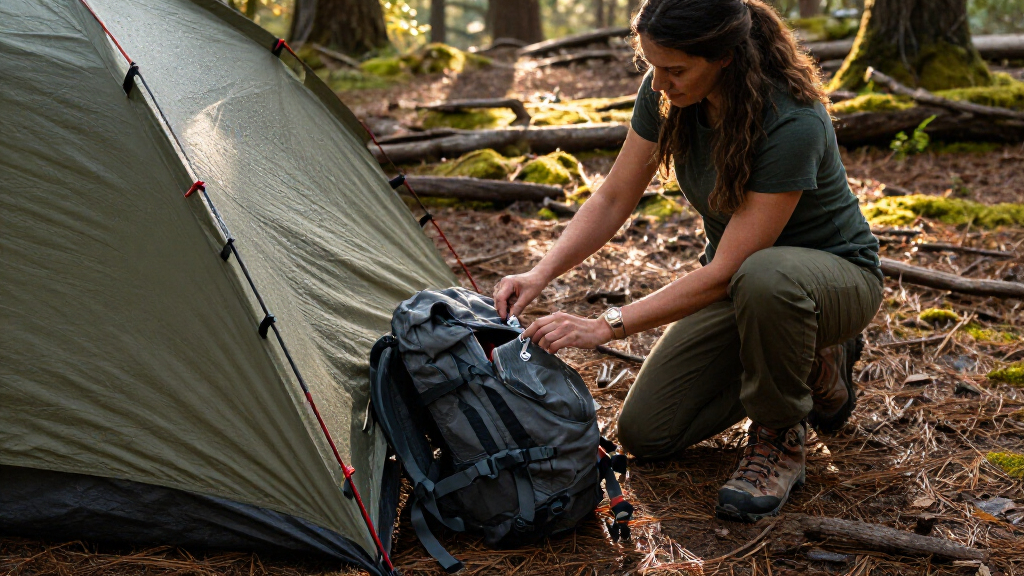
How We Picked
I ranked these lightweight camping tents by how well their stated design and features fit trips where carrying weight matters. The main criteria were intended use, capacity, pole type, weather protection, setup demands, and the practical tradeoff between packed size and livable space. I gave more weight to backpacking-oriented designs than to tents mainly positioned for casual car camping, because a tent can be easy to pitch yet still be a poor choice to carry on a trail.
The ranking also reflects how clearly each tent suits a particular buyer. The Kelty Grand Mesa earns the lead for its balanced backpacking focus; solo models rank well for hikers prioritizing a smaller shelter, while pop-up and conventional camping tents rank lower for sustained carrying. Product names and claims alone do not establish verified packed weights, weather-test results, or long-term durability, so I avoid treating those as proven advantages. Each option has a distinct use case, and the best choice depends on the load you are willing to carry and the conditions you expect.
Factors to Consider When Choosing Lightweight Camping Tents
To choose among these tents, I’d start with your actual trips rather than the lightest-sounding product label. A shelter that works for a short walk from the car may become a burden on a multi-day route, while a compact solo tent may feel cramped on a rainy weekend. These factors help separate useful weight savings from compromises you may notice every night.
Match Tent Weight to the Whole Carry
Compare the packed tent weight with your full shelter system, including stakes, footprint, poles, and any items carried by a partner. Product listings may report minimum trail weight or a packed weight, and those figures can describe different sets of components. A lower number is less useful if the tent requires extra gear you would not otherwise bring. For shared trips, splitting the fly, inner tent, and poles can make a two-person shelter easier for each hiker to carry. On short walks to a campsite, setup and comfort may matter more than shaving a small amount from the pack. Choose based on the load you will carry in practice, not a headline figure alone.
Choose Capacity for People, Pads, and Packs
A tent’s stated person capacity usually describes sleeping space, not room for comfortable movement or bulky equipment. Two adults with wide sleeping pads may find a two-person floor tight, particularly when rain keeps packs and wet layers inside. Check floor dimensions against your pads and think about whether equipment can go in a vestibule. A one-person shelter can save carried material, but it leaves little flexibility for a dog, extra gear, or a night spent waiting out weather. If you camp with another person often, a roomier shelter may be worth carrying even when its listed capacity sounds less weight-efficient. Test your layout at home before relying on it for a trip.
Read Weather Claims as a Starting Point
“Waterproof,” “3-season,” and “4-season” describe broad intentions, not a guarantee for every storm or temperature. Look for details about the rainfly coverage, floor construction, seams, ventilation, and how securely the tent can be pitched. A full-coverage fly can help in sustained rain, while ventilation matters when warm, humid conditions raise condensation risk. A 4-season label may appeal for cold or exposed trips, but it does not by itself confirm suitability for severe storms or snow loading. Match the shelter to the conditions you expect and check the maker’s care and setup guidance. For trips with uncertain forecasts, practice a taut pitch so water can shed rather than collect.
Balance Fast Setup Against Trail Practicality
Easy setup can make a real difference after a long hike or when a campsite is crowded, but convenience features may add bulk or reduce flexibility. Pop-up designs can pitch quickly, yet their packed shape may be awkward to fit into a backpack. A conventional pole tent takes more steps but can pack into separate pieces, making it easier to divide between hikers. Before buying, check whether the tent can be pitched in the order that suits your weather and whether setup requires two people. Practice once at home, including attaching the fly and staking the corners. A familiar, repeatable pitch is more useful than a fast setup claim you have not tried.
Decide Where Gear and Wet Clothing Will Go
Floor area is only part of a tent’s usable space: door placement and vestibules determine where muddy boots, packs, and cooking gear can be kept out of the sleeping area. Two doors can make night-time exits easier for a pair and reduce the need to climb over a partner. A single-door design may be lighter or simpler, but it can create a daily inconvenience when occupants share a tight floor. Think about how you manage wet layers in persistent rain, since bringing them inside can crowd sleeping space and increase dampness. Do not assume a larger capacity label means useful storage outside the inner tent. Choose an arrangement that fits your routine, not just the number of sleepers.
Spend More for a Specific Need, Not a Label
A premium or ultralight label is not enough reason to accept less space or a more demanding setup. Paying more makes sense when a tent’s verified weight, construction, or design solves a recurring problem on your routes. For occasional drive-in camping, a simpler and heavier shelter may be a better fit than an expensive model built around pack weight. For frequent solo backpacking, lighter carry can matter more because you bear the entire shelter load yourself. Check warranty terms, replacement-part availability, and care instructions as part of the ownership decision. The right tent is the one whose benefits you will use often enough to justify its compromises.
Frequently Asked Questions
Can I use a lightweight backpacking tent for car camping?
Yes, a backpacking tent can work well for car camping, especially if you value compact storage or plan to hike with it later. The tradeoff is that lighter shelters may offer less room to stand, fewer storage areas, or materials that call for more careful handling. Car camping removes the carry-weight penalty, so a larger dome tent may feel more comfortable for longer stays. Check the floor space and door layout before choosing a compact model for two people. If the tent will rarely leave the campsite, prioritize comfort and setup over minimum packed size.
Is a two-person tent comfortable for two adults?
It can be, but the capacity label does not account for every sleeping pad, body size, or piece of gear. Two adults may fit shoulder to shoulder while having little room for packs or wet clothing inside. Compare the tent’s floor dimensions with the pads you actually use, and check whether the doors and vestibule let each person manage gear without disturbing the other. For frequent trips together, a roomier tent can be worth the extra carry weight. For solo hikers who want occasional flexibility, a two-person model trades space for a heavier load.
Should I choose a 4-season tent for unpredictable weather?
Not automatically. A 4-season designation points toward a different intended use, but it does not confirm that a tent is right for every storm, temperature, or exposed campsite. For most fair-weather trips, a suitable 3-season tent with a well-pitched rainfly may be more practical and breathable. A more protective design can add weight and warmth, which may be uncomfortable on mild trips. Base your choice on expected wind, cold, snow, and ventilation needs, then check the manufacturer’s guidance for the specific shelter.
Does a pop-up tent make sense for backpacking?
Only if its packed size and weight work with your pack and route. A pop-up design can reduce pitching steps, but a bulky folded shape may be awkward to carry even when the setup itself is quick. That tradeoff is often easier to accept at a drive-in site than on a long hike. Check the packed dimensions and the full carry weight rather than assuming fast setup means backpacking-friendly. For trail use, a tent that packs into manageable components may be easier to distribute between hikers.
What should I check before trusting a tent in rain?
Check how much of the inner tent the fly covers, whether the floor has a raised edge, and how the seams and doors are designed. Practice pitching the tent tightly, since loose fabric can sag and collect water. Ventilation also matters: a shelter can feel damp from condensation even when rain has not entered. Confirm whether the maker recommends seam treatment or a separate footprint, and follow those instructions before a trip. If the forecast is severe, choose a campsite with natural drainage and shelter rather than relying on a product label alone.
Conclusion
For a broadly useful backpacking choice, I’d pick the Kelty Grand Mesa 2-Person as best overall because its aluminum poles and 3-season backpacking focus give it a clearer trail role than the car-camping-oriented models. For best value, compare the Clostnature Lightweight 2-Person and BISINNA 2-Person options against the weight and features you actually need; neither should be chosen on a waterproof claim alone. The Naturehike Cloud-Up 1-Person is my best premium-style choice for solo hikers who prioritize a compact shelter, while the familiar setup of the Coleman Sundome or Amazon Basics dome makes more sense for beginners camping near a vehicle than for long carries. For specific needs, choose the Camppal 1-Person 4-Season only when its intended conditions match your trips, and consider the Golabs pop-up for convenience at drive-in sites. If two people will share the tent often, check floor and vestibule dimensions before settling on any two-person model.
Evergreen bestsellers Picks

Hisense 40-Inch QD4SR Series Hi-QLED FHD Roku Smart TV

Samsung 55-Inch M80H Series 4K Mini LED Smart TV (2026 Model)

Hisense 43-Inch E6 Cinema Series Hi-QLED 4K UHD Smart Fire TV (43E6QF)
As an affiliate, we earn on qualifying purchases.