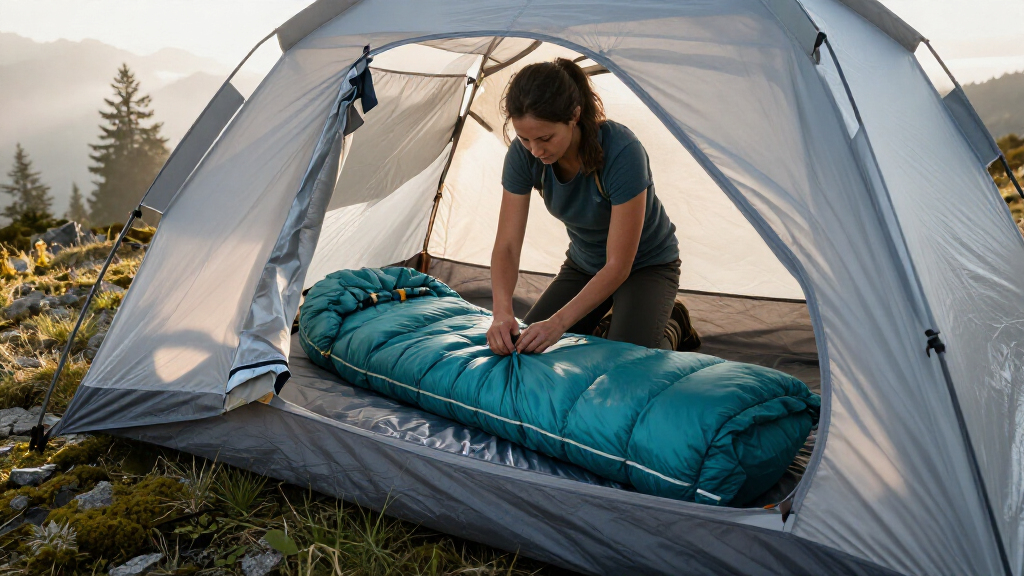
For most travelers, I’d start with the Naturehike Ultralight RDS Down Sleeping Bag: down insulation is the strongest match here for keeping carried weight and packed volume low. The REDCAMP Ultralight Compact Sleeping Bag is a practical alternative for buyers prioritizing a compact carry, while the ECOOPRO Warm-Weather Sleeping Bag suits mild-weather trips where a simple, roomy design matters more than cold-weather range. The main tradeoff is straightforward: lighter bags usually offer less warmth, while warmer or roomier options take up more pack space. Temperature ratings, insulation type, and fit all affect whether a bag will work for your actual route. Read on for the full comparison and guidance on matching a bag to your travel conditions.

Get travel and outdoor gear delivered free with Prime
- Fast, free delivery on millions of items
- Prime Video, Amazon Music and more included
- Member-only deals all year
Complete the kit

Key Takeaways
- The Naturehike Ultralight RDS Down Sleeping Bag is the clearest weight-first pick. Down is a better fit for travelers who need compact insulation, though it calls for more care around moisture than many synthetic options.
- Warm-weather bags dominate the compact, simple end of this lineup. Models from TANSTRIDER, ECOOPRO, and NewDoar make more sense for mild nights than for trips where temperatures may fall sharply.
- “Three-season” labels do not make the bags interchangeable. CORE, MalloMe, BORULL, and Wind Tour may appeal to broader-use buyers, but shoppers still need to check temperature ratings and fit rather than relying on the season label alone.
- Naturehike’s listings serve different priorities. Its down option targets low carry weight, while the compact bag and 53°F model are better judged as distinct choices for packability and warm conditions.
- Travel convenience depends on more than bag weight. A compression sack can reduce packed bulk, but it cannot make a warm-weather bag suitable for cold nights or compensate for a poor fit.
- Budget-friendly simplicity comes with limits. Several synthetic and summer-focused options may be easier to choose for casual trips, but buyers should trade some versatility for their lighter or simpler designs.
| CORE Adult Insulated Sleeping Bag, Blue/Gray |  | Best for Easy-Care Car Camping | Occupancy: 1 person | Weight: 3 pounds | Dimensions: 77 x 33 inches | VIEW LATEST PRICE | See Our Full Breakdown |
| Naturehike Ultralight RDS Down Sleeping Bag for Adults |  | Best for Weight-Conscious Backpacking | Occupancy: 1 person | Weight: 1.3 lb (565 g) | Down fill: 295 g duck down | VIEW LATEST PRICE | See Our Full Breakdown |
| MalloMe 3-Season Sleeping Bag for Adults and Kids |  | Best for Mild-Weather Versatility | Occupancy: 1 person | Weight: 1.3 kg | Dimensions: 86.6 x 31.5 inches | VIEW LATEST PRICE | See Our Full Breakdown |
| BORULL Lightweight 3-Season Sleeping Bag for Adults and Kids |  | Best for Roomy Shared Travel | Occupancy: 1 person | Weight: 3 lb | Dimensions: 86.6 x 33 inches | VIEW LATEST PRICE | See Our Full Breakdown |
| TANSTRIDER Ultralight Warm-Weather Sleeping Bag with Compression Sack |  | Best for Blanket-Style Flexibility | Occupancy: 1 person | Weight: 1.5 pounds | Dimensions: 75 x 30 inches | VIEW LATEST PRICE | See Our Full Breakdown |
| Naturehike Lightweight Compact Sleeping Bag |  | Best for Variable Conditions | Occupancy: 1 person | Seasons: 3 seasons | Temperature range: 43–72°F across the two insulation options | VIEW LATEST PRICE | See Our Full Breakdown |
| WERTYCITY Lightweight Summer Sleeping Bag for Backpacking |  | Best for Summer Pairing | Occupancy: 1 person; two compatible bags can zip together | Season: Summer | Comfort temperature: 59°F (15°C) | VIEW LATEST PRICE | See Our Full Breakdown |
| Wind Tour 3-Season Lightweight Sleeping Bag |  | Best Convertible Quilt | Occupancy: 1 person | Seasons: 3 seasons | Temperature range: 43–59°F (6–15°C) | VIEW LATEST PRICE | See Our Full Breakdown |
| ECOOPRO Warm-Weather Sleeping Bag with Compression Sack, 83 x 30 in |  | Best for Weather-Resistant Summer Trips | Occupancy: 1 person | Season: All seasons as listed | Temperature range: 55–60°F | VIEW LATEST PRICE | See Our Full Breakdown |
| REDCAMP Ultralight Compact Sleeping Bag for Backpacking |  | Best Compact Warm-Weather Pick | Season: Spring and summer | Temperature range: 59–77°F (15–25°C) | Comfort temperature: 68°F (20°C) | VIEW LATEST PRICE | See Our Full Breakdown |
| NewDoar Ultralight Warm-Weather Sleeping Bag |  | Best for Flexible Warm-Weather Use | Weight: 1.5 lb | Temperature range: 50–70°F (10–21°C) | Shell: 20D 380T ripstop nylon | VIEW LATEST PRICE | See Our Full Breakdown |
| Naturehike Lightweight Compact Sleeping Bag, 53°F |  | Best for Washable Comfort | Weight: 2.8 lb (LD150); 4.1 lb (LD350) | Comfort temperature: 53.6°F (LD150); 35.6°F (LD350) | Dimensions: (74.8 + 13.8) × 29.5 in | VIEW LATEST PRICE | See Our Full Breakdown |
| Sleeping Bag for Adults – Lightweight Waterproof Backpacking Cold Weather Sleeping Bag |  | Best for Taller Travelers and Damp Conditions | Weight: 3.3 lb | Temperature range: Comfort: 50–68°F; lower limit: 41°F | Dimensions: 86.6 × 31.5 in | VIEW LATEST PRICE | See Our Full Breakdown |
| BORULL Lightweight Compact Sleeping Bag |  | Best Compact Pick | Weight: 1.5 lb | Comfort temperature range: 50–77°F | Dimensions: 79 × 30 in | VIEW LATEST PRICE | See Our Full Breakdown |
| lightweight travel sleeping bag | Weight | Dimensions | Occupancy | Temperature range |
|---|---|---|---|---|
| CORE Adult Insulated Sleeping | 3 pounds | 77 x 33 inches | 1 person | — |
| Naturehike Ultralight RDS Down | 1.3 lb (565 g) | — | 1 person | — |
| MalloMe 3-Season Sleeping Bag | 1.3 kg | 86.6 x 31.5 inches | 1 person | — |
| BORULL Lightweight 3-Season Sl | 3 lb | 86.6 x 33 inches | 1 person | — |
| TANSTRIDER Ultralight Warm-Wea | 1.5 pounds | 75 x 30 inches | 1 person | 50–70°F (10–21°C) |
| Naturehike Lightweight Compact | — | — | 1 person | 43–72°F across the two insulation options |
| WERTYCITY Lightweight Summer S | 1.5 pounds | 75 × 29.5 inches | 1 person; two compatible bags can zip together | — |
| Wind Tour 3-Season Lightweight | 2.2 lb (1.0 kg) | — | 1 person | 43–59°F (6–15°C) |
| ECOOPRO Warm-Weather Sleeping | 1.7 lb (0.77 kg) | 83 × 30 in | 1 person | 55–60°F |
| REDCAMP Ultralight Compact Sle | 1.5 lb | 75 × 32.5 in (190 × 83 cm) | — | 59–77°F (15–25°C) |
| NewDoar Ultralight Warm-Weathe | 1.5 lb | 74.8 × 29.5 in | — | 50–70°F (10–21°C) |
| Naturehike Lightweight Compact | 2.8 lb (LD150); 4.1 lb (LD350) | (74.8 + 13.8) × 29.5 in | — | — |
| Sleeping Bag for Adults | 3.3 lb | 86.6 × 31.5 in | — | Comfort: 50–68°F; lower limit: 41°F |
| BORULL Lightweight Compact Sle | 1.5 lb | 79 × 30 in | — | — |
More Details on Our Top Picks
CORE Adult Insulated Sleeping Bag, Blue/Gray
The CORE suits travelers who prioritize simple care and dependable portability over the smallest packed load. Its 3-pound weight is heavier than the 1.3-pound Naturehike Ultralight, so it makes more sense for car trips or short walks to camp than weight-conscious backpacking. The synthetic hollow-fiber fill retains insulation when damp and the bag is machine washable, useful for trips where spills or muddy gear are likely. Its 50–70°F comfort range confines it to mild nights, while the 77-by-33-inch rectangular shape gives a relaxed fit for sleepers up to six feet tall. An interior pocket keeps small essentials close, but those conveniences do not offset its extra carry weight for long hikes.
Pros:- Synthetic hollow-fiber fill retains insulation when wet and dries quickly.
- Machine washable for straightforward cleanup after travel.
- Interior pocket keeps small essentials accessible.
- Carry bag is included for transport and storage.
Cons:- At 3 pounds, it is substantially heavier than the 1.3-pound Naturehike Ultralight.
- Its stated 50–70°F range does not suit cold-weather camping.
- 77-inch length is recommended only for sleepers up to six feet tall.
Best for: Car campers and casual travelers who want a washable bag for mild-weather trips and do not need an ultralight pack.
Not ideal for: Backpackers counting every pound or campers expecting nights below 50°F; its 3-pound weight and mild comfort range are limiting.
- Occupancy:1 person
- Weight:3 pounds
- Dimensions:77 x 33 inches
- Comfort temperature range:50°F to 70°F
- Shape:Rectangular
- Fill:Synthetic hollow fiber
- Materials:100% polyester
- Care:Machine washable
Our verdict“Choose the CORE for washable, mild-weather car camping, but pick the lighter Naturehike for trips where pack weight matters.”
Naturehike Ultralight RDS Down Sleeping Bag for Adults
For travelers who carry their sleeping kit on foot, this is the strongest weight-saving choice in this group: the Naturehike weighs 1.3 pounds and packs to 4.7 by 10.2 inches. Its 650-fill-power, RDS-certified duck down and individual channels offer a compact insulation package, while the water-repellent nylon shell adds some protection from moisture. Compared with the 3-pound CORE, it cuts substantial carry weight, though down requires more care around damp conditions. The stated comfort range of 42.8–51.8°F gives it a cooler-weather edge over the CORE and TANSTRIDER, but it is not a cold-weather bag. The short size is only 74.8 inches long, making fit a real constraint for taller sleepers.
Pros:- At 1.3 pounds, it is much lighter than the 3-pound CORE and BORULL.
- 650-fill-power duck down supports warmth with a compact packed size.
- Water-repellent 20D nylon shell helps resist light moisture.
- Two-way YKK zipper can join compatible bags and allows ventilation.
Cons:- Short size measures just 74.8 inches, limiting fit for taller users.
- Down needs more careful moisture management than the synthetic-fill CORE.
- Its comfort range is not intended for severe cold.
Best for: Backpackers and hikers who need a compact, low-weight bag for mild three-season trips and fit within the short-size length.
Not ideal for: Taller sleepers, campers facing sustained cold, or travelers who expect their bag to get wet and want the lower-maintenance synthetic fill of the CORE.
- Occupancy:1 person
- Weight:1.3 lb (565 g)
- Down fill:295 g duck down
- Fill power:650
- Recommended comfort temperature:42.8–51.8°F
- Unfolded size:74.8 x 28.3 inches (short size)
- Packed size:4.7 x 10.2 inches
- Shell and lining:20D 400T nylon
- Down certification:RDS-certified
Our verdict“Pick the Naturehike when low carry weight and compact packing matter more than extra length or easy-care synthetic insulation.”
MalloMe 3-Season Sleeping Bag for Adults and Kids
The MalloMe is a flexible pick for trips where a bag may be carried between camps but nighttime conditions are expected to stay mild. Its 50–80°F stated comfort range covers warmer nights than the Naturehike’s 42.8–51.8°F recommendation, but offers less guidance for cooler conditions. At 1.3 kg, it is lighter than the 3-pound CORE and BORULL, though heavier than the 1.3-pound Naturehike. A water-resistant polyester shell and compression sack make it practical for travel, while double-sided zippers and a drawstring headrest allow some fit adjustment. The 86.6-inch length is more generous than the CORE’s 77 inches, yet its recommendation tops out at six feet. Treat this as a mild-weather option, not a substitute for a cold-rated bag.
Pros:- Lighter than the 3-pound CORE and BORULL, at 1.3 kg.
- Water-resistant polyester shell can be wiped clean.
- Compression sack with straps supports compact transport.
- Double-sided zippers and drawstring headrest offer fit and ventilation adjustments.
Cons:- The 50–80°F comfort range is unsuitable for severe cold.
- At 1.3 kg, it is heavier than the 1.3-pound Naturehike down bag.
- Recommended for adults up to six feet, which may exclude taller users.
Best for: Travelers and newer campers who want a compressible synthetic bag for spring, summer, and mild fall outings.
Not ideal for: Cold-weather campers or backpackers seeking the lightest load; the Naturehike is lighter, and this bag’s 50–80°F range is aimed at mild conditions.
- Occupancy:1 person
- Weight:1.3 kg
- Dimensions:86.6 x 31.5 inches
- Comfort temperature range:50–80°F
- Shell material:Polyester
- Fill material:Polyester
- Closure:Zipper
- Included:Compression sack with straps
Our verdict“Choose the MalloMe for mild-weather trips that call for synthetic materials and a useful balance of packability and room.”
BORULL Lightweight 3-Season Sleeping Bag for Adults and Kids
BORULL prioritizes space and adaptable use rather than a low pack weight. At 86.6 by 33 inches, it offers more length than the CORE and a broad envelope shape for adults, teens, or growing children, though its recommended maximum height is 5 feet 11 inches. The foot ventilation zipper helps release heat on warmer nights, and the bag can zip to another compatible bag for double occupancy—useful for family travel in a way the MalloMe does not specifically offer. The tradeoff is a 3-pound weight, well above the Naturehike’s 1.3 pounds, and cotton fill is less suited to damp trips than the synthetic fill in the CORE or MalloMe. Its 50–80°F range also limits cooler-weather use.
Pros:- Roomy 86.6-by-33-inch shape suits a range of users.
- Foot zipper lets sleepers vent heat without opening the whole bag.
- Zip-together design supports paired sleeping arrangements.
- Machine washable and supplied with a compression sack.
Cons:- At 3 pounds, it is much heavier than the 1.3-pound Naturehike.
- Cotton fill is a less suitable choice for damp conditions than the CORE’s synthetic fill.
- 50–80°F comfort range limits use on cold nights.
Best for: Families and car campers who want a roomy mild-weather bag with a foot vent and the option to zip two compatible bags together.
Not ideal for: Backpackers prioritizing low weight or campers traveling in damp, cold conditions; it weighs 3 pounds and uses cotton fill.
- Occupancy:1 person
- Weight:3 lb
- Dimensions:86.6 x 33 inches
- Packed size:8 x 14 inches
- Comfort temperature range:50–80°F
- Fill material:Cotton
- Lining:Pongee
- Recommended maximum height:5 ft 11 in
- Features:Adjustable hood, foot ventilation zipper, machine washable, zip-together design
Our verdict“Choose BORULL for roomy family or car-camping use, not for weight-sensitive hiking or damp-weather trips.”
TANSTRIDER Ultralight Warm-Weather Sleeping Bag with Compression Sack
The TANSTRIDER is a warm-weather travel bag for people who value flexible use over insulation for changing conditions. At 1.5 pounds, it is far easier to carry than the 3-pound CORE or BORULL, although the 1.3-pound Naturehike remains lighter and packs smaller. Its two-way zipper lets it open into a blanket or connect to another compatible bag, while separate foot zippers provide ventilation when temperatures climb. The 75-by-30-inch rectangular shape is compact, but offers less length and width than the MalloMe’s 86.6-by-31.5-inch dimensions. Its 50–70°F range and cotton fill make it a fair-weather choice rather than a damp- or cold-weather option. The compression sack helps with packing, but does not make it a strong pick for demanding backpacking.
Pros:- 1.5-pound weight is below that of the 3-pound CORE and BORULL.
- Two-way zipper opens the bag as a blanket or connects compatible bags.
- Separate foot zippers allow ventilation on warm nights.
- Compression sack is included for packing.
Cons:- 50–70°F range limits use to warm-weather conditions.
- Cotton fill is less suited to damp travel than the CORE’s synthetic hollow-fiber fill.
- At 75 by 30 inches, it is shorter and narrower than the MalloMe.
Best for: Warm-weather travelers who want a light bag that can also serve as a blanket or connect to another compatible bag.
Not ideal for: Cold- or wet-weather campers, taller sleepers needing more room, or backpackers seeking the smallest and lightest setup; the Naturehike weighs less.
- Occupancy:1 person
- Weight:1.5 pounds
- Dimensions:75 x 30 inches
- Temperature range:50–70°F (10–21°C)
- Shape:Rectangular
- Shell material:Polyester
- Lining and fill:Washed cotton lining; cotton fill
- Closure:Two-way zipper
- Recommended maximum height:75 inches
Our verdict“Pick the TANSTRIDER for light, mild-weather travel where blanket-style opening matters more than extra room or cold-weather range.”
Naturehike Lightweight Compact Sleeping Bag
Two insulation weights make this Naturehike more adaptable than the single-temperature WERTYCITY Lightweight Summer Sleeping Bag: choose Air 60 for lighter loads in mild weather or Air 200 for added insulation. The 20D water-repellent nylon shell helps fend off dew and light rain, while the breathable lining and rectangular shape favor straightforward camp comfort over a highly specialized fit. Air 60 weighs 1.5 pounds and packs smaller; Air 200 weighs 2.6 pounds, so choosing more warmth brings a clear portability penalty. Its listed temperature range spans 43–72°F across the options, not within one universal configuration. I’d choose it for trips where conditions vary, but skip it if you need reliable protection from sustained wet weather or want one fixed packed size.
Pros:- Two insulation weights let buyers trade warmth for lower carried weight.
- Air 60 weighs 1.5 pounds and packs to 14 × 28 cm.
- Water-repellent 20D nylon helps protect against dew and light rain.
- Two sizes accommodate different body heights.
Cons:- Air 200 weighs 2.6 pounds and has a larger packed size.
- The 43–72°F range applies across two options, so buyers must match the configuration to conditions.
- Shell protection is described for dew and light rain, not sustained wet weather.
Best for: Travelers who camp across changing mild-weather conditions and want to choose between a lighter or warmer synthetic configuration.
Not ideal for: Backpackers who need dependable rain protection or a consistently compact setup regardless of insulation choice.
- Occupancy:1 person
- Seasons:3 seasons
- Temperature range:43–72°F across the two insulation options
- Insulation options:Air 60: 0.70 kg (1.5 lb); Air 200: 1.19 kg (2.6 lb)
- Sizes:M: 190 × 75 cm, for heights up to 175 cm; L: 205 × 85 cm, for heights up to 185 cm
- Shell and lining:380T 20D nylon shell; 240T polyester pongee lining
- Shape and closure:Rectangular; zipper
- Packed size:Air 60: 14 × 28 cm; Air 200: 19 × 37 cm
- Included:Sleeping bag and storage bag
Our verdict“Choose this Naturehike if you want a lightweight bag with a warmer configuration available, and can accept extra bulk when selecting Air 200.”
WERTYCITY Lightweight Summer Sleeping Bag for Backpacking
At 1.5 pounds, the WERTYCITY is a simple warm-weather carry for hikers who want a rectangular bag without the heavier Air 200 Naturehike configuration. Its stated 59°F comfort temperature makes the seasonal limit clear: this is for warm nights, not a flexible three-season choice. The standout is its ability to zip to a compatible second bag, giving couples a shared sleep setup without carrying a dedicated double bag on every trip. A compression sack helps manage pack space, and the pongee lining is described as breathable. The tradeoff is that it remains a one-person bag when used alone, and the listed maximum height is 75 inches. I’d pick it over the REDCAMP when pairing matters, but REDCAMP also opens flat as a quilt.
Pros:- Weighs 1.5 pounds for a manageable backpacking load.
- Compatible bags can zip together to form a double bag.
- Compression sack supports compact transport.
- Breathable polyester pongee lining.
Cons:- Designed for summer, with a stated comfort temperature of 59°F.
- Only one person fits when the bag is used on its own.
- Maximum recommended height is 75 inches.
Best for: Warm-weather backpacking couples who want lightweight individual bags that can zip together when traveling as a pair.
Not ideal for: Campers expecting cool nights, or taller sleepers above the 75-inch recommended height.
- Occupancy:1 person; two compatible bags can zip together
- Season:Summer
- Comfort temperature:59°F (15°C)
- Weight:1.5 pounds
- Dimensions:75 × 29.5 inches
- Materials:Nylon shell, synthetic fiber fill, polyester pongee lining
- Shape and closure:Rectangular; zipper
- Maximum recommended height:75 inches
- Included:Sleeping bag and compression sack
Our verdict“Pick the WERTYCITY for warm-weather trips where the option to zip two bags together matters more than quilt-style versatility.”
Wind Tour 3-Season Lightweight Sleeping Bag
The Wind Tour’s defining advantage is its two-use design: zip it for individual sleeping or spread it into a 72.8 × 63-inch quilt. That flexibility suits travelers who want bedding they can also use around camp, unlike the more conventional ECOOPRO envelope bag. At 2.2 pounds, it is light enough for many trips, though it is heavier than the 1.5-pound WERTYCITY and REDCAMP options. Its listed 43–59°F range points toward cool-to-mild conditions rather than warm summer-only use. The main compromise is cotton fill, which may be less suitable if the bag gets wet, and the listed temperature window is narrow. I’d favor it for adaptable camp use in dry conditions, not damp-weather travel.
Pros:- Converts from a zipped sleeping bag to a wide quilt.
- Weighs 2.2 pounds, with a storage sack included.
- Sleep mode is 84.6 inches long.
- Breathable storage sack supports storage and transport.
Cons:- Cotton fill may be less suited to wet conditions.
- Listed temperature range is limited to 43–59°F.
- Heavier than the 1.5-pound WERTYCITY and REDCAMP bags.
Best for: Travelers who want one lightweight sleep layer that can serve as a sleeping bag at night and a wide quilt around camp.
Not ideal for: Wet-weather backpackers or weight-conscious summer hikers seeking a lighter bag with a broader warm-weather focus.
- Occupancy:1 person
- Seasons:3 seasons
- Temperature range:43–59°F (6–15°C)
- Weight:2.2 lb (1.0 kg)
- Sleep mode dimensions:84.6 × 31.5 in (215 × 80 cm)
- Quilt mode dimensions:72.8 × 63 in (185 × 160 cm)
- Materials:Polyester shell; cotton fill
- Storage sack dimensions:12 × 8 in (30 × 20 cm)
Our verdict“Choose the Wind Tour if convertible quilt use matters more than minimum weight or wet-weather resilience.”
ECOOPRO Warm-Weather Sleeping Bag with Compression Sack, 83 x 30 in
The ECOOPRO is a straightforward choice for warm-weather travel when shell protection and low weight matter more than broad temperature coverage. At 1.7 pounds, it is slightly heavier than the 1.5-pound REDCAMP and WERTYCITY bags, but its waterproof nylon shell gives it a different emphasis from REDCAMP’s quilt-convertible design. It packs into a compression sack to an indicated height of 11 inches, making it practical to carry between campsites. The 55–60°F range limits its use to mild nights, so the “all seasons” listing should not be read as a promise of cold-weather comfort. This is a single-person envelope bag, and it lacks the zip-together feature of the WERTYCITY. I’d choose it for mild trips where shell resistance is a priority.
Pros:- Waterproof nylon shell offers more weather resistance than the shell protection described for the Naturehike.
- Weighs 1.7 pounds and includes a compression sack.
- Packs to a stated height of 11 inches.
- 83 × 30-inch envelope shape gives a roomy rectangular-style layout.
Cons:- The 55–60°F range limits it to mild conditions.
- One-person occupancy; no stated option to zip two bags together.
- At 1.7 pounds, it is heavier than the 1.5-pound REDCAMP and WERTYCITY.
Best for: Solo summer campers and hikers who want a light, compressible bag with a weather-resistant shell for exposure to damp ground or passing moisture.
Not ideal for: Cold-weather travelers, couples wanting to connect bags, or backpackers prioritizing the lowest weight in this group.
- Occupancy:1 person
- Season:All seasons as listed
- Temperature range:55–60°F
- Dimensions:83 × 30 in
- Weight:1.7 lb (0.77 kg)
- Packed size:Compresses to 11 in in height
- Materials:Nylon shell; polyester lining and fill
- Shape and closure:Envelope; zipper
- Included and warranty:Compression sack; 2-year warranty
Our verdict“Choose the ECOOPRO for mild-weather solo trips where a weather-resistant shell matters more than minimum weight or colder-night coverage.”
REDCAMP Ultralight Compact Sleeping Bag for Backpacking
For packing small, the REDCAMP makes a strong case: it weighs 1.5 pounds and packs to 7.9 × 4.7 inches, a more compact stated packed size than the ECOOPRO’s 11-inch packed height. Its two-way zipper also lets the bag open flat as a quilt or connect with another compatible bag, giving it more setup flexibility than the WERTYCITY, which focuses on joining a pair. The limits are clear: a 68°F comfort temperature and 59–77°F range make this a warm-weather option, not a bag for chilly nights. At 75 inches long, it is also less accommodating for taller sleepers than the ECOOPRO’s 83-inch length. I’d choose it for compact summer packing, but not for extra warmth or generous length.
Pros:- Weighs 1.5 pounds and packs to 7.9 × 4.7 inches.
- Two-way zipper allows the bag to open flat as a quilt.
- Can connect to a compatible second bag.
- Includes a compression sack and internal pocket.
Cons:- Designed for warm weather, with a 68°F comfort temperature.
- The 75-inch length may not suit taller sleepers.
- Product guidance recommends hooded sleeping bags for women.
Best for: Warm-weather backpackers with tight pack space who want a light bag that can open as a quilt or connect to a second bag.
Not ideal for: Tall sleepers above 6 feet or campers who need insulation for nights below its listed temperature range.
- Season:Spring and summer
- Temperature range:59–77°F (15–25°C)
- Comfort temperature:68°F (20°C)
- Weight:1.5 lb
- Dimensions:75 × 32.5 in (190 × 83 cm)
- Packed dimensions:7.9 × 4.7 in (20 × 12 cm)
- Material and fill:Polyester; synthetic fill
- Shape and closure:Rectangular; two-way zipper
- Included:Compression sack
Our verdict“Pick the REDCAMP for compact summer travel if you fit its 6-foot length limit and value a zipper that supports multiple setups.”
NewDoar Ultralight Warm-Weather Sleeping Bag
At 1.5 pounds, the NewDoar is a strong choice when carrying weight matters more than cold-weather insulation. Its 50–70°F range suits summer trips and warm indoor stays, while the two-way zipper gives it more uses than a basic travel bag: open the foot end for ventilation, unzip it as a blanket, or connect it to another compatible bag. Compared with the BORULL Lightweight Compact Sleeping Bag, it shares a low listed weight but packs into a larger sack and has a shorter recommended user height. The 74.8-inch length and 63-inch maximum height recommendation make fit a particular concern for taller adults. Its polyester fill and machine-washable construction simplify care, but this is a warm-weather specialist, not a cold-night solution.
Pros:- Listed weight of 1.5 lb keeps carry weight low
- Two-way zipper can open the bag into a blanket or join compatible bags
- Separate foot zipper allows extra ventilation
- Machine-washable construction simplifies cleanup
Cons:- Maximum recommended height of 63 in limits fit for many adults
- 50–70°F range is not suited to cold nights without added insulation
- Packed size of 11.8 × 6.5 in is larger than the BORULL’s listed packed size
Best for: Shorter travelers seeking a light summer bag that can also serve as a blanket or connect to a second bag
Not ideal for: Travelers taller than 5 ft 3 in or anyone expecting nights below 50°F
- Weight:1.5 lb
- Temperature range:50–70°F (10–21°C)
- Shell:20D 380T ripstop nylon
- Fill:Breathable polyester
- Dimensions:74.8 × 29.5 in
- Maximum recommended height:63 in
- Packed dimensions:11.8 × 6.5 in
- Shape and closure:Rectangular; two-way zipper
Our verdict“Choose the NewDoar for lightweight summer travel and flexible blanket use if its short fit and warm-weather range suit your plans.”
Naturehike Lightweight Compact Sleeping Bag, 53°F
The Naturehike prioritizes a soft, easy-care sleep surface over minimum pack weight. Its peach-skin velvet lining and machine-washable polyester hollow-fiber fill appeal to travelers who expect frequent use and want straightforward cleanup. It is sold in two versions, though, and the difference matters: the LD150 weighs 2.8 lb with a listed comfort temperature of 53.6°F, while the LD350 weighs 4.1 lb and lists 35.6°F. Compared with the NewDoar Ultralight Warm-Weather Sleeping Bag, even the lighter LD150 is heavier, but it adds a tightening hood and a longer stated temperature reach in the LD350 version. Top-and-bottom zippers allow joining compatible bags. I would choose it for comfort-focused car or train travel, not for a trip where every ounce and inch in a pack counts.
Pros:- Soft peach-skin velvet lining adds a comfortable feel against clothing or skin
- Machine-washable polyester fill is designed for easier routine care
- Top-and-bottom zippers can connect compatible bags
- Side drawstrings let the hood be tightened for added warmth
Cons:- Listed weight ranges from 2.8 to 4.1 lb depending on model
- Comfort temperature also varies by model, so specifications need to be checked before buying
- Heavier than the 1.5 lb NewDoar and BORULL options
Best for: Travelers who prioritize a washable, soft-lined bag and can choose the model that matches their expected temperatures
Not ideal for: Ultralight backpackers or buyers who want one clear weight and temperature specification without selecting between models
- Weight:2.8 lb (LD150); 4.1 lb (LD350)
- Comfort temperature:53.6°F (LD150); 35.6°F (LD350)
- Dimensions:(74.8 + 13.8) × 29.5 in
- Packed dimensions:Ø7.8 × 14.1 in (LD150); Ø11 × 14.9 in (LD350)
- Shape:Rectangular
- Outer material:Polyester
- Fill:Polyester hollow fiber
- Hood:Detachable; side drawstrings tighten it
Our verdict“Pick the Naturehike if washable, soft-lined comfort matters more than minimizing carry weight, and match the LD model to the temperature you expect.”
Sleeping Bag for Adults – Lightweight Waterproof Backpacking Cold Weather Sleeping Bag
This bag gives up some carry weight to provide more room and a moisture-conscious shell. At 3.3 lb and 86.6 inches long, it is a better fit for travelers up to 5 ft 11 in than the NewDoar Ultralight Warm-Weather Sleeping Bag, which has a 63-inch maximum height recommendation. The waterproof, breathable polyester shell and adjustable hood are useful when damp conditions or cooler evenings are part of the plan, while the foot zipper lets sleepers release heat without opening the whole bag. Its stated comfort range is 50–68°F, with a lower limit of 41°F, so the colder-weather wording should not be read as a winter guarantee. Compared with the lighter BORULL Lightweight Compact Sleeping Bag, this model offers more length and a waterproof shell but weighs over twice as much. The larger fit is a meaningful gain only if you need it.
Pros:- 86.6-inch length accommodates users up to 5 ft 11 in
- Waterproof, breathable polyester shell helps resist moisture
- Drawstring hood and foot zipper provide separate warmth and ventilation adjustments
- Compresses to a listed packed size of 7.9 × 14.2 in
Cons:- At 3.3 lb, it is substantially heavier than the 1.5 lb BORULL and NewDoar options
- Comfort range of 50–68°F does not make it a dependable winter bag
- Roomy dimensions and listed packed length may be inconvenient for compact travel kits
Best for: Taller campers who want a roomier bag and a waterproof, breathable shell for damp three-season trips
Not ideal for: Ultralight packers or winter campers who need dependable insulation in temperatures below the stated range
- Weight:3.3 lb
- Temperature range:Comfort: 50–68°F; lower limit: 41°F
- Dimensions:86.6 × 31.5 in
- Packed size:7.9 × 14.2 in
- Shell:Waterproof, breathable 100% polyester
- Lining:Polypongee
- Fill:Hollow cotton fiber
- Shape:Rectangular
Our verdict“Choose this model over the lighter BORULL if you need its extra length and moisture protection, but skip it when pack weight is the main priority.”
BORULL Lightweight Compact Sleeping Bag
The BORULL is the clearest choice here for travelers who want a light, compact envelope bag without the short fit of the NewDoar. It weighs 1.5 lb, measures 79 inches long, and lists a packed size of 4.7 × 7.9 inches, making it more pack-friendly on paper than the NewDoar’s 11.8 × 6.5-inch sack. Its dual-sided auto-lock zipper helps limit accidental opening, and the continuous polyester fill is designed to stay evenly distributed after washing. The tradeoff is a narrow comfort window for cool-weather use: its 50–77°F range suits mild nights, not cold trips, and the recommended user weight is under 165 lb. Compared with the 3.3 lb waterproof-shell model, the BORULL saves substantial weight but gives up that model’s stated waterproof shell and extra width.
Pros:- Low listed weight of 1.5 lb
- Compact packed size of 4.7 × 7.9 in
- 79-inch length accommodates users up to 6.58 ft
- Dual-sided auto-lock zipper helps prevent accidental opening
Cons:- Recommended for users under 165 lb, limiting suitability for broader sleepers
- 50°F lower end of the comfort range is too warm for colder nights without layering
- Polyester microfiber shell is not described as waterproof, unlike the shell on the 3.3 lb backpacking model
Best for: Pack-conscious travelers under 165 lb who need a long, lightweight bag for mild-weather camping and travel
Not ideal for: People over 165 lb or anyone planning cold-weather trips without added insulation
- Weight:1.5 lb
- Comfort temperature range:50–77°F
- Dimensions:79 × 30 in
- Packed size:4.7 × 7.9 in
- Shape:Envelope
- Shell:100% polyester microfiber, 400T/30D
- Liner:100% nylon, 380T/20D
- Fill:100% polyester microfiber, 100 GSM
- Maximum recommended height:6.58 ft
Our verdict“Choose the BORULL for compact carry and a longer fit on mild-weather trips, provided its weight recommendation and temperature range suit you.”
How We Picked
I ranked these lightweight travel sleeping bags by how well their stated design suits travel: low carry burden, manageable packed size, and enough warmth for the conditions the bag is meant to handle. I also weighed insulation type, shape and stated dimensions, included compression or storage features, and the practical difference between warm-weather and broader-season designs. A lightweight label alone was not enough; a bag that packs small but leaves a traveler cold is a poor choice for the trip.
The order favors clear use cases and useful tradeoffs over broad claims. The Naturehike down model leads for weight-focused travel, while compact and warm-weather options rank well for mild conditions and simple packing. More general-purpose or family-oriented bags remain useful for different buyers, but they rank lower for travelers seeking the smallest, lightest setup. Where product names do not specify enough detail to compare warmth or construction precisely, I avoid treating those claims as proof of performance and recommend checking the current manufacturer specifications before buying.
Factors to Consider When Choosing Lightweight Travel Sleeping Bags
Choosing a travel sleeping bag is less about finding the lightest number and more about avoiding a mismatch between the bag, the weather, and the way you travel. I’d make the decision in this order: expected overnight lows, packed volume, insulation care, then fit and convenience.
Match the Temperature Rating to Real Overnight Lows
Plan around the coldest night you reasonably expect, not the average temperature for the destination. A warm-weather bag can be pleasant in summer and inadequate when a high-altitude campsite or an unseasonable cold snap lowers the overnight temperature. Ratings are not a guarantee that every sleeper will feel comfortable at the same point, since clothing, shelter, fatigue, and personal cold sensitivity all matter. If conditions vary, look for a bag with a clearly stated rating and leave a margin rather than buying exactly to the forecast. A liner or warmer sleepwear may help with small temperature gaps, but neither turns a summer bag into a dependable cold-weather system.
Compare Packed Volume, Not Just Carry Weight
For travel, bulk can matter as much as weight: a bag that is light but difficult to fit in a carry-on or small pack may still be inconvenient. Check whether the stated packed dimensions refer to a compression sack, a storage sack, or an estimated compressed size, since these are not the same thing. Compression can shrink a bag for transport, but it should not be used as a long-term storage method for lofted insulation. Before buying, compare the packed bag with the space available in your actual luggage rather than relying on a vague “compact” label. This is especially useful for trips where the sleeping bag competes with clothing and other bulky gear.
Choose Insulation for Your Conditions and Care Habits
Down generally offers an attractive warmth-to-weight and packed-size profile, which explains its appeal for travelers trying to carry less. Its tradeoff is moisture sensitivity: damp insulation can lose loft, and drying it on the road may be difficult. Synthetic insulation is often a more forgiving choice for casual trips or damp settings, though it can take up more space for similar warmth. Neither type is automatically right for every traveler; the best choice depends on how reliably you can keep the bag dry and how much room you have. Read care instructions before buying, since washing and storage habits affect how well insulation serves over time.
Check Shape and Dimensions Against Your Sleep Style
A snug shape can reduce empty space that your body has to warm, but it may feel restrictive if you move around or sleep with bent knees. Roomier designs can be more comfortable for side sleepers and can make a bag easier to share across different users, yet extra fabric often adds bulk. Compare the listed length and width with your own height and preferred sleeping position rather than assuming “adult” means a universal fit. Also check shoulder and foot space if you plan to wear layers inside the bag. A bag that fits poorly can undermine both comfort and warmth, even when its headline specs look appealing.
Treat Season Labels as a Starting Point, Not a Promise
Terms such as “three-season” and “summer” are useful clues, but they do not replace a temperature rating or a look at the construction. Different brands may use season labels differently, and the same label can cover very different conditions. For trips with uncertain weather, choose based on the rating and the rest of your sleep setup, including sleeping pad and shelter. If you mostly travel in warm climates, carrying a heavier, broader-range bag can waste valuable space. If your plans span several seasons, a lighter summer bag may need to be paired with a separate plan for cold nights rather than stretched beyond its intended use.
Decide When an Accessory or Higher-End Material Is Worth It
A compression sack is useful when the bag must fit into limited luggage, but it adds little value if the bag already packs small enough for your setup. Paying more for down can make sense for frequent travelers who repeatedly carry their sleep system, while occasional car campers may prefer a simpler synthetic bag that is easier to care for. Check what comes with the bag and whether a storage sack, liner, or repair kit is actually included instead of assuming it from a product image. A premium material is not automatically a better buy if the trip is short, warm, and close to dry shelter. Spend for a specific advantage you will use, not for a label alone.
Frequently Asked Questions
Is a lightweight warm-weather sleeping bag suitable for a cold-weather trip?
Usually not on its own. Warm-weather models such as the TANSTRIDER, ECOOPRO, and NewDoar are better suited to mild nights than to conditions where temperatures may approach freezing. Check the manufacturer’s comfort rating and compare it with the expected overnight low, leaving room for personal cold sensitivity. A liner and warmer clothing can help with a modest shortfall, but they should not be treated as a substitute for a bag rated for the conditions. If the forecast is uncertain, choose more temperature coverage or bring a separate plan for added warmth.
Should I choose down or synthetic insulation for travel?
Choose based on the balance between packed size and care demands. The Naturehike Ultralight RDS Down model is the lineup’s clearest fit for buyers prioritizing a light, compact carry, while synthetic options may suit travelers who expect damp conditions or want a less delicate routine. Down needs protection from moisture and careful drying, which can be inconvenient on a multi-stop trip. Synthetic bags may take up more room, so check the packed dimensions against your luggage. Neither insulation type removes the need to match the bag’s temperature rating to your route.
Can one sleeping bag work for both summer travel and three-season camping?
Sometimes, but only if its stated temperature range suits the coldest conditions you expect and you are comfortable managing warmer nights. A broader-range bag may be a useful compromise for changing plans, though it can be bulkier than a dedicated summer option. A summer bag is generally easier to carry in hot-weather travel but leaves less margin when temperatures drop. Compare specific ratings and construction rather than relying on a “three-season” label alone. For frequent trips across very different climates, two purpose-matched bags may be more practical than forcing one bag to cover every situation.
How do I know whether a sleeping bag will fit in my carry-on or backpack?
Look for packed dimensions and confirm whether they describe the bag compressed in an included sack. Product names such as “compact” do not tell you how much space the packed bag will take in your luggage. Measure the empty space in your backpack or carry-on, then compare it with the listed dimensions, allowing room for items that cannot be compressed. A compression sack may reduce bulk, but the result depends on the bag’s insulation and fabric. If dimensions are missing or unclear, check the manufacturer’s current specifications before planning around a tight packing limit.
Is a compression sack enough reason to choose one bag over another?
Only when packed space is a real constraint and the sack produces a useful size reduction. An included sack does not make a bag warmer, lighter, or more durable, so it should not outweigh a mismatch in temperature rating or fit. Compare the total packed size and weight of the bag-and-sack combination, not just the accessory list. For airline travel, also confirm that the compressed bundle fits your luggage allowance and leaves space for other gear. Keep lofted insulation loose between trips instead of storing it compressed for long periods.
Conclusion
For the best overall balance for weight-conscious travel, I’d choose the Naturehike Ultralight RDS Down Sleeping Bag, provided you can keep down dry and its temperature rating suits your route. For best value and straightforward casual use, compare the MalloMe, BORULL, and CORE options by current specifications and fit rather than assuming their season labels mean the same thing. The Naturehike down model is also my best premium-style pick for travelers who value compact insulation, while the MalloMe is a more approachable beginner choice for buyers who want a familiar, general-purpose format. For specific warm-weather needs, the ECOOPRO or TANSTRIDER makes more sense than carrying a heavier bag intended for colder nights; for compact packing, compare the REDCAMP and Naturehike compact models by their actual packed dimensions. My final rule is simple: pick the lightest bag that still covers your coldest expected night and fits your sleep style.
Black Friday Picks

Bose QuietComfort Headphones (2nd Gen), Wireless Noise-Cancelling Over-Ear Headphones, Black
As an affiliate, we earn on qualifying purchases.