TL;DR

Get travel and outdoor gear delivered free with Prime
- Fast, free delivery on millions of items
- Prime Video, Amazon Music and more included
- Member-only deals all year
A quality digital luggage scale, used properly, helps you stay under airline weight limits. Leaving a small buffer and checking your weight before heading to the airport prevents costly overweight fees.
Overweight baggage fees are among the most common, yet most avoidable, travel expenses. A $15 digital luggage scale can save you $50, $100, or more, often in just one trip. But simply owning a scale isn’t enough—you need to use it correctly.
In this guide, you’ll learn proven best practices for weighing your bags, setting safe buffers, and avoiding surprises at the airport. Whether you’re a seasoned traveler or planning your first big trip, mastering this simple tool can keep your travel smooth—and your wallet happy.
Always weigh your luggage after packing, using a digital scale for accuracy within ±0.1 lb.
Add a 2–3 lb buffer to account for calibration differences and last-minute additions.
Weigh carry-ons and personal items, especially on airlines that gate-check or enforce strict limits.
Check your airline’s current baggage policies before packing, as limits vary widely.
Rearrange and wear heavy items to stay within weight limits without paying extra fees.
Best Practices for Using Luggage Scales to Avoid Overweight Fees
A $15 digital scale can prevent a $50–$200+ surprise. Weigh every fully packed bag, allow a small safety margin, and verify the airline’s current rules before leaving for the airport.
Six habits that prevent expensive surprises
Airport check-in scales are the final authority. Your advantage is arriving with a verified weight, a realistic buffer, and a plan for anything that changed after packing.
Weigh after everything is inside
Include toiletries, chargers, outerwear and purchases. Weigh again before the return flight because souvenirs change the equation.
Leave 2–3 lb of breathing room
For a 50 lb allowance, target 47–48 lb. The margin absorbs calibration differences and last-minute additions.
Weigh carry-ons and personal items
International and budget carriers increasingly weigh cabin bags at the gate. A common allowance is 15–22 lb / 7–10 kg.
Test with a known weight
Check against a 10 lb dumbbell or 5 kg bag of rice. Recalibrate or replace a scale that differs by more than 0.1 lb.
Verify the exact ticket allowance
Rules vary by airline, route, cabin, aircraft and status. Check the carrier’s current policy rather than relying on a remembered limit.
Pack the scale in your luggage
Compact hanging scales weigh only a few ounces. A hotel-room check prevents repacking on the airport floor.
A reliable reading in three simple steps
Smooth, centered lifting matters. Jerky movement, an insecure strap or a bag touching the floor can distort the measurement.
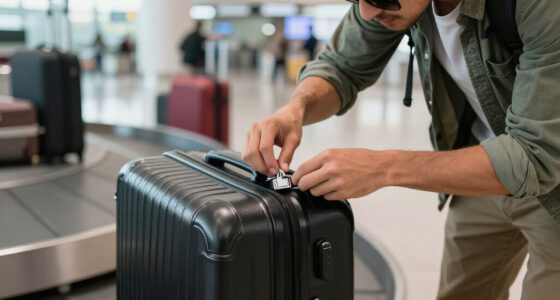
Attach to the top handle
Fasten the strap or hook securely. Center it so the bag hangs freely without slipping or leaning against another surface.
Raise steadily and hold still
Lift the bag fully clear of the floor with a smooth motion. Keep your arm steady and avoid swinging or sudden pulls.
Wait for the reading to lock
Most digital scales beep or flash when stable. Note the number, lower the bag safely and repeat once to confirm.
Heavy bag? Lift with your legs, not your back. If the scale permits it, use a sturdy fixed support and keep the bag clear of the floor.
The fee rises much faster than the cost of prevention
Typical US overweight charges begin around $50–$100 for a 51–70 lb bag and can exceed $200 at higher weights. Budget carriers may instead charge for each kilogram over the limit.
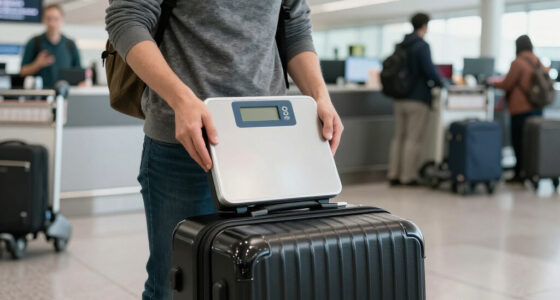
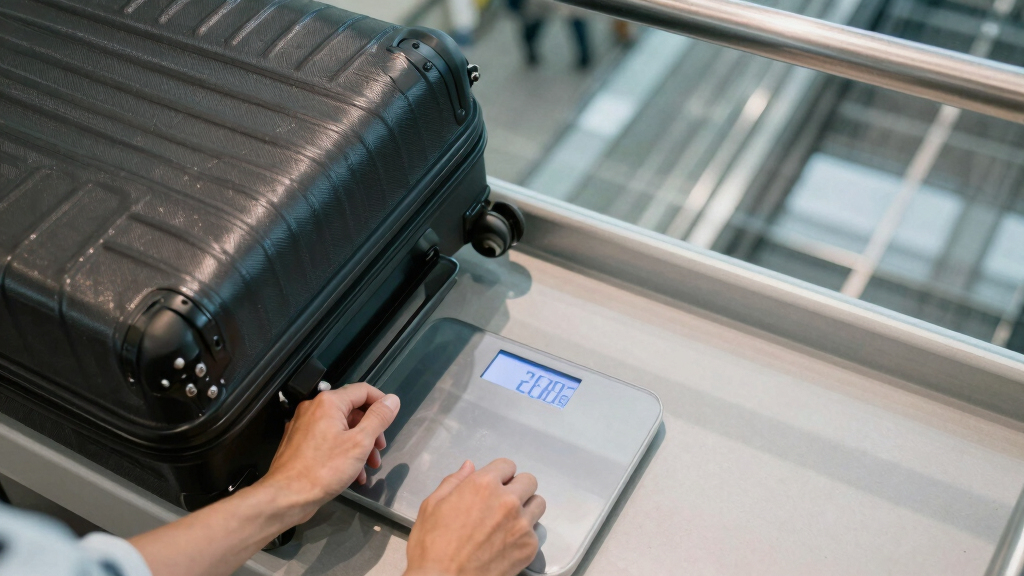
Why a hanging scale beats a bathroom scale
A purpose-built digital scale is portable, easy to repeat and precise enough for airline limits. Bathroom scales often struggle with low visibility and unstable bag placement.
| Decision factor | Digital luggage scale | Bathroom scale | Airport scale |
|---|---|---|---|
| Typical precision | ✓ ±0.1 lb / 50 g | ✗ May vary by pounds | ✓ Trade calibrated |
| Easy bag positioning | ✓ Designed for luggage | ✗ Awkward to balance | ✓ Large platform |
| Portable on return trip | ✓ Pocket-sized | ✗ Impractical | ✗ Airport only |
| Final authority | ~ Planning guide | ~ Rough estimate | ✓ Airline reading wins |
Best practice: take two consistent readings at home and stay below the published limit rather than aiming for the exact maximum.
Repack before you reach the check-in desk
An overweight reading is a prompt to redistribute, prepay or ship—not a reason to hope the airport scale reads lower.
Move dense items
Shift shoes, books, denim and toiletries to a lighter permitted bag.
Wear heavy layers
A coat, boots or heavy sweater can free several pounds from checked luggage.
Prepay online
If extra weight is unavoidable, advance purchase is often cheaper than airport rates.
Compare shipping
For a long trip or heavy purchases, shipping a box may cost less than overage fees.
Why a Digital Luggage Scale Beats Bathroom Scales Every Time
Digital luggage scales are designed for accuracy, portability, and ease of use. Unlike bathroom scales, which can be off by several pounds and awkward to balance, a good luggage scale gives you precise, quick readings. For example, a typical digital scale can measure up to 110 lb / 50 kg with a margin of error of just ±0.1 lb.
Imagine weighing your checked bag after packing—then weighing again after adding souvenirs. You’ll get a reliable number every time, helping you avoid the dreaded weight surprise at check-in. This accuracy is crucial because even a small miscalculation can lead to hefty fees or the need to repack at the airport — both of which cause delays and stress. Investing in a digital scale means you’re making a smart choice to prevent these inconveniences, as it provides consistent, dependable readings that are essential for planning your packing strategy.
Popular right now

eufy E25 Robot Vacuum and Mop Combo with HydroJet Roller Mop

De'Longhi Dinamica Plus Fully Automatic Espresso Machine

Sony WH-1000XM4C Wireless Noise-Cancelling Headphones, Black
As an affiliate, we earn on qualifying purchases.
How to Use a Luggage Scale Correctly in 3 Simple Steps
- Attach the strap or hook to the top handle of your bag. Make sure it’s secure to avoid slippage that could skew your reading.
- Lift steadily off the ground, keeping your arm straight and smooth. Avoid jerky movements, as inconsistent lifting can result in inaccurate measurements. Wait for the scale to beep or flash to lock in the reading, signaling a stable measurement.
- Read the display and note the weight. Repeat if necessary to confirm accuracy, especially if you suspect the reading was affected by movement or imbalance. Consistent weighing helps you develop a reliable sense of your luggage’s true weight, allowing you to make adjustments before arriving at the airport.
Practicing these steps at home helps you become comfortable with the process, reducing surprises and last-minute re-packing. Remember, the goal is to get a precise measurement that reflects the actual weight, so your planning is accurate and your fees are minimized.
Why Leaving a 2–3 lb Buffer Saves You Stress and Money
Home scales and airport scales can differ slightly—up to a pound or two—because of calibration differences, environmental factors like temperature or humidity, and the way the scale is used. Adding a small buffer of 2–3 lbs (1–1.5 kg) ensures you won’t get caught with a surprise fee due to these discrepancies. For example, if your airline’s limit is 50 lbs, aim for a reading of no more than 47 lbs on your scale.
This extra margin accounts for last-minute packing tweaks, measurement discrepancies, and the inevitable weight of the bag itself, which can vary slightly depending on the contents and how they settle. By setting a conservative target weight, you’re creating a safety cushion that prevents accidental overage, reducing the risk of having to re-pack or pay extra at check-in. This simple practice helps maintain your travel budget and keeps the check-in process smooth, avoiding delays caused by last-minute adjustments.
How to Weigh Carry-Ons — Don’t Forget Your Personal Item
Many travelers forget that carry-ons are now often weighed at the gate, especially with budget and international airlines. Weigh your carry-on at home with the same care as checked luggage. Aim for under 15–22 lbs (7–10 kg) to stay safe, but also recognize that a slightly lighter carry-on reduces the risk of last-minute surprises that could delay your boarding.
For example, if your carry-on weighs 18 lbs, consider transferring a bulky book or wearing heavier layers to reduce the weight. Some airlines also check personal items, so pack smart—think slim backpacks or tote bags with lighter contents. Being proactive about weighing your carry-on helps you avoid the inconvenience of removing items at the gate or paying extra fees, especially on airlines with strict weight limits. It also minimizes the risk of being turned away or delayed, which can disrupt your travel plans.
How to Calibrate and Check Your Scale’s Accuracy
Calibrating your luggage scale ensures you trust its readings. Weigh a known object—like a 10 lb dumbbell or a bag of rice—and compare the display. If it’s off by more than 0.1 lb, recalibrate or replace the scale. Regular calibration maintains the reliability of your measurements, which is essential because even slight inaccuracies can lead to overweight fees or the need to re-pack at the last minute.
Check the scale periodically, especially if you’ve dropped it or used it repeatedly. An accurate scale is your best tool for avoiding overage costs, and maintaining its calibration ensures consistent results over time. If you notice discrepancies, consult the user manual for calibration instructions or consider replacing the device to keep your measurements precise. Trustworthy readings allow you to pack confidently, knowing you’re within your airline’s limits and avoiding unnecessary fees.
Know Your Airline’s Exact Weight Limit and How It Changes
Airline baggage policies vary widely, often changing based on aircraft type, class of service, and route. Most international airlines specify checked bag limits at 23 kg / 50 lb, but some allow 32 kg / 70 lb for premium cabins. Carry-on limits are often 7–10 kg (15–22 lb), with gate checks becoming more common as airlines enforce stricter limits to manage weight distribution and safety.
Understanding these variations is crucial because exceeding limits can lead to significant fees or delays. For example, Emirates allows checked bags up to 32 kg (70 lb) in business class, while budget carriers like Ryanair stick to 20 kg / 44 lb. Always verify your airline’s current policy before packing, as rules can change and may differ even within the same airline depending on your ticket class or route. Being informed ensures you pack appropriately and avoid unexpected costs or inconvenience at the airport.
Rearrange Items Before You Check-in to Avoid Overweight Fees
If your scale shows you’re over, don’t panic. Transfer heavy items like shoes, books, or toiletries to your carry-on or wear them. For instance, wearing your bulky winter coat and boots can free up several pounds, allowing you to stay within the limit without paying extra. This strategic redistribution is a quick, effective way to manage weight, especially when approaching your airline’s maximum limit.
Another trick is to redistribute souvenirs or liquids into smaller containers. A quick re-pack can save you hundreds in fees at the airport, and it often takes just a few minutes to optimize your luggage. Being flexible and resourceful in this way can prevent costly re-packing at the check-in counter, making your journey smoother and more economical.
Bring Your Scale on the Return Trip — Don’t Repack in the Airport
Use your portable luggage scale before heading home. Weigh your bags after shopping or sightseeing to catch any weight creep. This prevents last-minute scrambling or paying overweight fees at the airport, especially if you’ve picked up souvenirs or extra items during your trip. Knowing your bag’s weight at this stage allows you to make adjustments—like shifting items into your carry-on or wearing heavier clothing—so you stay within limits and avoid additional charges.
This proactive approach saves time and money, and reduces the stress of last-minute repacking. It’s an easy step that ensures you don’t leave the airport with unexpected fees or delays, helping you end your trip on a positive note and start your journey home smoothly.
Prepay Extra Baggage Online Instead of Paying at the Airport
Most airlines offer discounted baggage fees when paid online in advance. If you’re over the limit, don’t wait. Buying extra weight online can be 50% cheaper than paying at the airport, and it often provides peace of mind knowing your baggage is covered. Planning ahead allows you to compare costs and choose the most economical option, avoiding the stress and unpredictability of last-minute payments.
For example, paying $60 for 10 kg online might save you from a $150 overweight fee at check-in. Additionally, prepaying helps you stick to your budget and prevents delays caused by payment disputes or re-packing at the last minute. It’s a simple step that can significantly reduce your travel expenses and streamline your airport experience, making your journey more comfortable and less stressful.
Use Compression Packing Cubes and Vacuum Bags Correctly
Compression cubes and vacuum bags are excellent space-saving tools, but they do not reduce the weight of your items. They help organize your belongings and maximize the space within your suitcase, which can be especially helpful when packing for long trips or multiple destinations. However, the overall weight remains the same; a 20 kg bag with compression tools still weighs 20 kg.
Using these tools wisely involves packing heavier items into the cubes or bags and compressing them efficiently, so you can fit more without exceeding weight limits. Always weigh your bag after packing to ensure it’s within your airline’s limits. This way, you benefit from better organization and space management without risking overweight charges due to misjudged weight.
Frequently Asked Questions
How accurate are luggage scales compared to airport scales?
Good digital luggage scales are accurate within about ±0.1 lb, but airport scales can differ slightly. Always leave a small buffer to avoid surprises.What happens if my bag is overweight at the airport?
You’ll be asked to pay the overweight fee or remove items. Having a smaller foldable tote or wearing heavy layers can help you shed weight quickly.Do airlines weigh carry-on bags?
Many do, especially budget and international carriers. It’s wise to weigh your carry-on at home to stay under the limits, which often range from 7–10 kg.Is 23 kg exactly 50 lb?
No—23 kg is about 50.7 lb. If the limit is 23 kg, you get a slight buffer with 50 lb, but don’t assume they round in your favor.Can I use a bathroom scale to weigh my luggage?
You can, but it’s less precise and more cumbersome. A dedicated digital luggage scale is faster and more reliable, especially for heavy bags.Conclusion
Mastering the use of a luggage scale transforms your packing game from guesswork to precision. It’s a simple step that saves hundreds—sometimes thousands—of dollars in overweight fees over a travel lifetime. The next time you pack, imagine the airport scales as a friendly gatekeeper, not an adversary.
Keep your bag within the limit, your stress low, and your travel budget intact. Because a well-weighed bag is a happy bag—and a happy traveler.