TL;DR

Get travel and outdoor gear delivered free with Prime
- Fast, free delivery on millions of items
- Prime Video, Amazon Music and more included
- Member-only deals all year
The best business travel bags combine smart organization, lightweight durability, and airline-friendly sizing. Features like built-in tech, security, and eco-friendliness boost efficiency. This guide helps you pick the perfect fit for your trips.
Imagine arriving at the airport, pulling out your bag, and everything is exactly where it should be. No frantic rummaging, no last-minute packing chaos. That’s the real power of a travel bag built for efficiency. For busy professionals, a bag isn’t just a carrier; it’s a tool that can save time, reduce stress, and keep your electronics safe.
In this guide, you’ll learn how to pick a business travel bag that checks all the boxes—size, durability, organization, and smart features—so each trip becomes smoother and more productive. We’ll cover what makes a bag truly optimized for business, recent tech upgrades, and how to match your needs with the right model.
Prioritize organization: dedicated compartments and quick access pockets streamline your trip.
Match size with airline restrictions: a well-measured bag prevents checked baggage fees.
Invest in lightweight, durable materials like polycarbonate or ballistic nylon to stay under weight limits.
Add smart features like RFID blockers or GPS tracking to protect your data and recover lost bags.
Choose modular or convertible bags for maximum flexibility during varied trip types.
How to Spot a Business Travel Bag That Keeps You Moving Fast
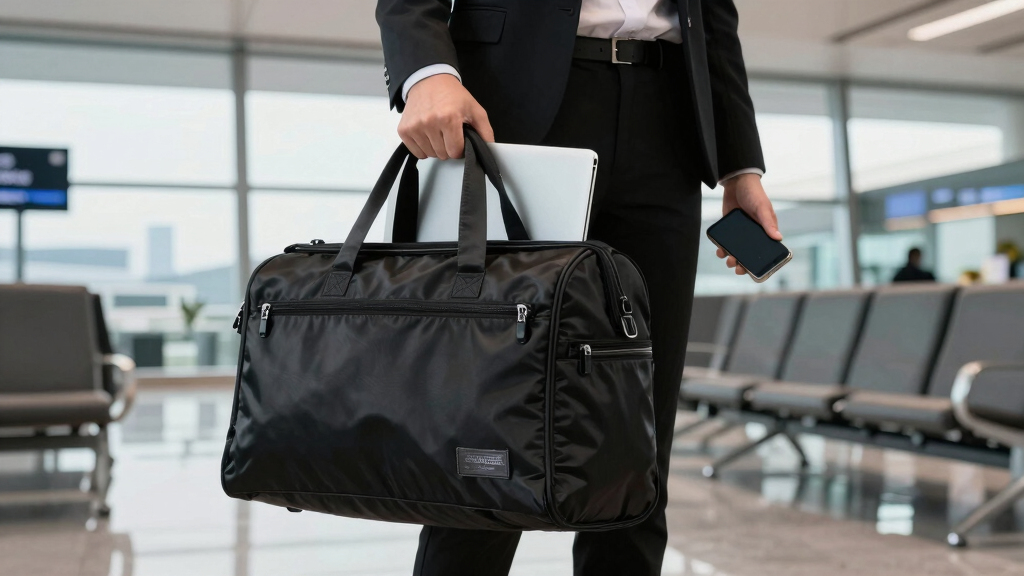
Business travel bags that truly boost your efficiency are built with quick access and smart organization. Think: dedicated laptop compartments, easy-to-reach passport pockets, and multiple accessory sections. A bag that opens wide and has clear sections saves you precious seconds at security or check-in.
Take the example of a professional who travels weekly. Their bag has a padded laptop sleeve, RFID-blocking pocket for credit cards, and a quick-access front pocket for boarding passes. It’s lightweight—under 2.5 kg (5.5 lbs)—and fits airline carry-on specs perfectly. When everything’s organized, you spend less time digging and more time focusing on your meeting.
**Practical takeaway:** Look for bags with a dedicated tech compartment and multiple easy-access pockets. These features aren’t just convenient—they reduce stress and save valuable time, especially during tight schedules. Prioritize models that open flat for security checks to minimize delays. Remember, the goal is to streamline your process, not complicate it.
business travel carry-on luggage with laptop compartment
As an affiliate, we earn on qualifying purchases.
As an affiliate, we earn on qualifying purchases.
The Size & Compliance Checklist: Your Ticket to Avoid Checked Bags
Knowing your airline’s carry-on size limits is a must. Most airlines allow bags up to 55 x 40 x 20 cm (21.5 x 15.5 x 7.8 inches), with a weight cap around 7-10 kg (15-22 lbs). A bag that’s just under these dimensions keeps you from paying extra or waiting for checked luggage.
For example, a popular model measures 54 x 39 x 19 cm (21.3 x 15.3 x 7.5 inches) and weighs 2.3 kg (5 lbs). It’s a perfect fit for most airlines, including American, Delta, and Lufthansa. When you pack smartly—using compression cubes and tech organizers—you maximize space within these limits.
**Practical takeaway:** Always verify your airline’s current carry-on policies before packing. Use a measuring tape and compare your chosen bag’s dimensions. Consider a bag with expandable compartments if your trips vary in length, but remember that expansion can sometimes push you over size limits. Balance your need for capacity with strict adherence to size restrictions to avoid surprises at the gate.
RFID blocking travel bag for professionals
As an affiliate, we earn on qualifying purchases.
As an affiliate, we earn on qualifying purchases.
Material Matters: The Best for Durability and Lightness
Business travelers need a bag that withstands the rigors of airports and hotels without adding weight. Polycarbonate shells and ballistic nylon are favorites for their toughness and light profile. For instance, a polycarbonate case offers a hard shell that resists scratches and impacts, while nylon fabrics provide flexibility and ease of repair.
Imagine tossing your bag into a crowded overhead bin. The right material absorbs shocks and resists tears, so your electronics stay safe. A bag weighing less than 3 kg (6.6 lbs) allows you to pack fully without risking overweight fees.
**Practical takeaway:** When choosing materials, consider the tradeoff between weight and protection. Polycarbonate offers excellent impact resistance but can be more prone to scratches, whereas ballistic nylon is flexible and easier to repair but slightly heavier. Think about your typical travel conditions and pack accordingly. A lightweight, durable material reduces the risk of damage and helps stay within airline weight limits, which can save you money and hassle.
lightweight durable business travel bag
As an affiliate, we earn on qualifying purchases.
As an affiliate, we earn on qualifying purchases.
Smart Tech That Saves You Time and Protects Your Data
Integrating tech features like built-in USB ports, GPS tracking, or Bluetooth locks can turn a good bag into a great one. A traveler with a portable power bank can recharge devices on the go, reducing airport waits. GPS tracking helps recover a lost bag—according to BagsOK, bags with tracking features are recovered 3x faster.
For example, a model with a removable power bank and a Bluetooth-enabled lock lets you control and monitor your bag via an app. These features add convenience, especially during tight layovers or last-minute changes.
**Practical takeaway:** Before investing in smart tech, assess your travel patterns. If you often forget your bag or travel through unfamiliar airports, GPS tracking and smart locks are worth it. If you rely heavily on electronics, USB ports and power banks can keep you connected. Remember, the most useful tech features are those that integrate seamlessly into your routine and enhance security and convenience without complicating your packing process.
convertible modular travel bag for business
As an affiliate, we earn on qualifying purchases.
As an affiliate, we earn on qualifying purchases.
Security Features That Keep Your Business Data Safe
Security isn’t just about locks; it’s about protecting sensitive info. RFID-blocking pockets prevent digital theft, while TSA-approved locks allow easy security checks without damage. Anti-theft zippers and hidden compartments make it harder for pickpockets to access your essentials.
Picture yourself in a busy airport lounge. You pull out your secure laptop compartment, confident your data is protected. When your bag features lockable zippers and RFID blockers, you’re less vulnerable to electronic pickpocketing or theft.
**Practical takeaway:** To maximize security, choose bags with RFID-blocking compartments and lockable zippers. Use TSA-approved locks that are easy to open for security checks but resistant to tampering. Consider hidden compartments for valuables, especially if you travel to high-risk areas. These measures don’t just protect your belongings—they give peace of mind, letting you focus on your work rather than worrying about theft.
Boost Your Efficiency with Smart Features and Modular Designs
Today’s travel bags go beyond just storage. Modular designs let you customize your packing system—adding or removing compartments based on trip length. Some models include detachable sections that convert from backpacks to briefcases, giving you versatility.
Imagine switching from a backpack to a briefcase during a client meeting. An example is a bag with a removable tech organizer that doubles as a standalone case. This flexibility can save you from carrying multiple bags and help stay organized.
**Practical takeaway:** When choosing a modular or convertible bag, consider your typical trips. For shorter trips, a bag with detachable compartments can reduce bulk. For longer trips, a versatile bag that transforms into different formats can save space and weight. Think about your workflow—if you often switch between casual and formal settings, a convertible design can streamline your carry options and keep you organized.
Comparison Table: Top Business Travel Bags vs. Airline Rules
| Model | Dimensions (cm) | Weight (kg) | Price Range | Features |
|---|---|---|---|---|
| Model A | 54 x 39 x 19 | 2.3 | $200-$350 | RFID, USB port, TSA lock |
| Model B | 55 x 40 x 20 | 2.8 | $180-$300 | Expandable, GPS tracking, lightweight |
| Model C | 52 x 38 x 20 | 2.5 | $150-$250 | Eco-friendly materials, padded laptop |
All three fit most airline carry-on limits, but Model A is the slimmest and lightest, ideal for frequent flyers. When comparing these options, consider not just the dimensions but also how the features align with your travel habits. For instance, if security and tech integration are priorities, Model A offers a compact yet feature-rich choice. If you value versatility and tracking, Model B’s expandability and GPS features make it a solid investment. Match your needs with the model that best supports your routine—this ensures your bag remains an asset, not a hindrance.
What to Consider Before Buying Your Business Travel Bag
Think about your typical trips: length, destination, tech needs. Do you prefer a backpack for hands-free mobility or a rolling suitcase? Will you need security features like RFID-blocking or biometric locks? Matching your bag’s features to your routine prevents headaches.
For instance, a consultant who travels weekly benefits from a lightweight, secure, and tech-enabled bag. An occasional traveler might prioritize style and capacity over high-tech features. The key is to evaluate your travel frequency, the nature of your trips, and what features will genuinely improve your experience. Make a checklist: list your essential features, weight limits, and size restrictions. Then, compare models based on these criteria to make an informed decision that aligns with your workflow and travel habits.
Frequently Asked Questions
How do I know if a bag will fit airline carry-on size restrictions?
Check the specific airline’s size limits before buying. Measure your preferred bag and compare it to those limits. Models designed to stay just under 55 x 40 x 20 cm usually fit most airlines without issue.Are smart luggage features worth the extra cost?
Smart features like GPS tracking and USB ports add convenience—helping you stay connected and recover lost bags faster. If you travel frequently, these benefits can outweigh the initial investment.What materials balance durability and lightness?
Polycarbonate shells and ballistic nylon fabrics are top choices. They resist impacts and tears while keeping weight low, ideal for busy travelers who need reliable protection without extra bulk.How can I protect sensitive electronics during travel?
Choose a bag with padded, shock-absorbing compartments. Look for models with dedicated tech zones that keep laptops, tablets, and chargers safe from bumps and jostling.How long should I expect my business travel bag to last?
With proper care, high-quality bags last around 5 to 10 years. Regular cleaning, avoiding overpacking, and storing properly extend their lifespan significantly.Conclusion
Choosing a travel bag isn’t just about looks—it’s about making every minute on the road count. Focus on smart organization, security, and size compliance. When your bag works with you, not against you, your business trips become smoother and more productive.
Get clear on what features matter most. Then, pick a bag that can handle your routine, so you arrive ready—every time.
Fall Picks
fall essentials
As an affiliate, we earn on qualifying purchases.