TL;DR
Packing shoes efficiently means protecting them from damage, saving space, and preventing dirt transfer. Using specific techniques like stuffing shoes and packing in dedicated bags keeps your footwear in top shape and your luggage organized.
Ever opened your suitcase after a trip and found your shoes scuffed, dirty, or crushed? That frustration ends with a few smart packing tricks. The goal isn’t just fitting shoes into your bag—it’s protecting them, saving space, and keeping everything organized.
In this guide, you’ll learn exactly how to pack shoes efficiently, whether you’re heading to a business meeting or a weekend getaway. Forget the guesswork—these tips are practical, tested, and ready to make your packing smoother.
Always clean shoes before packing to avoid dirt transfer and odors.
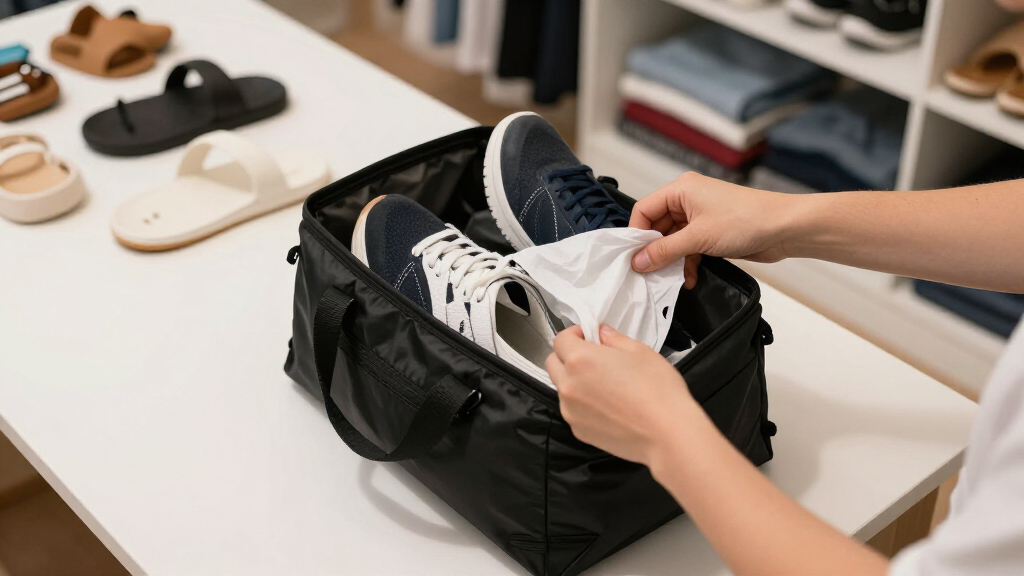
Stuff shoes with socks or tissue paper to maintain their shape and save space.
Use dedicated shoe bags or covers for better protection and organization.
Fill shoes with small items to maximize packing efficiency and preserve form.
Apply odor-absorbing products or baking soda inside shoes for fresh-smelling footwear after travel.
How to Pack Shoes Efficiently in Travel Bags Without Damage
The best shoe-packing method does three things at once: protects footwear, preserves suitcase space, and creates a clean barrier between soles and clothing. A few deliberate moves can prevent crushed heels, creased uppers, odors, and a messy arrival.
Pack shoes as structural luggage components—not awkward objects to squeeze into the final available gap.
Four risks. Four simple controls.
Travel exposes footwear to compression, friction, moisture, and shifting weight. Managing those forces keeps shoes wearable and stops soles, dirt, and odor from contaminating the rest of the bag.
Prevent scuffs
Use an individual cover or soft barrier so uppers and heels cannot rub against zippers, hardware, or another shoe.
Contain dirt
Clean soles and isolate them from clothing with a reusable fabric bag, shower cap, or dedicated organizer.
Hold the shape
Stuff toe boxes and support delicate uppers to prevent creases, deformation, and crushed heels during transit.
Use dead space
Turn hollow shoe interiors into protected storage for socks, charging cables, or other compact travel items.
From worn to travel-ready in five moves.
Follow the sequence before adding folded or rolled clothing. Shoes become the suitcase foundation, while softer items cushion the load above them.
Clean and dry
Remove mud, grit, and moisture. Dry footwear fully to reduce stains, bacteria, mold, and trapped odors.
Stuff the form
Fill toe boxes with rolled socks, tissue, or small soft garments. Give formal shoes extra structure.
Cover each shoe
Use washable shoe bags, fabric covers, or shower caps to contain soles and reduce friction.
Anchor the edges
Place shoes heel-to-toe along suitcase walls or at the wheel end where the case is most stable.
Fill every gap
Add soft items around shoes so they cannot shift, collide, or press into delicate accessories.
The suitcase layer map
Technique impact
Relative effectiveness index combining protection, organization, shape retention, and space use.
Dedicated bag or direct wrap?
A shoe bag is the safer all-round choice. Wrapping shoes in clothing can save a little room, but it introduces more friction, movement, and dirt-transfer risk.
| Method | Damage protection | Space efficiency | Convenience |
|---|---|---|---|
| Dedicated shoe bag |
Contains grime and limits scuffs. A structured or padded bag also reduces crushing. |
Adds slight bulk, but preserves form and creates a predictable unit for stacking. |
Easy to identify, remove, repack, and access without disturbing the whole suitcase. |
| Wrapped in clothing |
Soft layers help, but shifting fabric leaves shoes vulnerable to rubbing and deformation. |
Uses clothing as padding and avoids the extra volume of a separate organizer. |
Retrieving one pair may disrupt folded clothes and expose clean garments to the soles. |
Decision rule: choose a dedicated bag for formal, expensive, light-colored, or delicate footwear. Use a soft wrap only for clean, flexible casual shoes when every centimeter matters.
One clean sequence prevents five travel problems.
Match the method to the shoe.
Not every pair needs the same level of care. Structure, material, value, and intended use should determine how much protection each shoe receives.
Preserve the silhouette
Use tissue, soft shoe trees, or tightly rolled socks. Cover shoes individually so polished surfaces and hardware never touch.
Clean the soles first
Remove loose grit, fill the toe boxes, then place the pair heel-to-toe. Flexible uppers can tolerate closer packing.
Shield pressure points
Wrap heels and embellishments separately. Keep rigid heels away from delicate clothing, screens, and soft accessories.
Manage moisture
Add baking soda, activated-charcoal sachets, or odor-absorbing insoles. Air shoes fully when you reach the destination.
Choose versatility
Wear the bulkiest pair in transit and pack only styles that cover multiple outfits, settings, or activities.
Reuse the barrier
Choose washable fabric bags, natural-fiber organizers, or biodegradable covers instead of single-use plastic.
Traveler FAQ
The practical answers to the questions that usually appear when the suitcase is open and departure is getting close.
Q01How do I prevent scuffs?
Clean shoes, cover each one, stuff the interior, and cushion exposed hardware. Avoid placing polished uppers directly against another sole.
Q02How can I save space with several pairs?
Wear the bulkiest pair, pack versatile styles, fill shoe interiors, and position remaining shoes heel-to-toe along suitcase edges.
Q03Main compartment or separate bag?
Use a dedicated shoe bag or compartment whenever possible. It improves hygiene, organization, access, and protection.
Q04What belongs inside shoes?
Rolled socks, tissue, soft accessories, and secured charging cables work well. Avoid liquids, sharp objects, or items that could stain.
Q05Can compression bags help?
They can reduce bulk around flexible casual shoes, but excessive compression may deform structured footwear or crease delicate uppers.
Q06How do I stop travel odors?
Pack only dry footwear, use an absorbent product, keep shoes isolated, and air them immediately after arrival.
Protect first. Then compress.
Best all-round formula: clean + stuff + cover + edge-pack + stabilize.
That sequence preserves shoe shape, keeps clothing clean, uses hidden capacity, and makes unpacking faster. The few minutes spent preparing footwear can prevent avoidable wear and replacement costs later.
Why Protecting Shoes During Travel Matters
When you travel, shoes face a lot of hazards—scuffs, dirt, and crushing. Protecting them isn’t just about looks; it extends their lifespan and keeps your clothes clean. Imagine arriving at your hotel with scuffed loafers or dirty sneakers—annoying, right?
Using simple barriers like plastic shoe covers or dedicated bags keeps dirt and moisture away. Plus, it helps maintain your footwear’s shape, especially for delicate dress shoes or high heels. Protecting shoes is a small step that saves big headaches later.
Failing to protect your shoes can lead to faster wear and tear, which means replacing them sooner and spending more money. Additionally, dirty shoes can transfer grime to your clothes and luggage, creating extra cleaning chores and reducing your overall packing efficiency. Consider the tradeoff: investing a little time in protective measures now can save you money and hassle later, ensuring your shoes look new longer and your belongings stay cleaner.

Clear Shoe Bags for Travel 5 PCS, Drawstring Travel Shoe Bags for Packing
- Size: 15.7 x 11.8 inches, 5-pack
- Versatile Use: Shoes, clothes, toiletries, laundry
- Material: Waterproof, reusable PE material
As an affiliate, we earn on qualifying purchases.
As an affiliate, we earn on qualifying purchases.
How to Pack Shoes Step-by-Step for Maximum Safety and Space
- Clean your shoes before packing. Dirt and mud can transfer and cause stains or odors, which can be difficult to remove later, especially if they set during travel. Clean shoes also help prevent the buildup of bacteria or mold inside your luggage.
- Wrap each shoe in a plastic bag, shower cap, or dedicated shoe cover to prevent dirt transfer and protect against scuffs. This barrier minimizes the risk of dirt or moisture seeping into other items, which is crucial if your shoes are dirty or damp from wear.
- Stuff shoes with socks, tissue paper, or small clothing items. This keeps their shape intact and prevents creases or deformation. Additionally, stuffing adds volume, which can be used to fill gaps in your luggage, optimizing space and preventing other items from shifting. Proper stuffing also helps maintain the shoe’s structure, especially for delicate or high-heeled footwear, preventing deformation that can occur during transit.
- Place shoes at the bottom of your suitcase or along the sides. They act as a sturdy base for other items, helping distribute weight evenly and preventing crushing of more delicate clothes or accessories. Positioning shoes strategically can also help stabilize your entire packing layout, reducing the risk of shifting during travel.
- Fill the interior of shoes with chargers, jewelry, or rolled-up socks to maximize space. This not only makes use of every inch but also stabilizes the shoes, reducing movement and potential damage during transit. Filling shoes with small valuables can also serve as a security measure, keeping important items tucked safely inside your footwear.
This method ensures shoes stay in good shape, don’t crush your clothes, and take up minimal space. Balancing protection with efficient packing reduces the risk of damage and keeps your luggage organized, making unpacking easier and quicker.

Travel Shoe Bags, Foldable Waterproof Shoe Puches Organizer-Double Layer (Multi-colored4)
- Durable Waterproof Material: Made with waterproof nylon fabric and double stitching
- Foldable and Spacious: Design offers large capacity equivalent to 17’’ x 9’’ shoe bag
- Lightweight Design: Weighs only 60 grams per bag
As an affiliate, we earn on qualifying purchases.
As an affiliate, we earn on qualifying purchases.
Comparison: Packing Shoes in a Bag vs. Directly in Luggage
| Method | Protection from Damage | Space Efficiency | Convenience |
|---|---|---|---|
| Inside a dedicated shoe bag | High—keeps dirt and scuffs contained, preventing transfer to other items and reducing wear from external impacts. This dedicated protection also minimizes the risk of shoes getting squished or deformed, especially if the bag is padded or structured. | Moderate—adds some bulk but prevents deformation and keeps shoes in shape, which can save space in the long run. The organized containment reduces clutter and makes stacking or arranging shoes easier, contributing to overall packing efficiency. | High—easy to grab shoes without unpacking entire bag, ideal for quick changes or multiple shoe options. The separate bag allows quick access and reduces the need to unpack the entire suitcase, saving time during transit or at the destination. |
| Wrapped in clothes directly in luggage | Lower—clothes can shift, causing shoes to bump into other items or get squished, increasing risk of damage. This method offers less protection against impacts and may lead to deformation or scuffing, especially if clothes are bulky or unevenly packed. | High—saves space but offers less protection, which might lead to deformation or scuffing over time. This approach maximizes space but sacrifices the structural integrity and protection of your footwear, potentially leading to costly replacements. | Moderate—less organized, more unpacking needed to access specific shoes, which can be inconvenient when in a hurry. It may also result in shoes getting dirty or scuffed during retrieval, especially if mixed with clothing or other items. |
Choosing between these methods depends on your priorities. Dedicated shoe bags provide better protection and organization, especially for valuable or delicate footwear. Wrapping shoes in clothes maximizes space but trades off some safety, so consider your trip length, shoe value, and packing style.

Odor-Eaters Everyday Comfort Insoles, Foot Odor Eliminating Insert, 3 Count
- Reduces Foot Aches & Pain: Provides support and comfort to reduce pain
- 3-Layer Memory Foam Design: Soft foam for shock absorption and all-day comfort
- 3-Pair Multipack: Includes three pairs for multiple shoes and replacements
As an affiliate, we earn on qualifying purchases.
As an affiliate, we earn on qualifying purchases.
Frequently Asked Questions
How do I prevent my shoes from getting scuffed or damaged during travel?
Wrap shoes in plastic bags, shoe covers, or soft clothing. Stuff them with socks or tissue paper to maintain shape. Place them in dedicated shoe bags or use soft packing organizers to prevent scuffs and crushing.
What is the best way to save space when packing multiple pairs of shoes?
Stuff shoes with rolled socks or small items, use compression bags, and select versatile shoes. Position shoes along the suitcase edges as a sturdy base, and fill inside shoes with small gear to maximize space. These techniques help you pack more efficiently without risking damage or losing shape.
Should I pack my shoes in the main compartment or a separate shoe bag?
Use a dedicated shoe bag or compartment to keep shoes separate from clothing. This prevents dirt transfer, maintains shape, and makes it easier to access shoes without unpacking everything. The separation also helps prevent shoes from damaging delicate clothes or accessories.
How do I keep shoes odor-free during long trips?
Sprinkle baking soda inside shoes, use odor-absorbing insoles, or include activated charcoal bags. Air out shoes upon arrival to keep them smelling fresh. These methods help combat moisture and bacteria buildup that cause odors.
Are eco-friendly options available for packing shoes?
Yes, biodegradable shoe covers, reusable fabric bags, and natural fiber shoe organizers are sustainable choices. They protect your shoes while reducing plastic waste, aligning with eco-conscious travel practices and helping you minimize environmental impact.

Lifewit Under Bed Shoe Storage Organizer 2 Pack(12 Shoes Cells), 4.3 Inches Profile Fabric Shoes Container Box with Clear Cover, Foldable Storage Bag with 2 Handles, Fits 12 to 24 Pairs
- Sturdy, expandable design: Made with durable cardboard and reinforced handles
- Dustproof clear window: See shoes easily while protecting from dust
- Convenient handle design: Handles on each side for easy pulling
As an affiliate, we earn on qualifying purchases.
As an affiliate, we earn on qualifying purchases.
Conclusion
Protecting your shoes during travel is about more than aesthetics—it’s about smart packing that preserves their shape and cleanliness. Use dedicated bags, stuffing techniques, and space-saving tricks to keep your footwear in top condition.
Next time you pack, remember: a well-protected shoe is a happy shoe. And a happy shoe means a smoother, more stylish trip. So, grab your shoes, get packing, and step out with confidence.